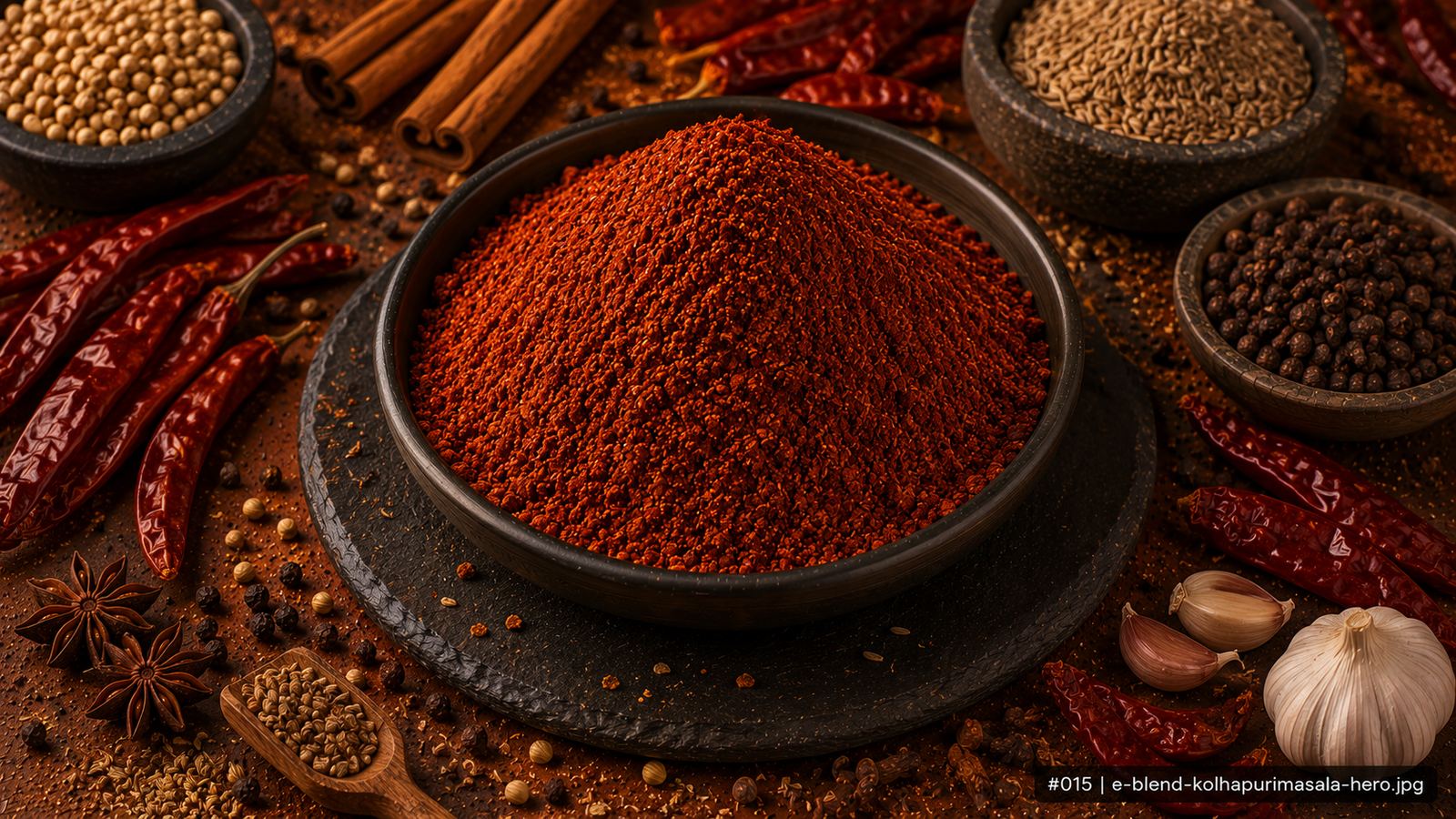
What Does Kolhapuri Masala Taste Like?
Kolhapuri Masala in Every Indian Language
| Language | Name | Pronunciation |
|---|---|---|
| English | Kolhapuri Masala | Kol-hah-POO-ree |
| Hindi | कोल्हापुरी मसाला | Kol-hah-POO-ree Mah-sah-lah |
| Marathi | कोल्हापुरी मसाला | Kol-hah-POO-ree Mah-sah-lah |
| Tamil | கொல்ஹாபுரி மசாலா | Kol-hah-POO-ree |
| Telugu | కొల్హాపూరి మసాలా | Kol-hah-POO-ree |
| Malayalam | കൊൽഹാപൂർ മസാല | Kol-hah-POO-ree |
| Kannada | ಕೊಲ್ಹಾಪೂರಿ ಮಸಾಲ | Kol-hah-POO-ree |
| Bengali | কোলহাপুরি মশলা | Kol-hah-POO-ree |
| Gujarati | કોલ્હાપુરી મસાલો | Kol-hah-POO-ree |
| Punjabi | ਕੋਲ੍ਹਾਪੁਰੀ ਮਸਾਲਾ | Kol-hah-POO-ree |
| Urdu | کولہاپوری مسالہ | Kol-hah-POO-ree |
What Is Kolhapuri Masala?
Kolhapuri masala is the defining spice blend of Kolhapur — a city in western Maharashtra known across India for producing some of the country's spiciest food. The masala is used primarily in Kolhapuri chicken, mutton preparations, and the region's famous rassa dishes (tambda rassa — red broth, pandhra rassa — white broth) that are central to Kolhapuri cuisine.
Unlike goda masala (Maharashtra's general-purpose masala), Kolhapuri masala is a specific, high-heat preparation with a dramatically higher proportion of dried red chilli. It also typically includes roasted dried coconut, sesame seeds, stone flower (dagad phool), and a fried-onion-garlic base — making it one of the most complex and time-intensive masalas in Indian cooking.
- Kolhapuri chicken — one of Maharashtra's most popular meat dishes nationally — cannot be authentic without this specific masala
- The tambda rassa of Kolhapur is architecturally built on Kolhapuri masala — it is not rassa if made with generic masala
- The Kolhapur region's food identity is inseparable from the heat and complexity of this blend
- Kolhapuri masala represents the most complex intersection of Maharashtra's coconut, stone flower, and high-chilli traditions
- Understanding this blend reveals how dramatically Indian regional cooking can differ within a single state
Kolhapuri Masala Through History
Kolhapur was the seat of the Maratha warrior Karveer kingdom, with a food tradition associated with the Mahar and Maratha communities who favoured intensely spiced meat preparations. The heavy spicing of Kolhapuri cooking is often attributed to this martial cultural tradition and to the region's historically meat-eating communities.
Tambda rassa and pandhra rassa — the two signature Kolhapuri broths — are traditionally served together: the red rassa fiercely spiced, the white rassa mild and cooling (made from chicken or mutton stock with ginger and whole spices). The contrast between the two dishes in a single meal reflects sophisticated culinary thinking.
The Science of Kolhapuri Masala
How to Store Kolhapuri Masala
How to Buy Good Kolhapuri Masala
How to Use Kolhapuri Masala Correctly
- Use 1.5–2 tbsp per 500g meat — significantly more than standard masala
- Add to fried onion-tomato base and cook 5 minutes before adding meat
- For rassa: simmer the masala in oil before adding the broth
- Finish with a knob of butter or ghee for richness
- Prepare for sustained heat — this is one of India's hottest regional masalas
- Balance with coconut milk or cream if serving to those unused to high heat
What Kolhapuri Masala Pairs Well With
Dishes That Use Kolhapuri Masala
Where Kolhapuri Masala Matters Most
| Maharashtrian Cuisine | Essential |
| Kolhapuri Cuisine | Essential |
| Restaurant Indian | Common |
| North Indian Cuisine | Common — restaurant adaptation |
| South Indian Cuisine | Occasional |
| Jain Cooking | Rare — contains garlic/onion |
Kolhapuri Masala vs Goda Masala vs Chettinad Masala
| Feature | Kolhapuri | Goda Masala | Chettinad |
|---|---|---|---|
| Heat level | Very high | Moderate | Very high |
| Coconut? | Yes — significant | Sometimes | Yes — significant |
| Stone flower? | Yes | Yes | Yes |
| Region | Kolhapur, Maharashtra | All Maharashtra | Chettinad, Tamil Nadu |
| Meat focus? | Yes — primarily | No — vegetarian | Yes — primarily |
| National recognition | High | Low — underappreciated | High |