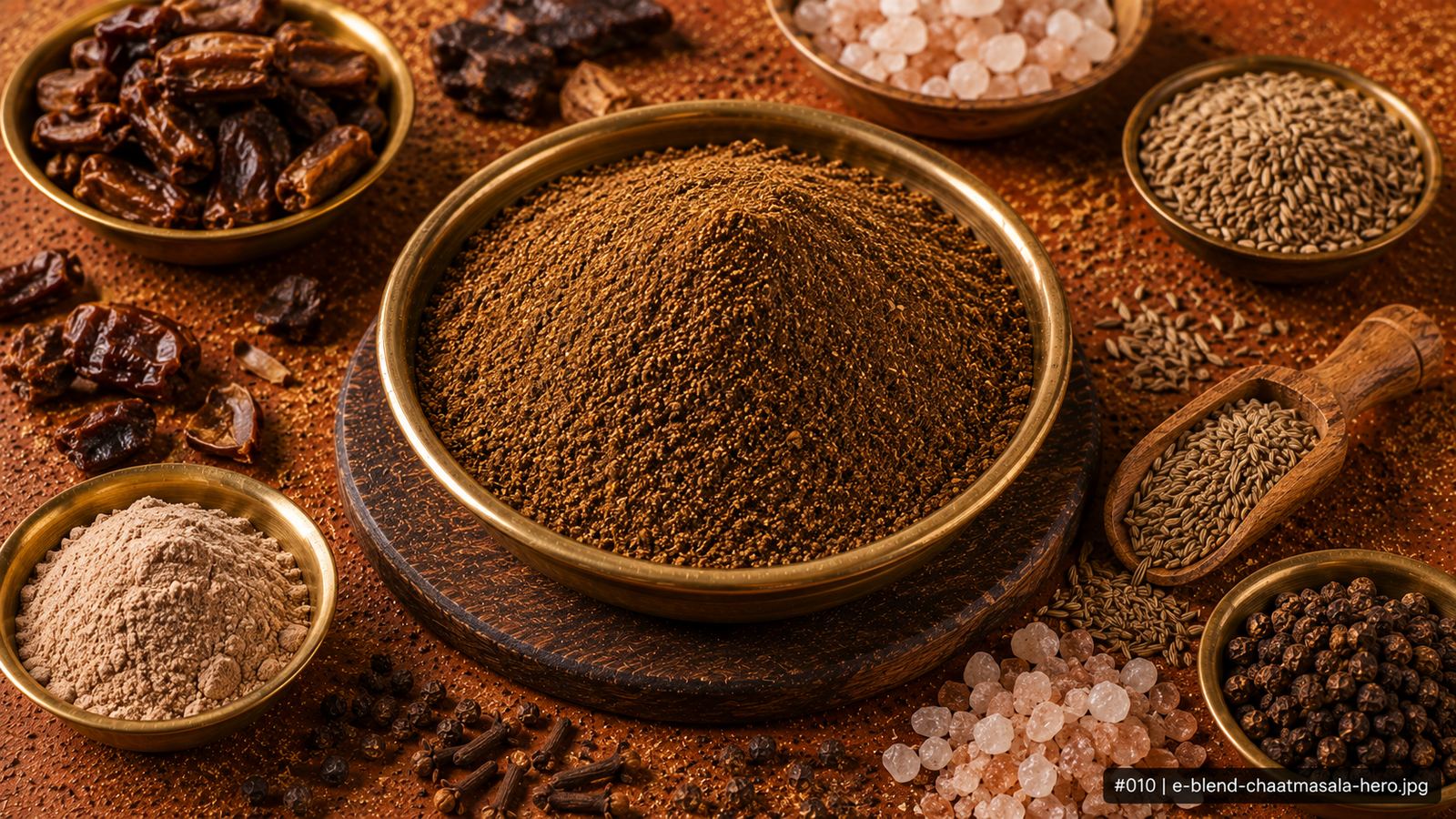
What Does Kitchen King Masala Taste Like?
Kitchen King Masala in Every Indian Language
| Language | Name | Pronunciation |
|---|---|---|
| English | Kitchen King Masala | KICH-en KING |
| Hindi | किचन किंग मसाला | KICH-en KING Mah-sah-lah |
| Bengali | কিচেন কিং মশলা | KICH-en KING Moh-sha-lah |
| Tamil | கிச்சன் கிங் மசாலா | KICH-en KING |
| Telugu | కిచెన్ కింగ్ మసాలా | KICH-en KING |
| Malayalam | കിച്ചൻ കിംഗ് മസാല | KICH-en KING |
| Kannada | ಕಿಚನ್ ಕಿಂಗ್ ಮಸಾಲ | KICH-en KING |
| Gujarati | કિચન કિંગ મસાલો | KICH-en KING |
| Marathi | किचन किंग मसाला | KICH-en KING |
| Punjabi | ਕਿਚਨ ਕਿੰਗ ਮਸਾਲਾ | KICH-en KING |
| Urdu | کچن کنگ مسالہ | KICH-en KING |
What Is Kitchen King Masala?
Kitchen King masala is an all-purpose North Indian spice blend created by MDH Spices (Mahashian Di Hatti) in Delhi — one of India's most recognisable commercial spice brands. It is not a traditional regional masala like garam masala or panch phoron but a 20th-century commercial product designed as a versatile, all-purpose cooking spice for North Indian vegetable curries, dals, and sabji preparations.
Its composition covers multiple spice functions simultaneously — it contains base spices (coriander, cumin, turmeric), heat (red chilli), finishing notes (garam masala components), and a mild tang (dried mango powder). This all-in-one convenience has made it extremely popular as a quick weekday cooking shortcut.
- Kitchen King is one of the most widely sold Indian spice blends domestically and in the diaspora — its versatility has driven commercial success
- For quick weekday cooking, it provides a complete spice profile without requiring individual spice management
- It represents an important category: commercial spice blends that don't correspond to any traditional regional masala but have become a de facto kitchen standard
- Understanding Kitchen King helps explain the difference between traditional regional masalas and commercial convenience blends
- For new cooks, it serves as a reliable starting point before learning to work with individual spices
Kitchen King Masala Through History
MDH Spices was founded by Dharampal Gulati in 1919 in Sialkot (now Pakistan), relocated to Delhi after Partition in 1947. The company built one of India's largest spice businesses through a combination of consistent quality, national distribution, and the distinctive yellow packaging with Mahashay Dharampal's face.
Kitchen King masala was developed as an explicit all-purpose product — the name itself signals its intent. Rather than a specific regional tradition, it represents the modernisation and commercialisation of Indian spice blending in the post-independence era, when urban lifestyles required quicker, more convenient cooking solutions.
The Science of Kitchen King Masala
How to Store Kitchen King Masala
How to Buy Good Kitchen King Masala
How to Use Kitchen King Masala Correctly
- Add 1 tsp to hot oil or onion base during the masala stage
- Works directly in dal, vegetable curries, and sabji
- For more complexity: supplement with additional garam masala at the end
- Quantity: 1–1.5 tsp per dish for 4 people
- Can replace individual spices in most everyday North Indian recipes
What Kitchen King Masala Pairs Well With
Dishes That Use Kitchen King Masala
Where Kitchen King Masala Matters Most
| North Indian Cuisine | Common |
| Everyday Indian Cooking | Common |
| Gujarati Cuisine | Common |
| Punjabi Cuisine | Common |
| South Indian Cuisine | Occasional |
Kitchen King vs Garam Masala vs Curry Powder
| Feature | Kitchen King | Garam Masala | Curry Powder |
|---|---|---|---|
| Origin | Commercial — MDH Delhi | Traditional North India / Mughal | British colonial |
| Traditional? | No — 20th century product | Yes | No |
| Versatility | High — all-purpose | Medium — finishing only | High but inauthentic |
| When added | During cooking | End only | During cooking |
| Authentic Indian? | Commercial but Indian | Yes | No |