★★★★☆ Gujarat
★★★☆☆ South India
What Does Ajwain Taste Like?
Ajwain in Every Indian Language
| Language | Name | Pronunciation |
|---|---|---|
| English | Carom Seeds / Ajwain | KAR-um |
| Hindi | अजवाइन — Ajwain | AJ-wine |
| Bengali | যোয়ান — Jowan | JO-wan |
| Tamil | ஓமம் — Omam | OH-mum |
| Telugu | వాము — Vamu | VAH-moo |
| Malayalam | അജ്മോദ — Ajmoda / ഓമം — Omam | OH-mum |
| Kannada | ಓಮ — Oma | OH-mah |
| Gujarati | અજમો — Ajmo | AJ-moh |
| Marathi | ओवा — Ova | OH-vah |
| Punjabi | ਅਜਵਾਇਣ — Ajwain | AJ-wine |
| Urdu | اجوائن — Ajwain | AJ-wine |
| Sanskrit | यवानी — Yavani | yah-VAH-nee |
What Is Ajwain?
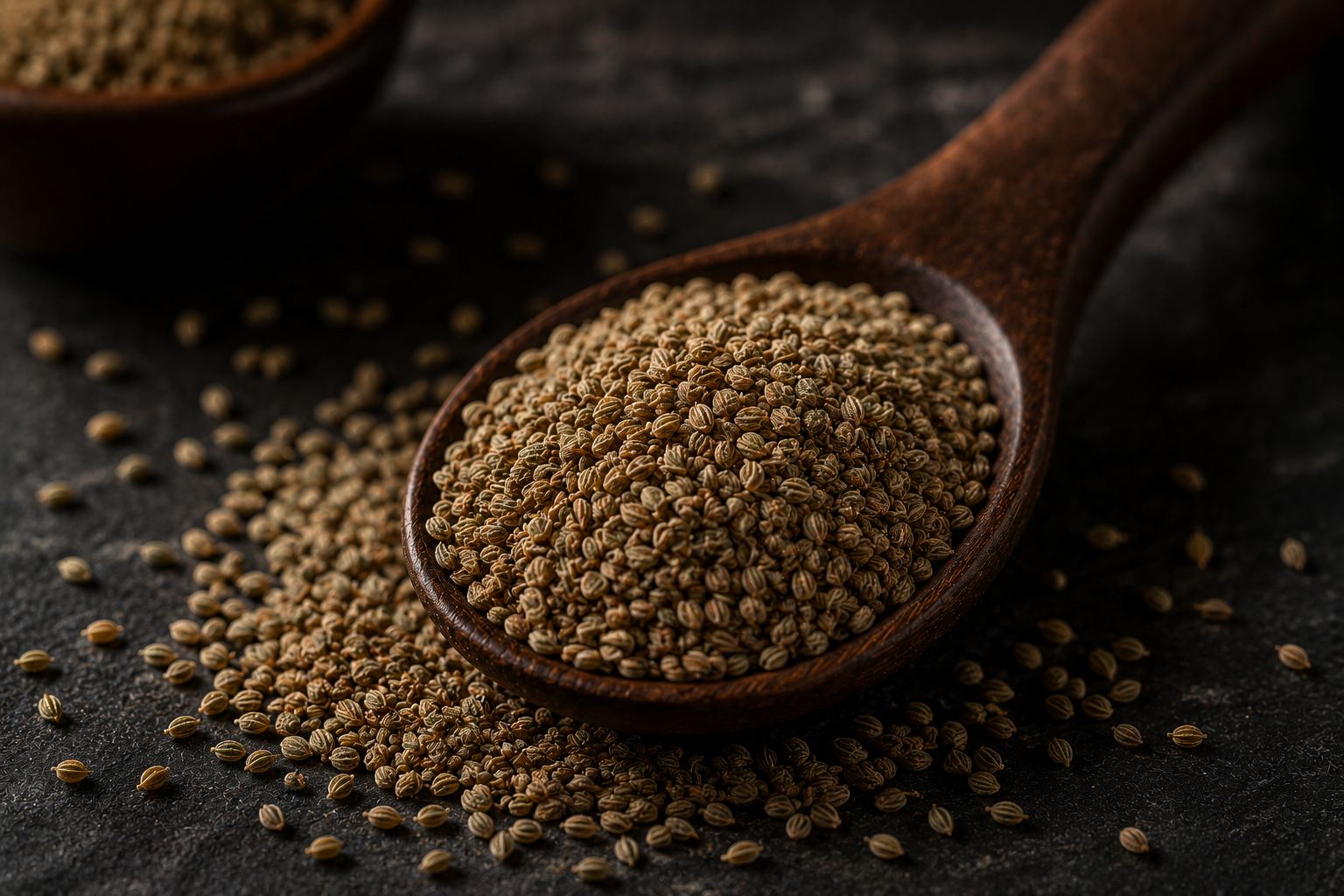
Ajwain — carom seeds — are the tiny oval seeds of Trachyspermum ammi, a plant related to caraway and cumin. Despite their small size, they are extraordinarily aromatic — one of the most intensely flavoured spices in Indian cooking. A small pinch in a dish fills a kitchen with the smell of thyme, multiplied. This intensity means ajwain must be used in very small quantities — even a small amount can dominate a dish entirely.
Ajwain's primary use in Indian cooking is in bread doughs (paratha, puri, kachori) and in dals — specifically lentil dishes where it acts simultaneously as a flavour agent and a digestive aid. It is one of the spices most closely associated with Indian home remedies for digestive issues, respiratory problems, and cold relief.
- Paratha and puri made without ajwain taste noticeably incomplete in North Indian cooking — the thyme note is characteristic
- Ajwain dal is a specific preparation valued as much for its digestive properties as its flavour
- The medicinal tradition around ajwain — given in ajwain water for digestive issues and in kadha for respiratory ailments — means it occupies a semi-medicinal role in Indian homes
- Without ajwain, many North Indian fried breads and snacks lack their characteristic sharp, clean aromatic note
- Ajwain is one of the few Indian spices that can be eaten raw — a single seed chewed relieves nausea almost immediately
Ajwain Through History
Ajwain has been cultivated in Egypt and the Indian subcontinent for at least 3,000 years, appearing in Ayurvedic texts as yavani — a digestive and respiratory medicine. The Charaka Samhita references it for digestive ailments, respiratory congestion, and as an antimicrobial agent — properties now supported by its high thymol content.
In Indian home medicine (gharelu nuskhe), ajwain occupies an important place: ajwain water (ajwain ka paani) given for infant colic, ajwain with salt for sore throat, and ajwain-based kadha for congestion. These practices predate modern medicine and reflect ajwain's high thymol concentration — thymol is still used in modern pharmaceuticals for respiratory complaints.
Culinary use developed alongside medicinal use, with bread bakers discovering that ajwain improved both digestion of fried foods and the aroma of the finished bread — a dual benefit that made it standard in North Indian bread-making.
The Science of Ajwain
How to Store Ajwain
How to Buy Good Ajwain
How to Use Ajwain Correctly
- Bread doughs: add 1/2 tsp whole or crushed to paratha or puri dough — distribute evenly
- Dal: add a pinch (1/4 tsp) to tadka oil before adding cooked dal
- Crush between fingers before adding to release thymol more fully
- Quantity: 1/4 to 1/2 tsp per dish maximum — it dominates easily
- For digestive use: add 1/4 tsp to hot ghee and mix into dal — serves as flavour and aid simultaneously
- Never use more than called for — a tablespoon of ajwain would be inedible
What Ajwain Pairs Well With
Dishes That Use Ajwain
Where Ajwain Matters Most
| North Indian Cuisine | Essential |
| Gujarati Cuisine | Essential |
| Rajasthani Cuisine | Common |
| Maharashtrian Cuisine | Common |
| South Indian Cuisine | Occasional |
| Jain Cooking | Common |
| Sattvic Cooking | Occasional |
Ajwain vs Thyme vs Caraway
| Feature | Ajwain | Thyme | Caraway |
|---|---|---|---|
| Key compound | Thymol (35–60%) | Thymol (30–45%) | Carvone |
| Flavour | Intense thyme, sharp | Gentle thyme, herbal | Rye-bread, anise |
| Form | Seed | Herb (leaf) | Seed |
| Indian use | Extensively | Rarely | Rarely |
| Culinary role | Bread, dal, digestive | Garnish/infusion | Occasional spice |
| Intensity | Very high — use sparingly | Moderate | Moderate |