★★★★☆ Bengal (panch phoron)
★★★☆☆ North India
What Does Fennel Seeds Taste Like?
Fennel Seeds in Every Indian Language
| Language | Name | Pronunciation |
|---|---|---|
| English | Fennel Seeds | FEH-nel |
| Hindi | सौंफ — Saunf | SAWN-f |
| Bengali | মৌরি — Mouri | MOW-ree |
| Tamil | பெரும்ஜீரகம் — Perunjeeragam | Peh-run-JEE-rah-gum |
| Telugu | సోంపు — Sompu | SOM-poo |
| Malayalam | പെരുംജീരകം — Perumjeerakam | Peh-rum-JEE-rah-kum |
| Kannada | ಸೋಂಪು — Sompу | SOM-poo |
| Gujarati | વરીયાળી — Variyali | VAH-ree-yah-lee |
| Marathi | बडीशेप — Badishepa | BAH-dee-sheh-pah |
| Punjabi | ਸੌਂਫ — Saunf | SAWN-f |
| Urdu | سونف — Saunf | SAWN-f |
| Sanskrit | शतपुष्पा — Shatapushpa | sha-tah-POOSH-pah |
What Is Fennel Seeds?
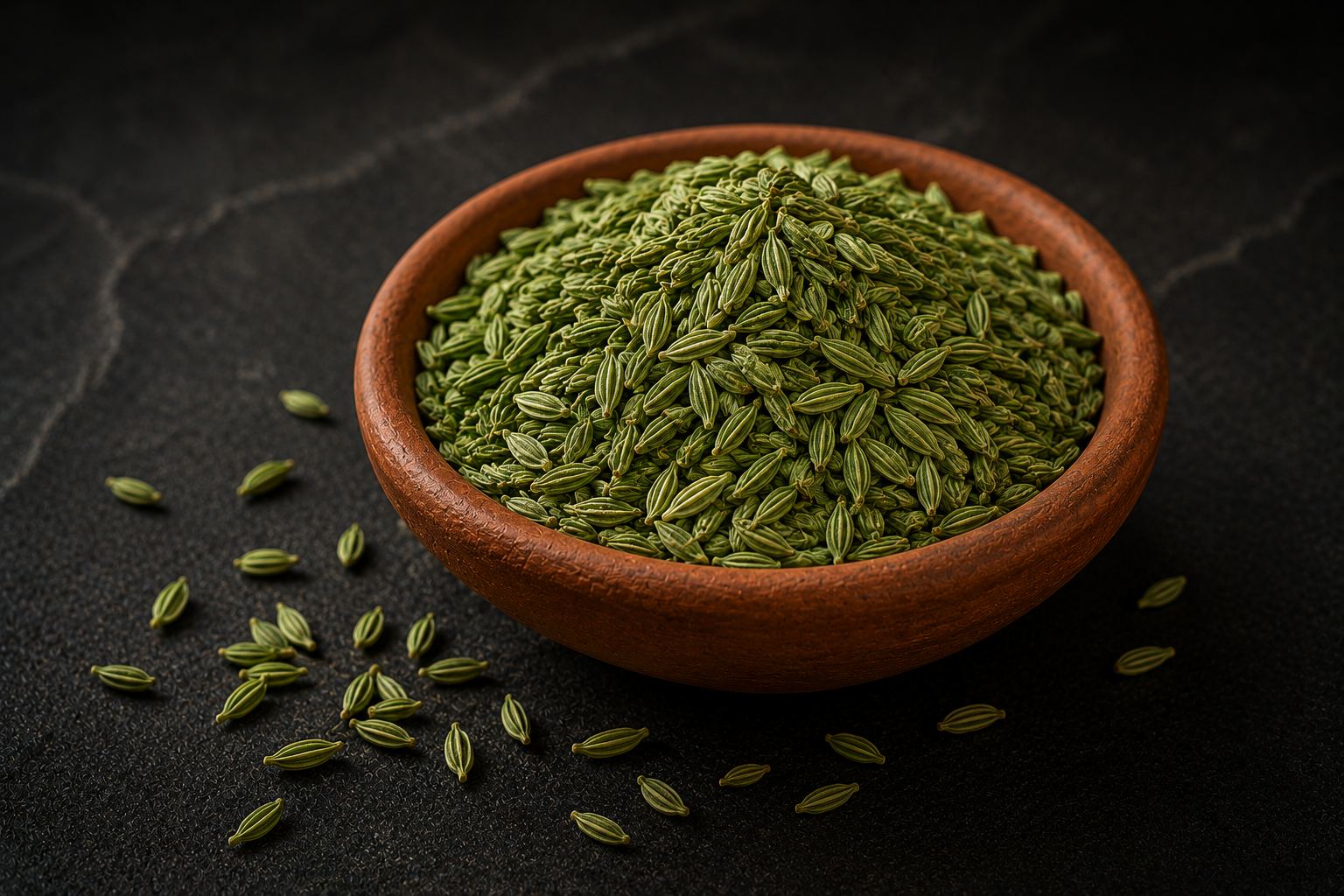
Fennel seeds — saunf — are the dried seeds of Foeniculum vulgare, a flowering plant related to carrot, caraway, and dill. They are the sweetest spice in the Indian kitchen — one of very few spices that brings sweetness rather than heat, bitterness, or pungency. This characteristic makes fennel a balancing ingredient in spice blends where it counteracts the bitterness of fenugreek and the pungency of mustard.
Fennel occupies three distinct roles in Indian cooking: as a spice in blends (most importantly in panch phoron), as a key component of Kashmiri cooking where it defines the cuisine's sweet-aromatic character, and as an after-dinner digestive — sugar-coated fennel seeds (mukhwas) served after meals are as much a part of Indian dining culture as the food itself.
- Kashmiri garam masala is built around fennel — without it, Kashmiri cooking loses its defining sweet-aromatic character
- Panch phoron requires fennel as the sweet counterbalance to bitter fenugreek and pungent mustard
- The after-dinner digestive tradition — saunf chewed after meals — is practiced across India, from Mughal-era restaurants to home cooking
- Without fennel, spice blends in Kashmiri cooking taste harsh and unbalanced
- The cooling effect of anethole in fennel is one of the reasons it's given to children and used in digestive formulations
Fennel Seeds Through History
Fennel is native to the Mediterranean but arrived in India via ancient trade routes and has been cultivated there for at least 2,000 years. Sanskrit texts reference shatapushpa ('hundred flowers') — the fennel plant — in both culinary and Ayurvedic contexts. Arab traders valued fennel as both a spice and a medicinal herb.
In Kashmir, fennel became deeply integrated into the local spice vocabulary over centuries of Persian and Central Asian influence. Kashmiri garam masala — fundamentally different from the North Indian version — uses fennel as a primary note alongside cardamom and cinnamon. The sweet-aromatic character of Kashmiri cooking is largely a product of this fennel influence.
The mukhwas tradition — serving sugar-coated fennel seeds after meals — developed in the Mughal court, where fennel was considered a digestive aid and mouth freshener. The practice spread through all classes of Indian society and persists today across restaurants from New Delhi to New Jersey.
The Science of Fennel Seeds
How to Store Fennel Seeds
How to Buy Good Fennel Seeds
How to Use Fennel Seeds Correctly
- Tadka: add to hot oil at the start — will sizzle and release sweet aroma in 15–20 seconds
- For Kashmiri dishes: use generously — 1–2 tsp whole per dish
- Dry-roast and grind for spice blends that need a sweet background note
- After-dinner digestive: serve whole or sugar-coated as mukhwas
- Quantity in panch phoron: equal parts with cumin, nigella, fenugreek, and mustard
- For breathing a sweet note into biryani: add whole in the dum stage
What Fennel Seeds Pairs Well With
Dishes That Use Fennel Seeds
Where Fennel Seeds Matters Most
| Kashmiri Cuisine | Essential |
| Bengali Cuisine | Essential |
| Mughlai Cuisine | Common |
| North Indian Cuisine | Common |
| South Indian Cuisine | Occasional |
| Jain Cooking | Common |
| Sattvic Cooking | Common |
Fennel Seeds vs Anise Seeds vs Caraway
| Feature | Fennel Seeds | Anise Seeds | Caraway Seeds |
|---|---|---|---|
| Botanical name | Foeniculum vulgare | Pimpinella anisum | Carum carvi |
| Key compound | Anethole | Anethole | Carvone |
| Flavour | Sweet, warm anise | Stronger anise, more direct | Rye-bread, anise-adjacent |
| Indian use | Essential — widely used | Rarely used | Rarely used |
| Size | Larger, oval | Smaller, oval | Curved, smaller |
| Interchangeable? | Partially with anise | Partially with fennel | No |