★★★★☆ Karnataka coast
★★★★☆ Tamil Nadu coast
★★★☆☆ Goa
What Does Coconut Oil Taste Like?
Coconut Oil in Every Indian Language
| Language | Name | Pronunciation |
|---|---|---|
| English | Coconut Oil | KOH-koh-nut OYL |
| Hindi | नारियल का तेल — Nariyal Ka Tel | NAH-ree-yal KAH TEL |
| Bengali | নারকেল তেল — Narkel Tel | NAR-kel TEL |
| Tamil | தேங்காய் எண்ணெய் — Thengai Ennai | THEN-gye EN-eye |
| Telugu | కొబ్బరి నూనె — Kobbari Noone | KOB-bah-ree NOO-neh |
| Malayalam | വെളിച്ചെണ്ണ — Velichenna | veh-LI-chen-nah |
| Kannada | ತೆಂಗಿನ ಎಣ್ಣೆ — Tengina Enne | TEN-gee-nah EN-eh |
| Gujarati | નારિયેળ નું તેલ — Nariyel Nu Tel | NAH-ree-yel noo TEL |
| Marathi | नारळाचे तेल — Naralache Tel | NAH-rul-ah-cheh TEL |
| Punjabi | ਨਾਰੀਅਲ ਦਾ ਤੇਲ — Nariel Da Tel | NAH-ree-el DAH TEL |
| Urdu | ناریل کا تیل — Nariyal Ka Tel | NAH-ree-yal KAH TEL |
| Sanskrit | नारिकेल तैल — Narikela Taila | nah-REE-keh-lah TYE-lah |
What Is Coconut Oil?
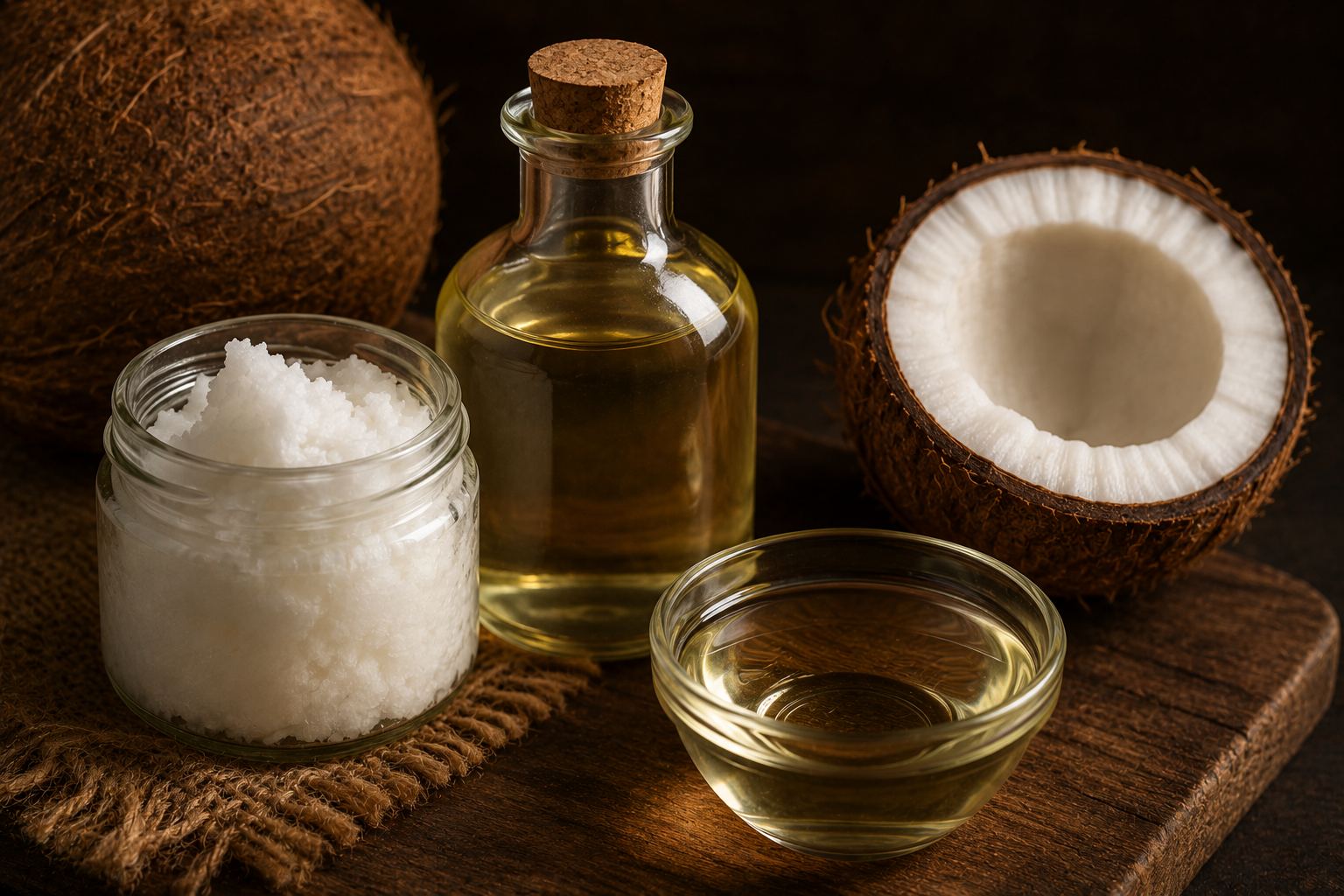
Coconut oil is pressed from the dried meat (copra) or fresh meat of the coconut palm fruit. Virgin coconut oil (VCO) is cold-pressed from fresh coconut meat and retains the characteristic coconut flavour and aroma. Refined coconut oil is extracted from copra (dried coconut), then refined to remove colour and odour — producing a neutral, high-smoke-point fat.
In Keralan cooking, virgin coconut oil is not merely a cooking fat but a cultural identity — the flavour of Keralan fish curry cooked in coconut oil, with coconut milk and curry leaves, is inseparable from that oil's presence. Replacing it with refined oil produces a different dish. Outside Kerala, refined coconut oil is used for its neutral flavour and high smoke point.
- Kerala's entire culinary identity is built on coconut oil — fish curry, avial, thoran, and stew all taste categorically different in coconut oil vs any other fat
- The flavour combination of coconut oil, curry leaves, and mustard seeds in tadka is the defining aromatic signature of Keralan cooking
- Without coconut oil, Keralan payasam (milk pudding) lacks the specific fat-sweet interaction that gives it its character
- Coastal Karnataka and Tamil Nadu cooking also use coconut oil — the fat connects coastal cooking traditions across South India
- The global wellness industry's interest in MCT fats has given coconut oil international recognition that it had as a regional ingredient for thousands of years
Coconut Oil Through History
Coconut palms have been cultivated along India's coastline for at least 3,000 years, and coconut oil has been the primary cooking fat of Kerala throughout that history. Sanskrit texts reference narikela taila (coconut oil) for both culinary and Ayurvedic uses.
The global health industry of the 1980s-90s classified coconut oil as unhealthy due to its high saturated fat content — this led to its replacement in many products with partially hydrogenated vegetable oils (trans fats), which proved to be significantly more harmful. The subsequent rehabilitation of coconut oil, and the growth of interest in medium chain triglycerides (MCTs) in the 2010s, partly restored its reputation internationally, though Keralan cooking had never abandoned it.
The Science of Coconut Oil
How to Store Coconut Oil
How to Buy Good Coconut Oil
How to Use Coconut Oil Correctly
- For Keralan cooking: always use virgin — the coconut flavour is part of the dish
- For neutral high-heat cooking: use refined — smoke point 232°C
- Tadka: add mustard seeds and curry leaves to medium-hot coconut oil (not smoking)
- For sweets: coconut oil provides a distinct flavour — use virgin
- Quantity: 2–3 tbsp per dish, same as any cooking oil
What Coconut Oil Pairs Well With
Dishes That Use Coconut Oil
Where Coconut Oil Matters Most
| Keralan Cuisine | Essential |
| South Indian Cuisine | Essential |
| Coastal Karnataka | Essential |
| Chettinad Cuisine | Common |
| North Indian Cuisine | Rare |
| Jain Cooking | Common |
| Sattvic Cooking | Common |
Virgin vs Refined Coconut Oil
| Feature | Virgin Coconut Oil | Refined Coconut Oil |
|---|---|---|
| Source | Fresh coconut meat (cold-pressed) | Copra (dried coconut), refined |
| Flavour | Distinct coconut | Neutral |
| Aroma | Strong coconut | None |
| Smoke point | 177°C | 232°C |
| Best for | Keralan cooking, sweets, flavour dishes | Neutral high-heat cooking |
| Nutrition | Similar | Similar |