What Does Ghee Taste Like?
Ghee in Every Indian Language
| Language | Name | Pronunciation |
|---|---|---|
| English | Ghee / Clarified Butter | GEE |
| Hindi | घी — Ghee | GEE |
| Bengali | ঘি — Ghi | GEE |
| Tamil | நெய் — Neyyi | NAY-yee |
| Telugu | నెయ్యి — Neyyi | NAY-yee |
| Malayalam | നെയ്യ് — Neiy | NAY |
| Kannada | ತುಪ್ಪ — Tuppa | TOOP-pah |
| Gujarati | ઘી — Ghi | GEE |
| Marathi | तूप — Toop | TOOP |
| Punjabi | ਘਿਓ — Ghio | GEE-oh |
| Urdu | گھی — Ghee | GEE |
| Sanskrit | घृत — Ghrita | GHRIT-ah |
What Is Ghee?
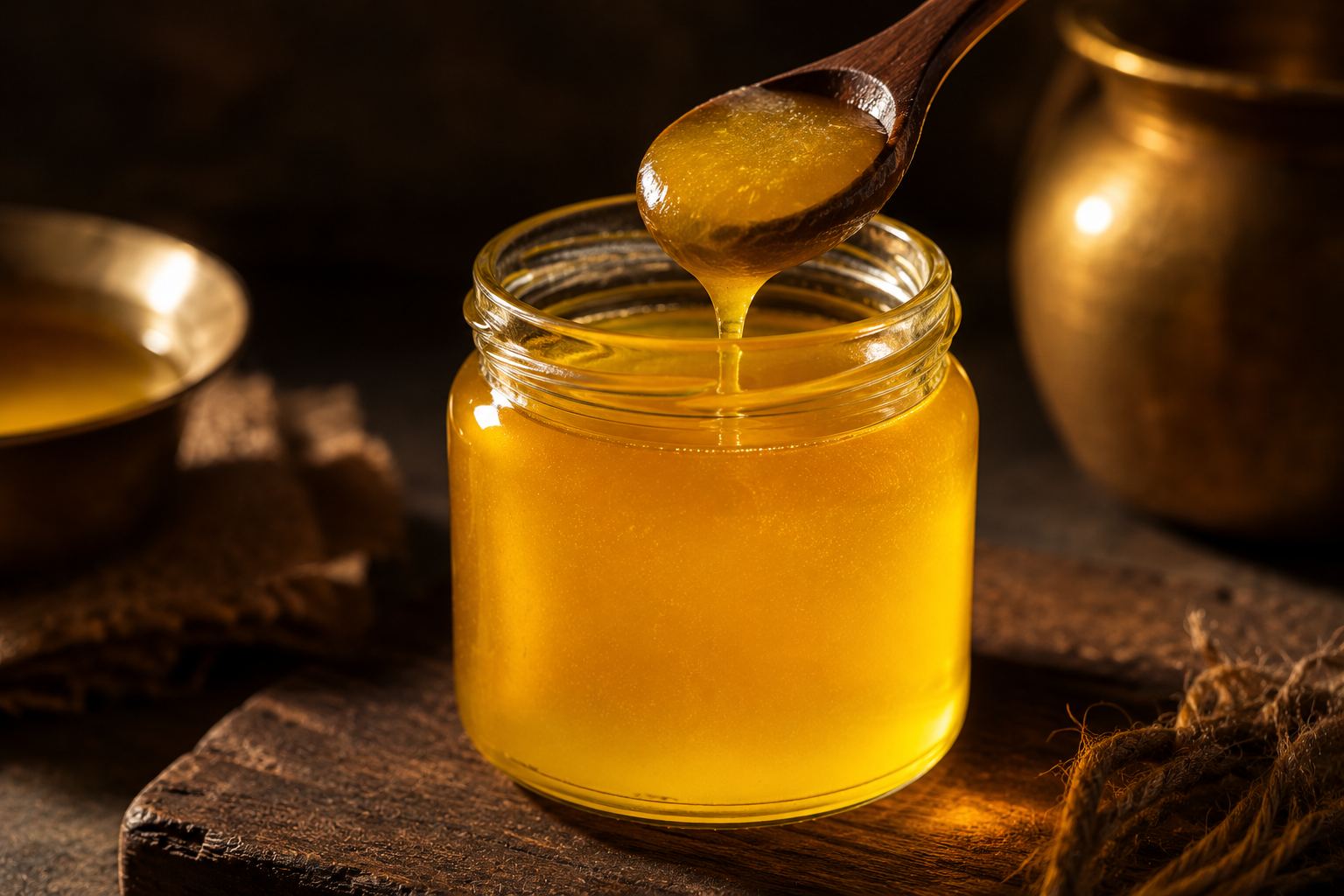
Ghee is clarified butter — butter with its milk solids and water removed, leaving only pure butterfat. The clarification process involves simmering butter until the water evaporates and the milk proteins precipitate, then straining. The result is a golden, intensely flavoured fat with a significantly higher smoke point than butter (250°C vs 175°C) and exceptional storage stability at room temperature.
In Indian culture, ghee transcends cooking — it is used in religious ceremonies (yagnas), Ayurvedic medicine, and as a marker of hospitality and celebration. A pot of homemade desi ghee is one of the most valued gifts in Indian households. The flavour of properly made ghee — nutty, sweet, with a caramelised complexity — is categorically different from commercial versions or from regular butter.
- Dal without a final drizzle of ghee is considered nutritionally and flavourally incomplete across most of India
- Biryani rice cooked in ghee has a distinctly superior aroma and texture to rice cooked in oil — the milk solids create additional Maillard complexity
- Roti and paratha served without ghee is culturally and culinarily diminished in North Indian tradition
- Ghee's 250°C smoke point makes it ideal for the high-heat applications of Indian cooking where other fats would burn
- The sacred status of ghee in Vedic tradition — used in fire ceremonies for 5,000 years — reflects a deep cultural valuation that shapes its role in Indian cooking today
Ghee Through History
Ghee appears in the Rigveda — one of the oldest texts in the world — where it is called the 'first and most essential of all foods.' Vedic fire ceremonies (yagnas) use ghee as the primary offering substance, reflecting its sacred status in Hindu tradition. The Charaka Samhita identifies ghee as the single most beneficial food in Ayurvedic medicine.
The economic importance of ghee in pre-refrigeration India was practical as well as cultural: clarified butter keeps at room temperature for months or years without spoiling, whereas regular butter ferments within days in India's heat. This preservation quality made ghee an essential pantry item long before refrigeration.
Modern nutritional science's reversal on saturated fats — moving away from the anti-fat consensus of the 1980s-90s — has rehabilitated ghee's reputation outside India, where it had been marginalised as 'unhealthy.' In Indian households, its status never wavered.
The Science of Ghee
How to Store Ghee
How to Buy Good Ghee
How to Use Ghee Correctly
- Dal finishing: drizzle 1 tsp over a finished bowl of dal — never cook dal in ghee
- Tadka: use instead of oil for superior flavour — heat until liquid (if solid), add spices
- Biryani: fry rice in ghee before adding water for better texture and flavour
- Roti/chapati: smear on hot bread immediately after cooking
- Quantity: 1 tsp per person as a dal/rice finishing fat; 2 tbsp per dish for tadka
What Ghee Pairs Well With
Dishes That Use Ghee
Where Ghee Matters Most
| North Indian Cuisine | Essential |
| South Indian Cuisine | Essential |
| Bengali Cuisine | Essential |
| Mughlai Cuisine | Essential |
| Jain Cooking | Essential |
| Sattvic Cooking | Essential |
| All Indian Cuisines | Essential |
Ghee vs Butter vs Refined Oil vs Coconut Oil
| Feature | Ghee | Butter | Refined Oil | Coconut Oil |
|---|---|---|---|---|
| Smoke point | 250°C | 175°C | 220–240°C | 177°C |
| Milk solids? | Removed | Present | N/A | N/A |
| Flavour | Rich, nutty, complex | Creamy, mild | Neutral | Coconut |
| Room temp stable? | Yes — months | No | Yes | Yes |
| Indian tradition | Ancient — sacred | Secondary | Modern | Regional — South/Kerala |
| Best for | Tadka, biryani, finishing | Baking | High-heat frying | South Indian cooking |