★★★★☆ Rajasthan
★★★★☆ Andhra Pradesh
★★★☆☆ Maharashtra
What Does Groundnut Oil Taste Like?
Groundnut Oil in Every Indian Language
| Language | Name | Pronunciation |
|---|---|---|
| English | Groundnut Oil / Peanut Oil | GROWND-nut OYL |
| Hindi | मूंगफली का तेल — Moongphali Ka Tel | MOON-fah-lee KAH TEL |
| Bengali | চিনাবাদাম তেল — Chinabaadam Tel | CHEE-nah-bah-dam TEL |
| Tamil | கடலை எண்ணெய் — Kadalai Ennai | KAH-dah-lye EN-eye |
| Telugu | వేరుసెనగ నూనె — Verusenaga Noone | veh-roo-SEH-nah-gah NOO-neh |
| Malayalam | കടല എണ്ണ — Kadala Enna | KAH-dah-lah EN-ah |
| Kannada | ಕಡಲೆ ಎಣ್ಣೆ — Kadale Enne | KAH-dah-leh EN-eh |
| Gujarati | મગફળી નું તેલ — Magfali Nu Tel | MAG-fah-lee noo TEL |
| Marathi | शेंगदाणे तेल — Shengdane Tel | SHENG-dah-neh TEL |
| Punjabi | ਮੂੰਗਫਲੀ ਤੇਲ — Moongfali Tel | MOON-fah-lee TEL |
| Urdu | مونگ پھلی کا تیل — Moongphali Ka Tel | MOON-fah-lee KAH TEL |
What Is Groundnut Oil?
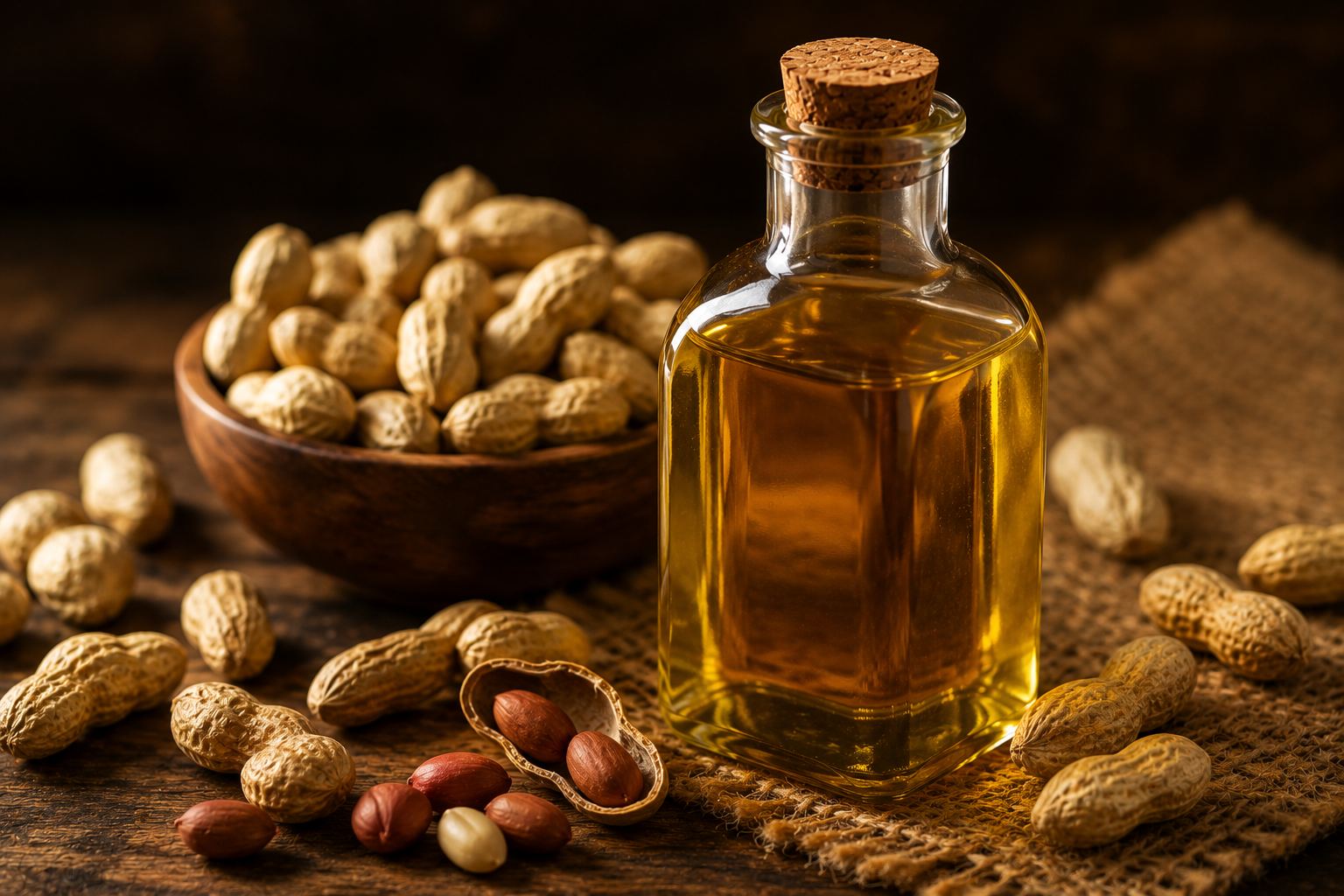
Groundnut oil — peanut oil — is pressed from peanuts (groundnuts, Arachis hypogaea). It is the primary everyday cooking oil of Gujarat, Rajasthan, and parts of Andhra Pradesh and Maharashtra. Its high smoke point (230°C for refined), neutral flavour, and affordability make it one of the most practical cooking oils for Indian high-heat cooking applications.
Two forms exist: cold-pressed (kachi ghani-style) groundnut oil with mild peanut flavour, and refined groundnut oil which is neutral. For deep frying, refined groundnut oil is considered among the best choices — it tolerates very high temperatures without smoking or developing off-flavours, and its neutral taste does not interfere with the food being fried.
- Gujarat's everyday cooking — dal, sabji, rotli — is done primarily in groundnut oil, making it integral to the state's culinary identity
- Deep frying for Indian snacks and street food across India often uses groundnut oil for its stability at high temperatures
- Andhra Pradesh is India's largest groundnut-producing state — local production drives extensive use in local cooking
- The neutral flavour of refined groundnut oil makes it a versatile cooking fat that works across all Indian regional cuisines
- Rajasthani cooking uses groundnut oil alongside ghee — important in a region where animal fats and dairy are central
Groundnut Oil Through History
Peanuts are native to South America and arrived in India via Portuguese traders in the 16th century — making them a post-Columbian crop. However, India became the world's second-largest peanut producer after China, with Andhra Pradesh, Gujarat, and Rajasthan as primary growing states. Groundnut oil rapidly became one of India's most important cooking fats after its introduction, eventually displacing some traditional oils in regions where it grew well.
The Science of Groundnut Oil
How to Store Groundnut Oil
How to Buy Good Groundnut Oil
How to Use Groundnut Oil Correctly
- Deep frying: heat refined groundnut oil to 170–180°C
- For everyday cooking: medium heat for tadka and vegetable preparation
- Can be combined 50:50 with ghee for richer flavour while maintaining stability
- Quantity: 2–3 tbsp per dish for standard cooking
- For deep frying: fill wok 1/3 to 1/2 with oil
What Groundnut Oil Pairs Well With
Dishes That Use Groundnut Oil
Where Groundnut Oil Matters Most
| Gujarati Cuisine | Essential |
| Andhra Cuisine | Essential |
| Rajasthani Cuisine | Common |
| North Indian Cuisine | Common |
| South Indian Cuisine | Common |
| Jain Cooking | Essential |
| Sattvic Cooking | Common |
Groundnut Oil vs Sunflower Oil vs Refined Coconut Oil
| Feature | Groundnut Oil | Sunflower Oil | Refined Coconut Oil |
|---|---|---|---|
| Smoke point | 230°C | 227°C | 232°C |
| Flavour | Mild nutty or neutral | Neutral | Neutral |
| Stability at heat | Good | Lower — higher PUFA | Excellent |
| Regional India | Gujarat, Andhra | General use | Kerala, South India |
| Best for | Deep frying, daily cooking | Salads, medium heat | South Indian cooking, baking |