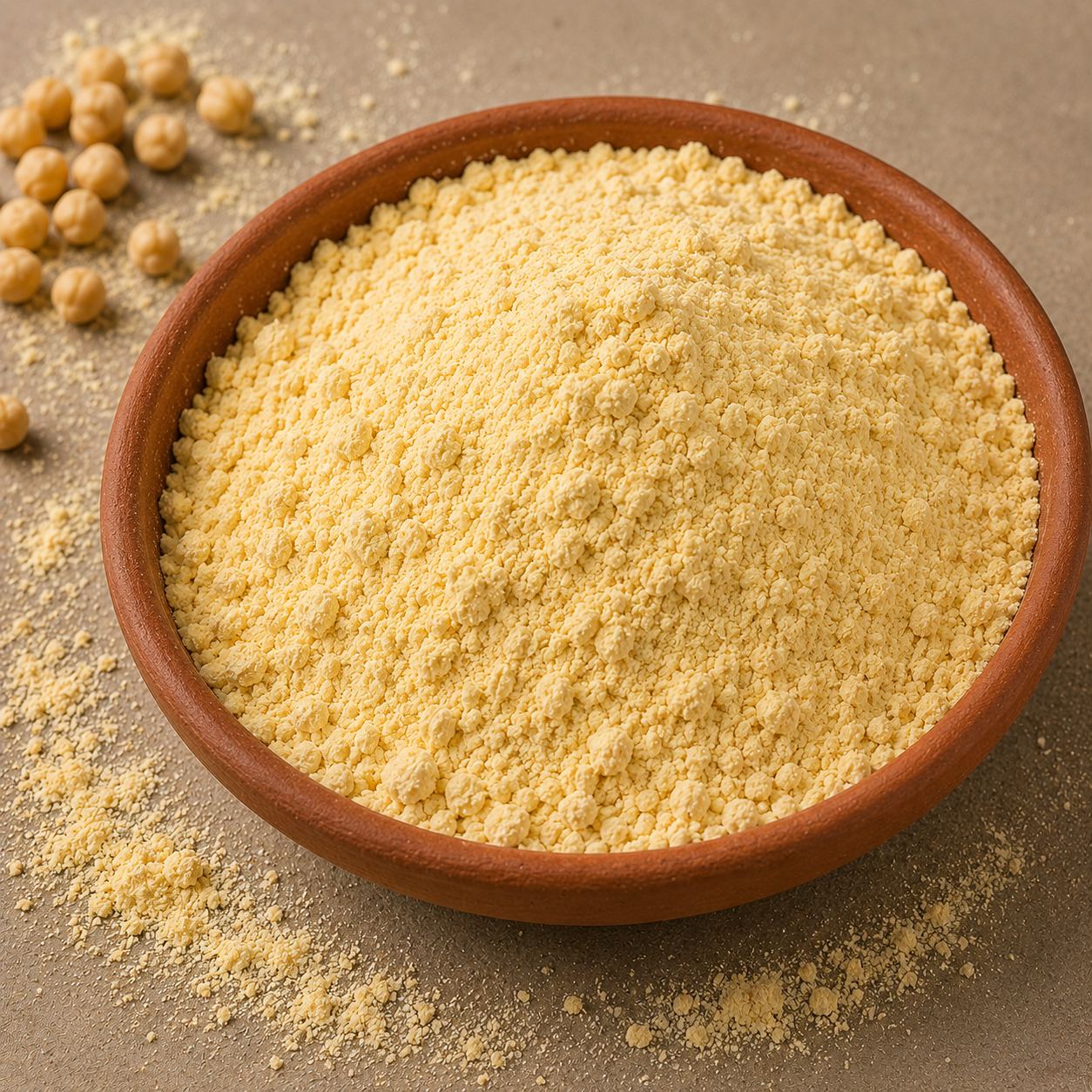
What Does Besan Taste Like?
Besan in Every Indian Language
| Language | Name | Pronunciation |
|---|---|---|
| English | Chickpea Flour | BEH-sun |
| Hindi | बेसन — Besan | BEH-sun |
| Bengali | বেসন — Besan | BEH-sun |
| Tamil | கடலை மாவு — Kadalai Maavu | kah-DAH-lye MAH-voo |
| Telugu | శెనగ పిండి — Senaga Pindi | seh-NAH-gah PIN-dee |
| Malayalam | കടല മാവ് — Kadala Maavu | kah-DAH-lah MAH-voo |
| Kannada | ಕಡಲೆ ಹಿಟ್ಟು — Kadle Hittu | KAH-dleh HIT-too |
| Gujarati | ચણાનો લોટ — Chanano Lot | CHAH-nah-no LOT |
| Marathi | डाळीचे पीठ — Daliche Pith | DAH-lee-cheh PITH |
| Punjabi | ਬੇਸਨ — Besan | BEH-sun |
| Urdu | بیسن — Besan | BEH-sun |
| Sanskrit | चणक चूर्ण — Chanaka Churna | CHAH-nah-kah CHOOR-nah |
What Is Besan?
Besan is flour ground from chana dal (desi chickpea) — yellow, gluten-free, and with a distinctly nutty, slightly earthy flavour. It is the most versatile of India's non-wheat flours, appearing in snacks (pakoda, sev, chakli), main dishes (kadhi, missi roti), sweets (besan halwa, besan ladoo), and as a binding agent.
Besan's protein content (~22g per 100g) is more than double that of wheat flour. It is gluten-free, making it essential for coeliacs and those following gluten-free diets. The flavour can be slightly bitter if uncooked — besan must be cooked adequately (until the raw, bitter note disappears) for good results.
- Kadhi — the yogurt-besan curry of North India and Gujarat — is structurally impossible without besan's binding and thickening properties
- Pakoda (fritters) depend on besan's ability to form a crisp, bubbly coating when fried in oil
- Sev and chakli (crunchy savoury snacks) are extruded and fried besan preparations — no other flour produces the same result
- Besan halwa and ladoo are Festival sweets made from besan toasted in ghee — one of the most distinctive Indian dessert flavours
- As a gluten-free protein source at 22g/100g, besan has no equivalent among common Indian flours
Besan Through History
Chickpea flour has been made in India for at least 4,000 years — wherever chana dal was grown, the flour was ground for immediate use. Ground chickpea flour appears in ancient Vedic texts and medieval Indian cooking documents. It has been used continuously across every region of India throughout recorded history.
The Science of Besan
How to Store Besan
How to Buy Good Besan
How to Use Besan Correctly
- For pakoda batter: 1 cup besan + spices + water to thick batter consistency
- For kadhi: whisk 3 tbsp besan with 2 cups yogurt until smooth before adding to water
- For halwa: cook in ghee on medium heat until fragrant and golden — do not rush
- For ladoo: cook besan in ghee 20–25 minutes until dark golden and very fragrant
- Rest batter 10 minutes after mixing for better pakoda results
What Besan Pairs Well With
Dishes That Use Besan
Where Besan Matters Most
| All Indian Cuisines | Essential |
| Jain Cooking | Essential |
| Sattvic Cooking | Essential |
| Gluten-Free Cooking | Essential |
Besan vs Atta vs Maida
| Feature | Besan | Atta | Maida |
|---|---|---|---|
| Source | Chickpea (desi) | Whole wheat | Refined wheat |
| Protein | ~22g/100g (highest) | ~13g/100g | ~10g/100g |
| Gluten | None | Yes | Yes (high) |
| Flavour | Nutty, earthy | Mild wheat | Neutral |
| For pakoda? | Yes — essential | No | Sometimes blended |
| GI | ~44 | ~57 | ~71 |