★★★★★ All India
What Does Atta Taste Like?
Atta in Every Indian Language
| Language | Name | Pronunciation |
|---|---|---|
| English | Whole Wheat Flour | AH-tah |
| Hindi | आटा — Atta | AH-tah |
| Bengali | গমের আটা — Gomer Ata | GOH-mer AH-tah |
| Tamil | கோதுமை மாவு — Godumai Maavu | goh-DOO-mye MAH-voo |
| Telugu | గోధుమ పిండి — Godhuma Pindi | goh-DOO-mah PIN-dee |
| Malayalam | ഗോതമ്പ് പൊടി — Gothambu Podi | goh-THAM-boo POH-dee |
| Kannada | ಗೋಧಿ ಹಿಟ್ಟು — Godhi Hittu | GOH-dee HIT-too |
| Gujarati | ઘઉં નો લોટ — Ghau No Lot | GHOW noh LOT |
| Marathi | गव्हाचे पीठ — Gavhache Pith | GAV-hah-cheh PITH |
| Punjabi | ਆਟਾ — Atta | AH-tah |
| Urdu | آٹا — Atta | AH-tah |
| Sanskrit | गोधूम — Godhuma | goh-DHOO-mah |
What Is Atta?
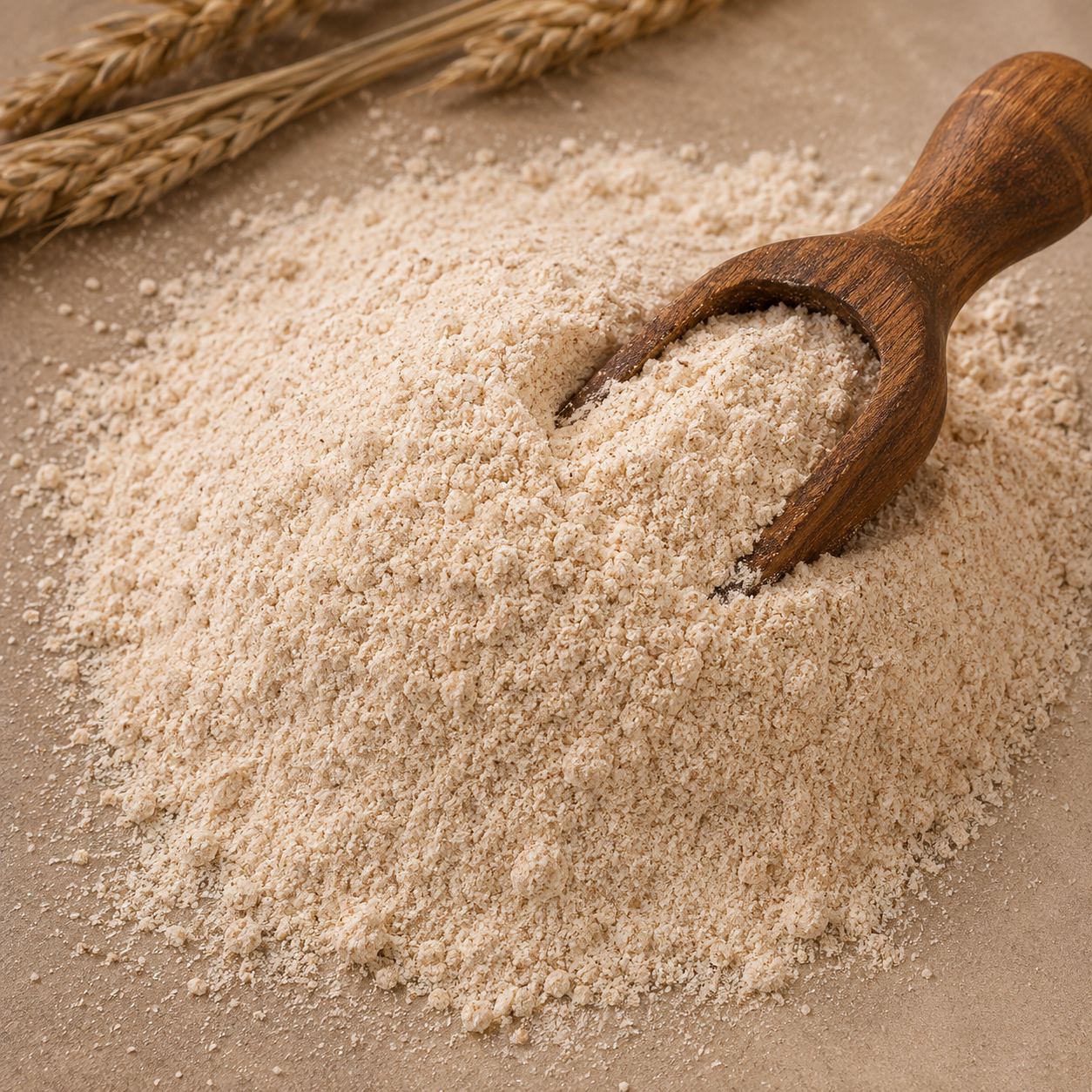
Atta is stone-ground whole wheat flour — the flour of India's flatbread tradition. Unlike Western whole wheat flour, which is typically roller-milled and often has the bran added back after milling, Indian chakki atta is traditionally ground whole in a stone mill (chakki), preserving the bran, germ, and endosperm together with a specific particle size and texture.
This difference matters for chapati making: the stone-ground flour produces a pliable dough that rolls easily and puffs on the tawa, while Western whole wheat flour makes stiffer dough that doesn't behave the same way. When substituting atta in recipes, use Indian atta rather than Western whole wheat flour.
- Chapati, paratha, and roti — the daily bread of hundreds of millions of Indians — are exclusively made from atta
- The flatbread tradition requires atta's specific gluten structure and particle size — maida produces a different bread
- Atta's bran content provides significantly more fibre than maida — important nutritional distinction in Indian diet
- Chakki-ground atta's superior flavour is the reason traditional stone-ground flour has never been displaced in home cooking
Atta Through History
Wheat has been cultivated in India since the Indus Valley Civilisation, with evidence from Harappan sites. The flatbread tradition — making unleavened bread on a hot griddle — is ancient, predating leavening technology. The chakki (stone mill) is one of India's most ancient food-processing technologies, referenced in Sanskrit texts and present in every Indian home for thousands of years.
The Science of Atta
How to Store Atta
How to Buy Good Atta
How to Use Atta Correctly
- Sift before use for lighter chapati
- Mix dough with warm water — 1 cup water per 2 cups atta approximately
- Rest dough 20–30 minutes before rolling
- For chapati: roll thin (2mm), cook on dry tawa, finish directly on flame
- For paratha: stuff, roll, cook in ghee
- Water temperature affects elasticity — warmer water for more pliable dough
What Atta Pairs Well With
Dishes That Use Atta
Where Atta Matters Most
| All Indian Cuisines | Essential |
| Jain Cooking | Essential |
| Sattvic Cooking | Essential |
Atta vs Maida vs Semolina
| Feature | Atta | Maida | Sooji/Rava |
|---|---|---|---|
| Wheat part | Whole grain | Endosperm only | Coarse endosperm |
| Gluten | High | Very high | Moderate |
| Fibre | High | Very low | Low |
| Texture | Medium-fine | Very fine | Coarse |
| For chapati? | Yes — essential | No | No |
| Glycemic Index | ~57 | ~71 | ~66 |