Ingredient identity
Ingredient DNA
Maida — Refined Wheat Flour
Triticum aestivum (refined) · Family: Poaceae / Fabaceae · Genus: Triticum
Origin
South Asia / Middle East
Form
Fine to coarse powder
Primary Use
Naan · Kulcha · Bhatura · Baked goods · Halwa
Taste profile
What Does Maida Taste Like?
Botanical classification
Species
Triticum aestivum (refined)
Names across India
Maida in Every Indian Language
| Language | Name | Pronunciation |
|---|
| English | Refined Wheat Flour / All-Purpose Flour | |
| Hindi | Maida | |
| Tamil | மைதா மாவு — Maida Maavu | |
| Telugu | మైదా పిండి — Maida Pindi | |
| Malayalam | മൈദ — Maida | |
| Kannada | ಮೈದಾ ಹಿಟ್ಟು — Maida Hittu | |
| Gujarati | Maida | |
| Marathi | Maida | |
| Punjabi | Maida | |
Origin and identity
What Is Maida?
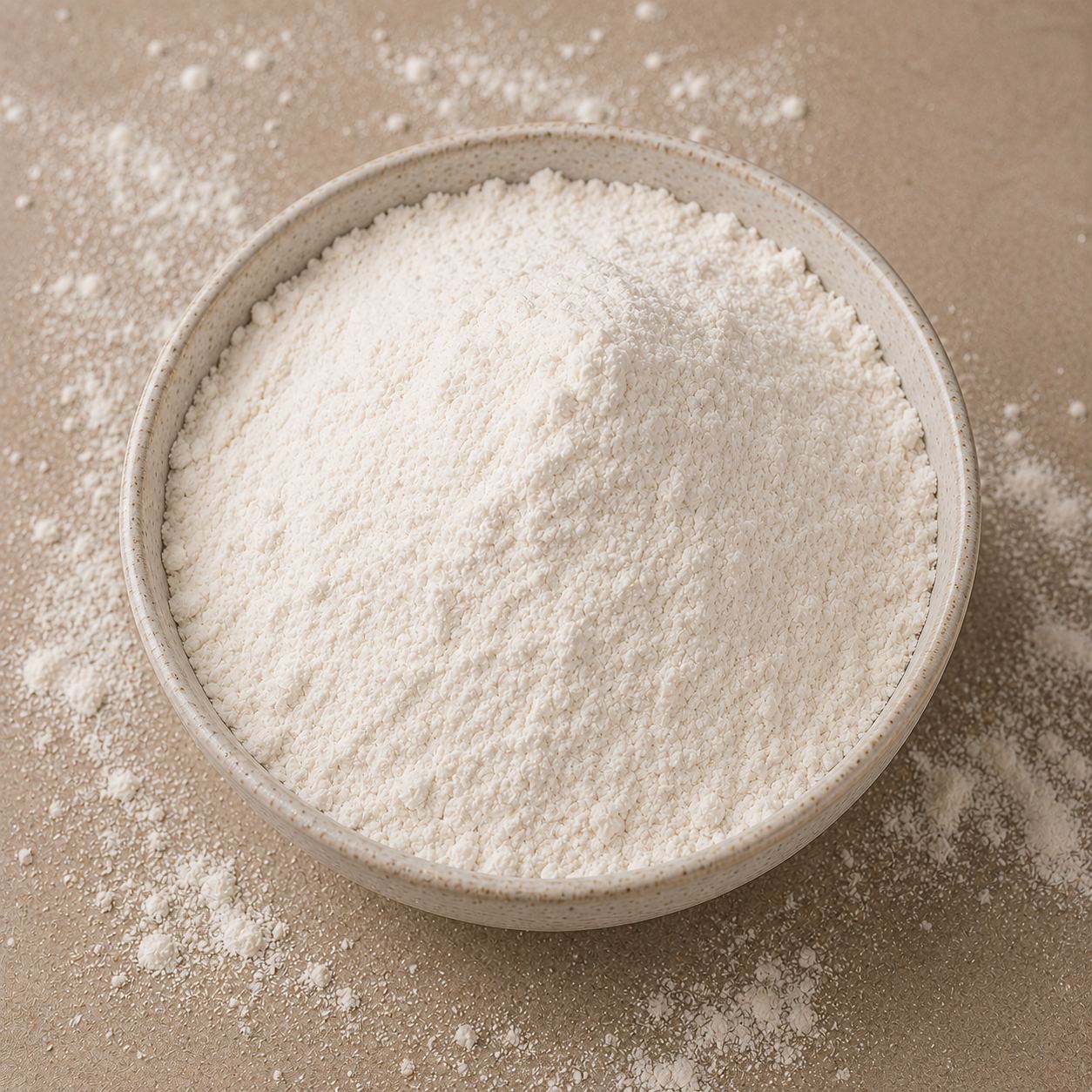
Maida is refined wheat flour — the endosperm of the wheat grain only, with bran and germ removed. Very white, very fine, very high in gluten. The same processing that makes it soft and workable also strips it of fibre, B vitamins, and minerals.
It is essential for certain Indian preparations that need its high gluten and smooth texture: naan, kulcha, bhatura, khari biscuit, cake, and bread. But it is nutritionally inferior to atta, and its very high glycemic index (71) makes it problematic as a daily staple.
What Indian Cooking Loses Without Maida
- Naan and bhatura require maida's specific gluten structure — atta dough cannot produce the same risen, chewy result
- Puff pastry, khari biscuit, and Indian bakery products use maida for the same reason Western baking uses all-purpose flour
- Without maida, the entire Indian bakery and street food industry would lose its structural flour
- The distinction between maida and atta is fundamental to understanding Indian bread hierarchy
Historical significance
Maida Through History
Historical Record
Refining Wheat — An Industrial Development
Refined wheat flour (maida) arrived in India with British colonial mills in the 19th century. Traditional Indian bread was entirely atta-based — chapati, paratha, roti — and the concept of refined white flour was a colonial introduction. Indian bakeries established during the colonial period adopted maida as their primary flour, creating the Indian bread, biscuit, and cake tradition.
Cooking science
The Science of Maida
High Gluten, No Fibre — The Trade-Off
Maida's refining process removes the bran (which contains fibre and B vitamins) and the germ (which contains vitamin E and essential fatty acids). What remains is almost pure starch and protein (gluten). The very high gluten content (approximately 11g per 100g) is what makes maida ideal for leavened breads and pastry — but the loss of fibre means blood glucose spikes rapidly after consumption.
Storage science
How to Store Maida
Airtight container
Up to 1 year
Key note
Store away from moisture — flour absorbs humidity quickly
Buying guide
How to Buy Good Maida
✓ Look For
- Fresh milling date where possible
- No rancid or musty smell
- Fine, uniform powder
- From reputable mills
✗ Avoid
- Old, rancid smell
- Lumpy or clumped flour
- No milling date
- Adulterated with other flour
Technique
How to Use Maida Correctly
Technique, quantity, and what to avoid
- Store in airtight container
- Use within 3–6 months of milling
- Sieve before use for smoother dough
- Rest dough 15–30 minutes after mixing for better texture
Pairings
What Maida Pairs Well With
Famous dishes
Dishes That Use Maida
Regional use
Where Maida Matters Most
Regional Importance
★★★★★
All India
Universal flour
★★★★★
North India
Primary wheat flour use
★★★★★
South India
Rice and millet flours
★★★★☆
Rural India
Traditional millet flours
| All Indian Cuisines | Essential |
| Jain Cooking | Essential |
| Sattvic Cooking | Essential |
Comparison
Maida vs Other Indian Flours
| Feature | Maida | Maida (Refined) | Besan (Chickpea) |
|---|
| Gluten | Yes (if wheat) | Yes | None |
| Fibre | High (whole wheat) | Low | High |
| Primary use | Naan · Kulcha · Bhatura · Baked goods · Halwa | Baking, maida items | Pakoda, kadhi |
| Protein | 12–14g/100g | 10g/100g | 22g/100g |
Nutrition
Nutrition and Key Compounds
Maida — Honest Nutritional Picture
Culinary quantities — aromatic and flavour contribution, not macro nutrition
Maida (dry): ~10g protein, 73g carbohydrate, 3g fibre per 100g. GI ~71 — high. Significantly less nutritious than atta. Very high gluten makes it useful for specific preparations but inappropriate as a daily staple flour.
Substitutions
Substitutes for Maida
What Works and What Does Not
Other flours in 25% blend
Most Indian flours can be combined without dramatic effect on most preparations.
For traditional preparations
Each flour's specific properties are required for traditional dishes.
Chef's notes
Practical Insight
From the Kitchen
Use maida for its intended applications — leavened breads, pastry, biscuits — and atta for flatbreads. Partially substituting atta for up to 30% of maida in most recipes works without dramatic texture change while improving the nutritional profile.