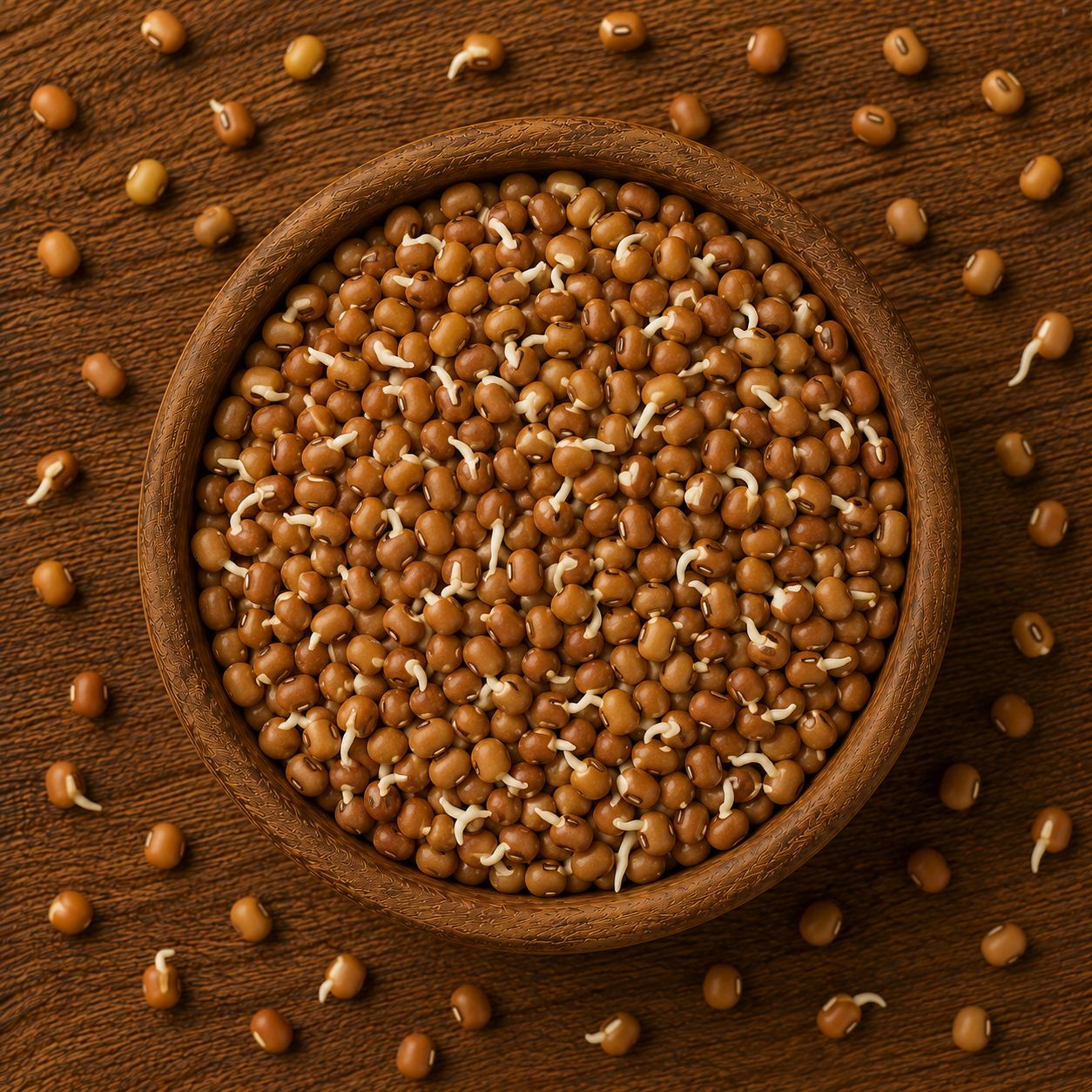
What Does Moth Beans Taste Like?
Moth Beans in Every Indian Language
| Language | Name | Pronunciation |
|---|---|---|
| English | Moth Bean | MOTH BEEN |
| Hindi | मोठ — Moth | MOTH |
| Bengali | মাঠ বীন | MATH BEEN |
| Tamil | மொத்த பீன்ஸ் | MOTH |
| Telugu | మోత్ బీన్ | MOTH |
| Malayalam | മോത്ത് ബീൻ | MOTH |
| Kannada | ಮಠ ಬೀನ್ | MATH |
| Gujarati | મઠ — Math | MATH |
| Marathi | मटकी — Matki | MAT-kee |
| Punjabi | ਮੋਠ — Moth | MOTH |
| Urdu | موٹھ — Moth | MOTH |
| Sanskrit | मकुष्ठ — Makushtha | mah-KOOSH-thah |
What Is Moth Beans?
Moth beans — matki in Marathi — are small brown legumes native to India and among the most drought-resistant crops in the country. They grow in the arid regions of Rajasthan, Gujarat, and Maharashtra where other legumes struggle.
In Maharashtra, matki is the foundation of Misal Pav — one of Maharashtra's most beloved street foods, where sprouted moth beans form the base of a spiced curry served with bread rolls. Sprouting significantly improves nutritional profile and digestibility.
- Misal Pav — Maharashtra's iconic street food — is built on matki
- Sprouting tradition makes matki one of India's most nutritionally dynamic legumes
- Drought resistance makes it crucial for food security in Rajasthan and Gujarat
- Sprouted matki is one of India's most practiced health food traditions
Moth Beans Through History
Moth bean is native to the Thar Desert region, where it evolved to tolerate extreme heat and drought. Archaeological evidence suggests cultivation for at least 3,000 years. One of the few legumes that genuinely thrives in conditions that would kill other food crops.
The Science of Moth Beans
How to Store Moth Beans
How to Buy Good Moth Beans
How to Use Moth Beans Correctly
- Soak overnight for cooking as dal
- For sprouting: soak 8 hours, drain, sprout 24–36 hours
- For Misal: sprout then cook in spiced curry
- Pressure cook (soaked): 8–10 minutes
- 1/2 cup dry per 2 servings
What Moth Beans Pairs Well With
Dishes That Use Moth Beans
Where Moth Beans Matters Most
| Maharashtrian Cuisine | Essential |
| Rajasthani Cuisine | Essential |
| Gujarati Cuisine | Common |
| North Indian Cuisine | Common |
| Jain Cooking | Essential |
| Sattvic Cooking | Essential |
Moth Beans vs Whole Moong vs Kala Chana
| Feature | Moth Beans | Whole Moong | Kala Chana |
|---|---|---|---|
| Origin | India — desert crop | South Asia | Middle East/South Asia |
| For sprouting? | Yes — Misal standard | Yes — most common | Yes |
| Misal Pav? | Yes — standard | Not traditional | No |
| Drought tolerance | Extremely high | Moderate | Moderate |