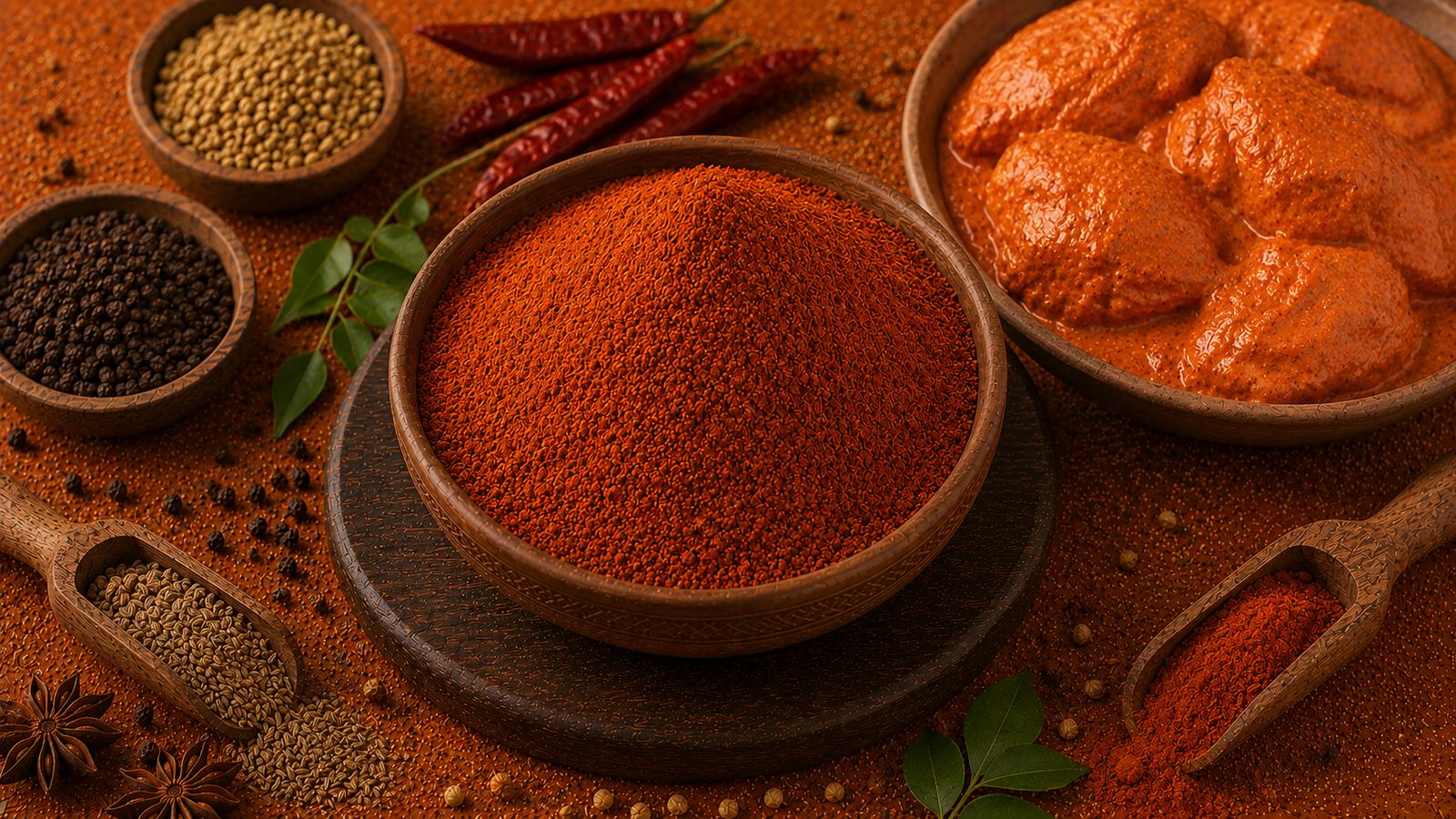
What Does Tandoori Masala Taste Like?
Tandoori Masala in Every Indian Language
| Language | Name | Pronunciation |
|---|---|---|
| English | Tandoori Masala | tan-DOO-ree |
| Hindi | तंदूरी मसाला | tan-DOO-ree Mah-sah-lah |
| Bengali | তন্দুরি মশলা | tan-DOO-ree Moh-sha-lah |
| Tamil | தந்தூரி மசாலா | tan-DOO-ree Mah-sah-lah |
| Telugu | తందూరి మసాలా | tan-DOO-ree Mah-sah-lah |
| Malayalam | തന്ദൂരി മസാല | tan-DOO-ree Mah-sah-lah |
| Kannada | ತಂದೂರಿ ಮಸಾಲ | tan-DOO-ree Mah-sah-lah |
| Gujarati | તંદૂરી મસાલો | tan-DOO-ree Mah-sah-lo |
| Marathi | तंदूरी मसाला | tan-DOO-ree Mah-sah-lah |
| Punjabi | ਤੰਦੂਰੀ ਮਸਾਲਾ | tan-DOO-ree Mah-sah-lah |
| Urdu | تندوری مسالہ | tan-DOO-ree Mah-sah-lah |
What Is Tandoori Masala?
Tandoori masala is the ground spice blend used to make tandoori marinades — the vivid red, spiced yogurt coatings applied to chicken, paneer, vegetables, and seafood before cooking in a tandoor clay oven or over very high heat. The blend is designed to work with yogurt: the dairy proteins form a protective coating around the spices, preventing burning at the extremely high temperatures (400°C+) of a tandoor, while the acid in the yogurt tenderises protein.
The characteristic deep red colour of tandoori preparations comes from Kashmiri red chilli — mild in heat but vivid in colour. Without Kashmiri chilli, tandoori preparations lack their signature colour. Commercial tandoori masalas sometimes add artificial colour (red food colouring), which is why homemade or quality commercial versions are significantly better.
- Tandoori chicken — arguably India's most famous dish internationally — exists entirely because of this spice blend and technique
- The yogurt-spice marinade system enables cooking at extremely high temperatures without burning the spices — a technique enabling the charred, smoky exterior of authentic tandoori
- Paneer tikka, seekh kebab, and most North Indian grilled foods use this blend as the foundation
- Without the Kashmiri chilli component, tandoori food would be pale and visually unappealing
- The tandoori tradition defines Punjab's food identity and India's most recognisable restaurant cooking style
Tandoori Masala Through History
The tandoor clay oven has been used in the Punjab and Northwest India for at least 5,000 years — archaeological evidence of tandoor-like ovens has been found at Indus Valley Civilisation sites. The spice marinade tradition developed alongside the oven — high-heat cooking requires protective coatings to prevent burning, and yogurt-spice marinades evolved as the solution.
The specific modern form of tandoori masala — with its emphasis on Kashmiri red chilli for colour — was popularised and commercialised from the mid-20th century, particularly through Delhi restaurant culture. The restaurant Moti Mahal in Delhi is credited with popularising tandoori chicken in its modern form in the 1950s.
The Science of Tandoori Masala
How to Store Tandoori Masala
How to Buy Good Tandoori Masala
How to Use Tandoori Masala Correctly
- Mix 2 tbsp per 500g protein with 4 tbsp yogurt, ginger-garlic paste, salt, and lemon juice
- Marinate minimum 4 hours, overnight for maximum penetration
- Bring to room temperature before cooking
- Grill, roast, or cook in very hot oven (220°C+) — needs high heat for char
- For home ovens: use the grill/broiler for the final 5 minutes to create charred spots
What Tandoori Masala Pairs Well With
Dishes That Use Tandoori Masala
Where Tandoori Masala Matters Most
| North Indian Cuisine | Essential |
| Punjabi Cuisine | Essential |
| Restaurant Indian | Essential |
| Mughlai Cuisine | Common |
| South Indian Cuisine | Common |
| Jain Cooking | Common |
Tandoori Masala vs Tikka Masala vs Kebab Masala
| Feature | Tandoori Masala | Tikka Masala (sauce) | Kebab Masala |
|---|---|---|---|
| Used for | Marinade before cooking | Sauce after cooking | Incorporated into mince |
| Technique | Coat + grill/tandoor | Add to cream-tomato sauce | Mix into meat |
| Colour source | Kashmiri red chilli | Tomato + chilli | Red chilli + paprika |
| Yogurt? | Yes — essential | No — different preparation | Sometimes |
| International? | Very well known | Most famous Indian dish globally | Less known internationally |