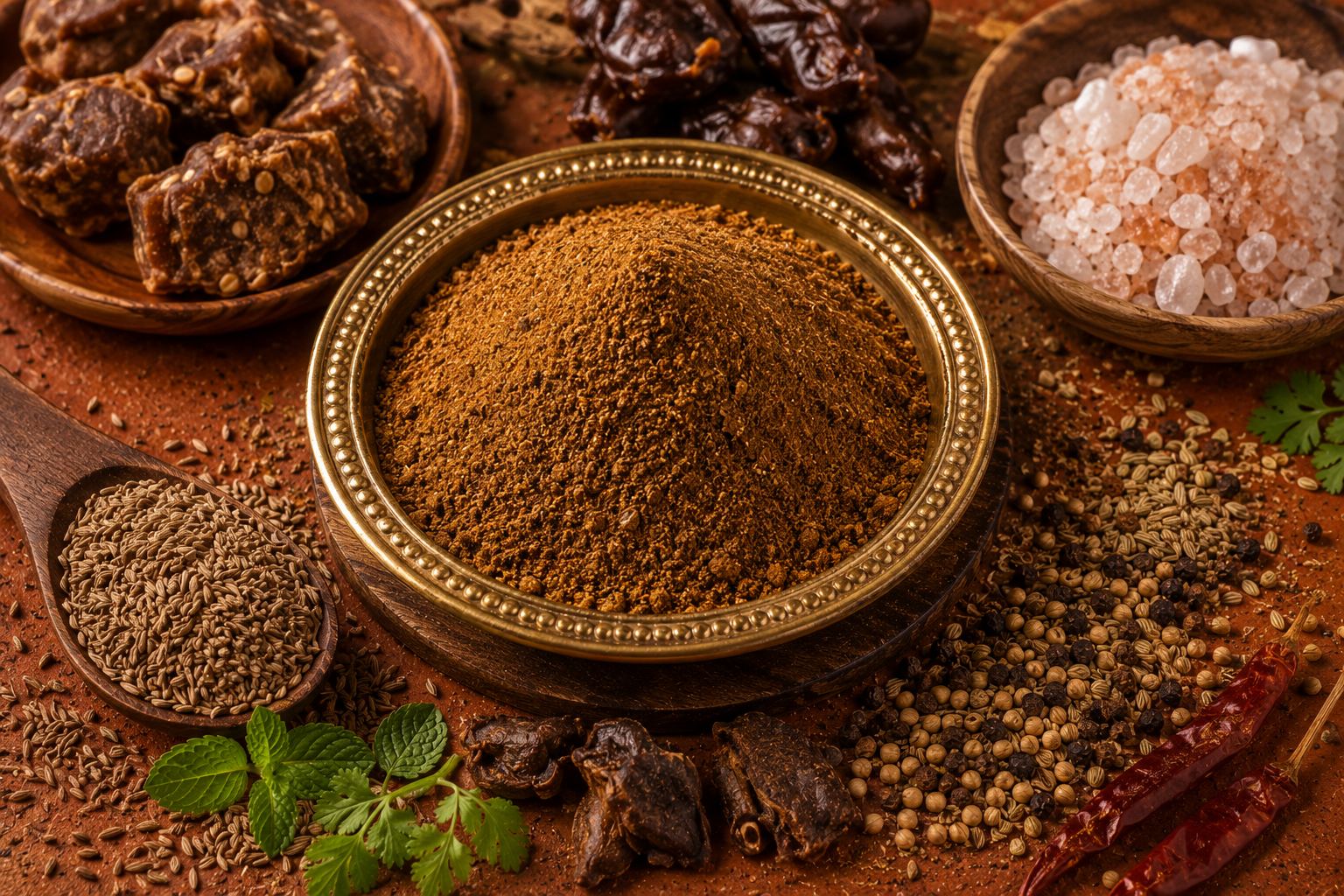
What Does Chaat Masala Taste Like?
Chaat Masala in Every Indian Language
| Language | Name | Pronunciation |
|---|---|---|
| English | Chaat Masala | CHAAT Mah-sah-lah |
| Hindi | चाट मसाला | CHAAT Mah-sah-lah |
| Bengali | চাট মশলা | CHAAT Moh-sha-lah |
| Tamil | சாட் மசாலா | CHAAT Mah-sah-lah |
| Telugu | చాట్ మసాలా | CHAAT Mah-sah-lah |
| Malayalam | ചാറ്റ് മസാല | CHAAT Mah-sah-lah |
| Kannada | ಚಾಟ್ ಮಸಾಲ | CHAAT Mah-sah-lah |
| Gujarati | ચાટ મસાલો | CHAAT Mah-sah-lo |
| Marathi | चाट मसाला | CHAAT Mah-sah-lah |
| Punjabi | ਚਾਟ ਮਸਾਲਾ | CHAAT Mah-sah-lah |
| Urdu | چاٹ مسالہ | CHAAT Mah-sah-lah |
What Is Chaat Masala?
Chaat masala is the tangy, sour-savoury ground spice blend that is the flavour signature of Indian street food. Its defining character comes from two ingredients that appear in almost no other Indian spice blend: kala namak (black salt, providing an eggy-sulphurous savouriness) and amchur (dried mango powder, providing sharp tanginess). Combined with roasted cumin, coriander, black pepper, and dried mint, chaat masala produces a flavour profile that is simultaneously sour, savoury, warm, and sharp — and completely unlike anything else in Indian cooking.
Chaat masala is never cooked — it is always added raw at the end of preparation or sprinkled at the table. Heat destroys the sulphur compounds in kala namak and softens the sharp tang of amchur, removing the defining characteristics of the blend.
- Pani puri water (the spiced liquid in which puris are dunked) is impossible without chaat masala — it is the tangy-sour character that defines the experience
- Bhel puri, sev puri, and all chaat preparations use chaat masala as the final unifying seasoning
- Fruit salads and raitas in North India are seasoned with chaat masala rather than plain salt — transforming them into something more complex
- Chaat masala in a glass of water with lime creates jaljeera — one of India's most refreshing street drinks
- Without chaat masala, the entire chaat tradition would taste flat, one-dimensional, and incomplete
Chaat Masala Through History
Chaat as a food category has ancient origins in North India, with some historical accounts suggesting it developed in the Mughal-era bazaars of Delhi and Agra. The spice blend that defines it — combining sour, savoury, and warm in a single powder — evolved from the Ayurvedic practice of using digestive spices alongside fried foods.
The specific combination of kala namak and amchur in chaat masala is relatively modern — industrialised production from the late 20th century standardised what had previously been a blend every vendor made to their own proportions. Commercial chaat masala (MDH and Everest are the best-known Indian brands) has become a pantry staple across India and the Indian diaspora worldwide.
The Science of Chaat Masala
How to Store Chaat Masala
How to Buy Good Chaat Masala
How to Use Chaat Masala Correctly
- Sprinkle over finished chaat just before serving
- For fruit salad: 1/4 tsp over a bowl for 2 people
- For drinks: a pinch in water with lime makes jaljeera
- For raita: replace half the regular salt with chaat masala
- Never add to hot cooking — always raw, always at end
- Quantity: very small — 1/4 to 1/2 tsp per serving
What Chaat Masala Pairs Well With
Dishes That Use Chaat Masala
Where Chaat Masala Matters Most
| North Indian Cuisine | Essential |
| Street Food Tradition | Essential |
| Gujarati Cuisine | Common |
| Bengali Cuisine | Common |
| South Indian Cuisine | Common |
| Jain Cooking | Common |
Chaat Masala vs Garam Masala vs Amchur
| Feature | Chaat Masala | Garam Masala | Amchur (Plain) |
|---|---|---|---|
| Character | Tangy, sour, savoury | Warm, aromatic | Sour, sharp |
| Key compounds | Kala namak + amchur | Volatile aromatics | Citric acid |
| When added | Always raw — end | End of cooking | During or end |
| Used in cooking? | No — table/finishing | Yes — during cooking | Yes |
| Heat stable? | No — destroys character | No — add late | Partially |