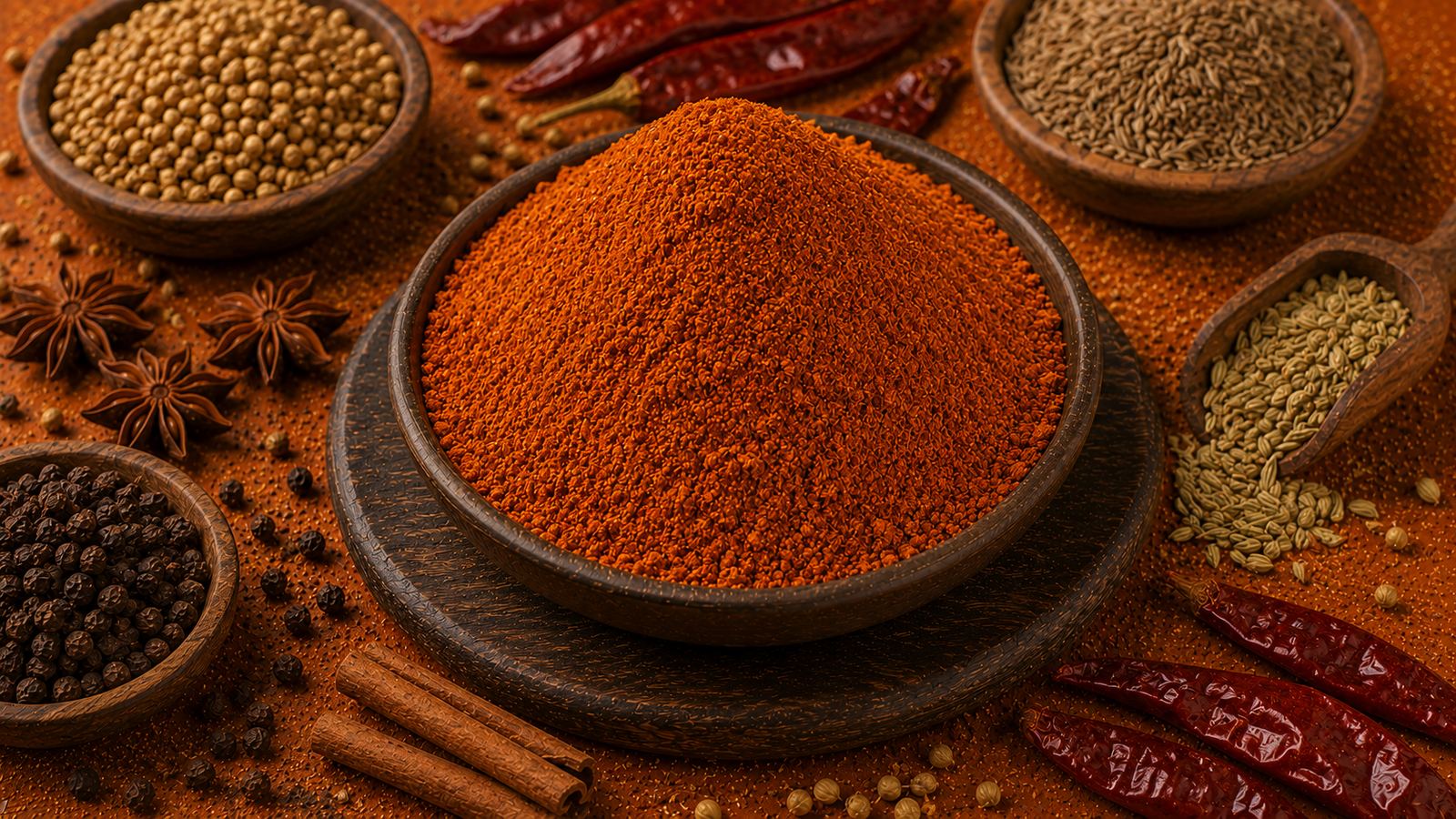
What Does Pav Bhaji Masala Taste Like?
Pav Bhaji Masala in Every Indian Language
| Language | Name | Pronunciation |
|---|---|---|
| English | Pav Bhaji Masala | PAHV BAH-jee |
| Hindi | पाव भाजी मसाला | PAHV BAH-jee Mah-sah-lah |
| Bengali | পাও ভাজি মশলা | POW BAH-jee |
| Tamil | பாவ் பாஜி மசாலா | PAHV BAH-jee |
| Telugu | పావ్ భాజీ మసాలా | PAHV BAH-jee |
| Malayalam | പാവ് ഭാജി മസാല | PAHV BAH-jee |
| Kannada | ಪಾವ್ ಭಾಜಿ ಮಸಾಲ | PAHV BAH-jee |
| Gujarati | પાવ ભાજી મસાલો | PAHV BAH-jee |
| Marathi | पाव भाजी मसाला | PAHV BAH-jee Mah-sah-lah |
What Is Pav Bhaji Masala?
Pav bhaji masala is a ground spice blend developed specifically for pav bhaji — Mumbai's iconic street food of mashed mixed vegetables cooked with butter and served with soft white bread rolls (pav). It is not a general-purpose masala — it is engineered for this specific dish, with a composition that complements the butter, the mashed texture, and the vegetable base.
The blend includes a higher proportion of dried mango powder (amchur) than most masalas, giving it a slight tanginess that brightens the rich buttery vegetable base. Fennel seeds ground into the blend add a mild sweetness characteristic of the Mumbai street food version. Black salt (kala namak) provides the distinctive savoury depth.
- Pav bhaji without pav bhaji masala is technically possible but produces a generic masala vegetable dish rather than the specific Mumbai street food experience
- The blend is calibrated for butter — its composition works with dairy fat in a specific way that generic garam masala does not
- The slight tanginess from amchur in the blend is what gives pav bhaji its characteristic lip-smacking quality
- Mumbai's food culture defines this dish as a specific preparation requiring its specific blend — not an improvisation
- The popularity of pav bhaji as Mumbai's most beloved street food has made pav bhaji masala one of India's most commercially successful spice blends
Pav Bhaji Masala Through History
Pav bhaji was created in Mumbai in the 1850s, reportedly as a quick meal for textile mill workers — a way to use leftover vegetables quickly. The spice blend evolved from the Maharashtrian spice tradition combined with Portuguese-influenced bread-eating culture (pav comes from Portuguese pão, meaning bread). The mashed, buttery preparation became so popular that it moved from mill worker food to iconic street food across all of Mumbai.
The Science of Pav Bhaji Masala
How to Store Pav Bhaji Masala
How to Buy Good Pav Bhaji Masala
How to Use Pav Bhaji Masala Correctly
- Add 1.5–2 tbsp per serving of 4 during the bhaji cooking after onion-tomato base is ready
- Cook the masala in butter for 2 minutes before adding the mashed vegetables
- Always use with butter — the blend is calibrated for dairy fat
- Finish with an additional 1/2 tsp sprinkled over the finished bhaji
- A knob of butter added just before serving is non-negotiable
What Pav Bhaji Masala Pairs Well With
Dishes That Use Pav Bhaji Masala
Where Pav Bhaji Masala Matters Most
| Maharashtrian Cuisine | Essential |
| Mumbai Street Food | Essential |
| North Indian Cuisine | Common |
| Jain Cooking | Common |
Pav Bhaji Masala vs Garam Masala vs Chaat Masala
| Feature | Pav Bhaji Masala | Garam Masala | Chaat Masala |
|---|---|---|---|
| Purpose | Specific — for pav bhaji | General finishing | Street food finishing |
| Tanginess | Yes — amchur included | No | Yes — primary character |
| With butter? | Designed for butter | Any fat | Raw — no fat |
| Interchangeable? | No | No | No |