★★★★☆ Chettinad
★★★☆☆ Kerala
What Does White Pepper Taste Like?
White Pepper in Every Indian Language
| Language | Name | Pronunciation |
|---|---|---|
| English | White Pepper | WHYTE PEP-er |
| Hindi | सफेद मिर्च — Safed Mirch | SAH-fed MIRCH |
| Bengali | সাদা গোলমরিচ — Sada Golmorich | SAH-dah Gol-MOH-rich |
| Tamil | வெள்ள மிளகு — Vella Milagu | VEL-lah MIH-lah-goo |
| Telugu | తెల్ల మిరియాలు — Tella Miriyalu | TEL-lah MIH-ree-yah-loo |
| Malayalam | വെള്ള കുരുമുളക് — Vella Kurumulaku | VEL-lah Koo-roo-moo-LAH-koo |
| Kannada | ಬಿಳಿ ಮೆಣಸು — Bili Menasu | BIH-lee MEH-nah-soo |
| Gujarati | સફેદ મરી — Safed Mari | SAH-fed MAH-ree |
| Marathi | पांढरी मिरी — Pandhri Miri | PAN-dhree MEE-ree |
| Punjabi | ਸਫੇਦ ਮਿਰਚ — Safed Mirch | SAH-fed MIRCH |
| Urdu | سفید مرچ — Safed Mirch | SAH-fed MIRCH |
| Sanskrit | सित मरीच — Sita Marica | SEE-tah MAH-ree-chah |
What Is White Pepper?
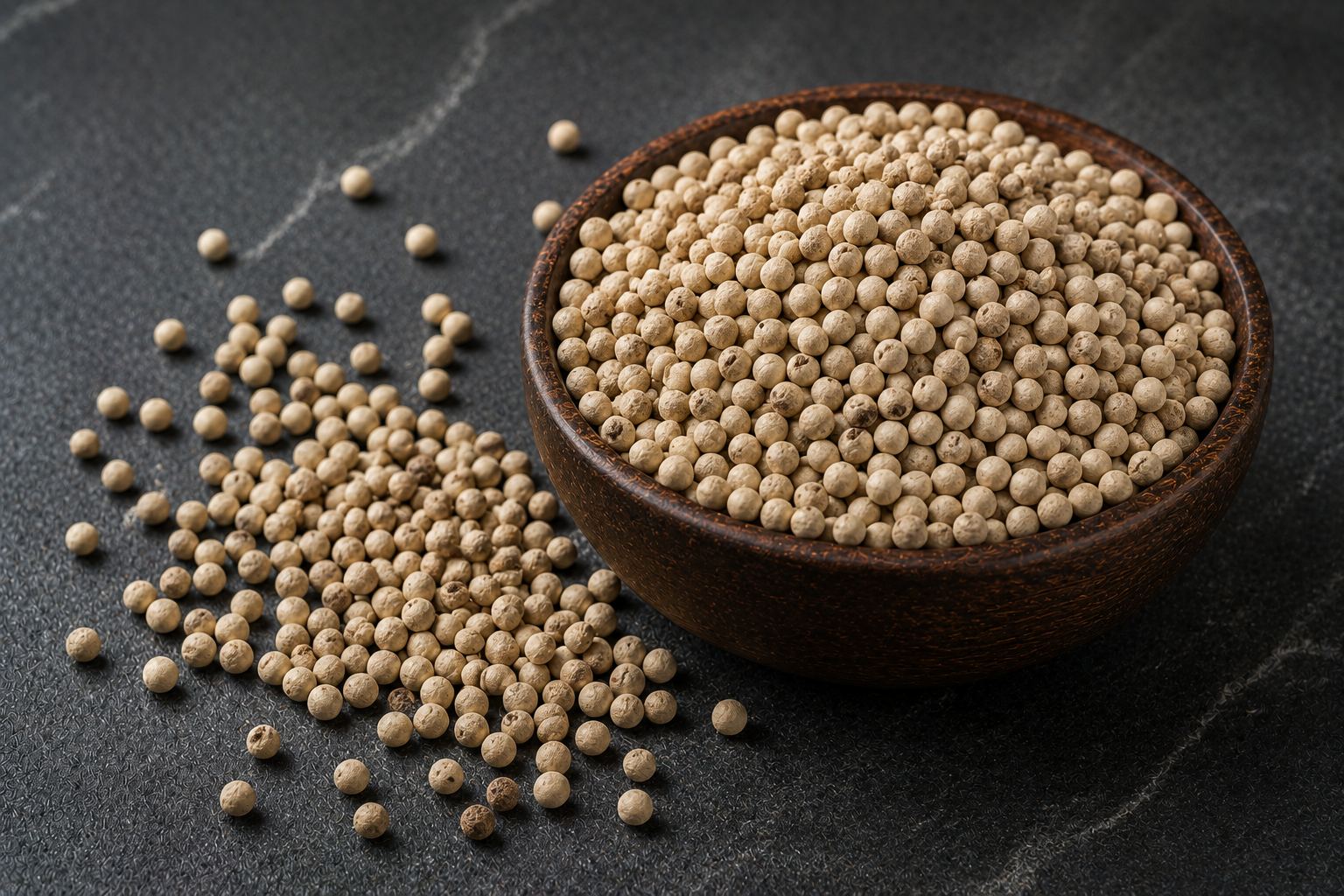
White pepper comes from the same plant as black pepper — Piper nigrum — but undergoes different processing. Black pepper is the whole dried berry (with outer skin). White pepper has the outer skin (pericarp) removed before or after drying, exposing the inner pale seed. This processing difference produces a distinctly different flavour: white pepper is sharper, hotter, and less complex than black pepper — the aromatic compounds in the outer layer that give black pepper its complexity are absent.
In Indian cooking, white pepper has a specific niche: preparations where visible black pepper specks would be aesthetically undesirable (cream soups, white sauces, certain Mughlai preparations) and specific regional cooking traditions (Chettinad, some Kerala preparations) that specifically call for white pepper's cleaner, sharper heat.
- Cream-based Mughlai preparations — korma, shahi paneer — sometimes use white pepper to avoid black specks in the creamy white sauce
- Pepper rasam in some Tamil households traditionally uses white pepper for a specific clean heat profile
- Chettinad cooking uses white pepper in pepper-forward preparations alongside black pepper
- For Chinese-influenced Indo-Chinese cooking where white pepper is the traditional heat source
- When cooking delicate white fish preparations where black pepper specks would be visually distracting
White Pepper Through History
White pepper's distinct culinary identity comes entirely from its processing method — it is not a different variety. The practice of removing the outer layer before or after drying began in Southeast Asia, where white pepper is more commonly used than in India. In Indian cooking, white pepper arrived primarily through Portuguese and British colonial influence, and through the traditional trade connections between South India and Southeast Asia.
The Sarawak (Malaysian) and Muntok (Indonesian) white pepper traditions produce the world's most prized white peppercorns. Kerala produces white pepper as well, primarily for export. In Indian cooking, white pepper has never achieved the status it holds in Southeast Asian and European cuisine — black pepper, with its greater complexity, remained preferred.
The Science of White Pepper
How to Store White Pepper
How to Buy Good White Pepper
How to Use White Pepper Correctly
- For cream preparations: grind freshly and add at the end to avoid black specks
- For Indo-Chinese: white pepper is the traditional heat source — use in fried rice and noodles
- For pepper rasam variations: use alongside or instead of black pepper for a different heat character
- Quantity: same as black pepper — 1/2 to 1 tsp freshly ground per dish
- For marinades: when no visible specks are desired in the finished dish
What White Pepper Pairs Well With
Dishes That Use White Pepper
Where White Pepper Matters Most
| South Indian Cuisine | Common |
| Chettinad Cuisine | Essential |
| North Indian Cuisine | Occasional |
| Mughlai Cuisine | Occasional |
| Indo-Chinese Cuisine | Essential |
| Jain Cooking | Common |
| Sattvic Cooking | Common |
White Pepper vs Black Pepper
| Feature | White Pepper | Black Pepper |
|---|---|---|
| Same plant? | Yes — Piper nigrum | Yes — Piper nigrum |
| Processing | Outer layer removed | Whole dried berry |
| Piperine (heat) | Higher concentration | Lower concentration |
| Complexity | Less — terpenes removed | More — terpenes in outer layer |
| Visual | Ivory white | Dark brown-black |
| Best use | White/cream preparations | Everything else |
| Flavour | Sharp, clean | Complex, earthy, warm |