★★★★★ Mughlai
★★★★☆ All premium Indian cooking
What Does Saffron Taste Like?
Saffron in Every Indian Language
| Language | Name | Pronunciation |
|---|---|---|
| English | Saffron | SAF-ron |
| Hindi | केसर — Kesar / ज़ाफ़रान — Zaffran | KEH-sar |
| Bengali | জাফরান — Jafran | JAF-rahn |
| Tamil | குங்குமப்பூ — Kungumapoo | KOON-goo-mah-poo |
| Telugu | కుంకుమ పువ్వు — Kumkuma Puvvu | KOOM-koo-mah POO-voo |
| Malayalam | കുങ്കുമപ്പൂ — Kumkumappoo | KOON-koo-mah-poo |
| Kannada | ಕೇಸರಿ — Kesari | KEH-sah-ree |
| Gujarati | કેસર — Kesar | KEH-sar |
| Marathi | केशर — Keshar | KEH-shar |
| Punjabi | ਕੇਸਰ — Kesar | KEH-sar |
| Urdu | زعفران — Zaffran | ZAF-ran |
| Sanskrit | कुम्कुम — Kumkuma | KOOM-koo-mah |
What Is Saffron?
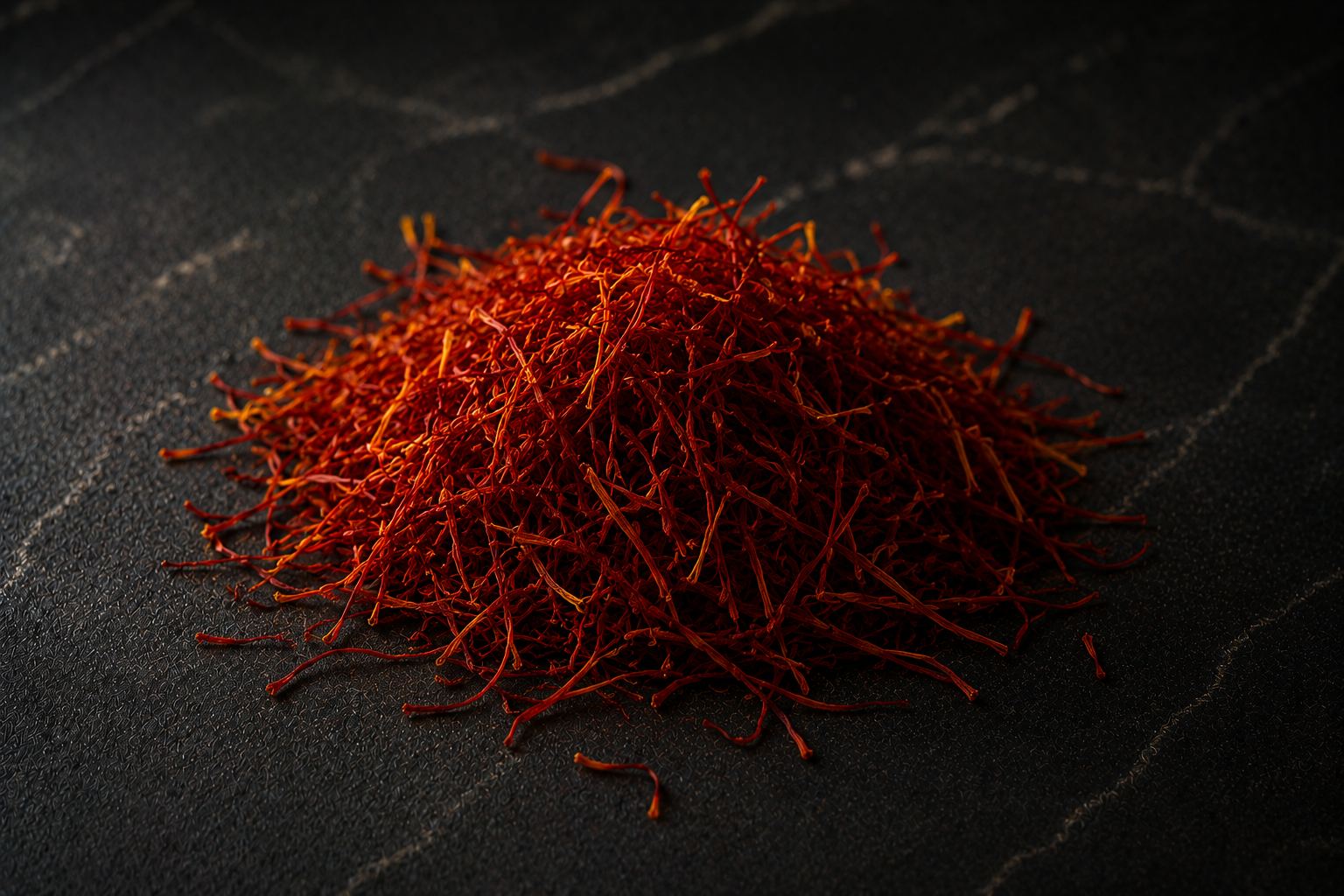
Saffron is the dried stigmas of Crocus sativus — each flower produces only three red thread-like stigmas, which must be hand-harvested on the single day the flower blooms. This labour intensity makes saffron the world's most expensive spice by weight — genuine quality saffron commands extraordinary prices. Kashmiri saffron from the Pampore region is considered the world's finest quality.
In Indian cooking, saffron has a prestigious role in Kashmiri, Mughlai, and festive preparations. It is not an everyday spice but a marker of occasion, luxury, and the highest cooking traditions. Its characteristic deep golden-orange colour, honey-floral aroma, and subtle metallic edge cannot be replicated by any other spice — the common substitution with turmeric produces colour but none of saffron's distinctive flavour.
- Kashmiri cooking's golden colour and unique floral depth comes from Kashmiri kesar — inseparable from the region's culinary identity
- Mughlai biryani at its highest expression requires saffron — dissolved in warm milk and poured over layers of rice during the dum stage
- Shrikhand, rasmalai, and Mughlai milk desserts at the premium level are defined by saffron's honey-floral character
- Thandai — the cold drink of Holi — is incomplete without a generous strand of saffron
- Without saffron, the dishes that feature it taste completely different — not just less colourful but flavourally different
Saffron Through History
Saffron cultivation in Kashmir dates to at least 500 BCE — the Pampore region near Srinagar is the most historically documented saffron-growing area in India. Sanskrit texts reference kumkuma for culinary and religious use, and the spice appears in ancient descriptions of Kashmir's agricultural wealth.
The Arab world was the primary conduit for saffron trade between Kashmir and Europe — zaffran (Arabic) becoming safran (French), saffron (English). Mughal emperors prized Kashmiri kesar above all other saffron, with Emperor Akbar's court records documenting its use in biryani, korma, and desserts.
Iranian saffron began to compete with Kashmiri in the global market from the 17th century onwards, and today Iran is the world's largest producer by volume. However, Kashmiri saffron retains a premium position — its ISO-classified higher crocin content produces deeper colour and more intense aroma.
The Science of Saffron
How to Store Saffron
How to Buy Good Saffron
How to Use Saffron Correctly
- Bloom: soak 10–15 threads in 2–3 tbsp warm (not hot) milk or water for 15–30 minutes
- Add bloomed liquid to dishes near the end of cooking
- For biryani: pour saffron milk over the top rice layer just before sealing for dum
- For kheer and desserts: add bloomed saffron in the last 5 minutes
- Quantity: 10–20 threads per dish for 4 people — a little goes very far
- Never add dry threads to hot oil — the aromatic compounds escape without blooming
What Saffron Pairs Well With
Dishes That Use Saffron
Where Saffron Matters Most
| Kashmiri Cuisine | Essential |
| Mughlai Cuisine | Essential |
| Gujarati Cuisine | Essential |
| Rajasthani Cuisine | Essential |
| North Indian Festive | Essential |
| South Indian Cuisine | Occasional |
| Jain Cooking | Common |
Genuine Saffron vs Turmeric vs Safflower (Common Adulterants)
| Feature | Genuine Saffron | Turmeric | Safflower |
|---|---|---|---|
| Colour in water | Deep golden-orange | Yellow | Yellow-orange |
| Speed of colour release | Slow — 5–15 minutes | Immediate | Fast |
| Threads stay intact? | Yes — don't dissolve | N/A — powder | Turns pale quickly |
| Aroma | Honey, floral, metallic | Earthy, mild | Minimal |
| Price | Very high | Very low | Very low |
| Flavour | Complex, distinctive | Mild earthy | Almost none |