★★★★★ North India
★★★★★ Mughlai tradition
What Does Cinnamon Taste Like?
Cinnamon in Every Indian Language
| Language | Name | Pronunciation |
|---|---|---|
| English | Cinnamon / Cassia | SIN-ah-mun |
| Hindi | दालचीनी — Dalchini | DAL-chee-nee |
| Bengali | দারচিনি — Darchini | DAR-chee-nee |
| Tamil | பட்டை — Pattai | PAH-tye |
| Telugu | దాల్చిన చెక్క — Dalchina Chekka | dal-CHEE-nah CHEK-kah |
| Malayalam | കറുവaപ്പaഠ — Karuvapatta | kah-roo-vah-PAH-tah |
| Kannada | ದಾಲ್ಚಿನ್ನಿ — Dalchini | DAL-chee-nee |
| Gujarati | તજ — Taj | TAJ |
| Marathi | दालचिनी — Dalchini | DAL-chee-nee |
| Punjabi | ਦਾਲਚੀਨੀ — Dalchini | DAL-chee-nee |
| Urdu | دار چینی — Darchini | DAR-chee-nee |
| Sanskrit | त्वक् — Tvak | TVAK |
What Is Cinnamon?
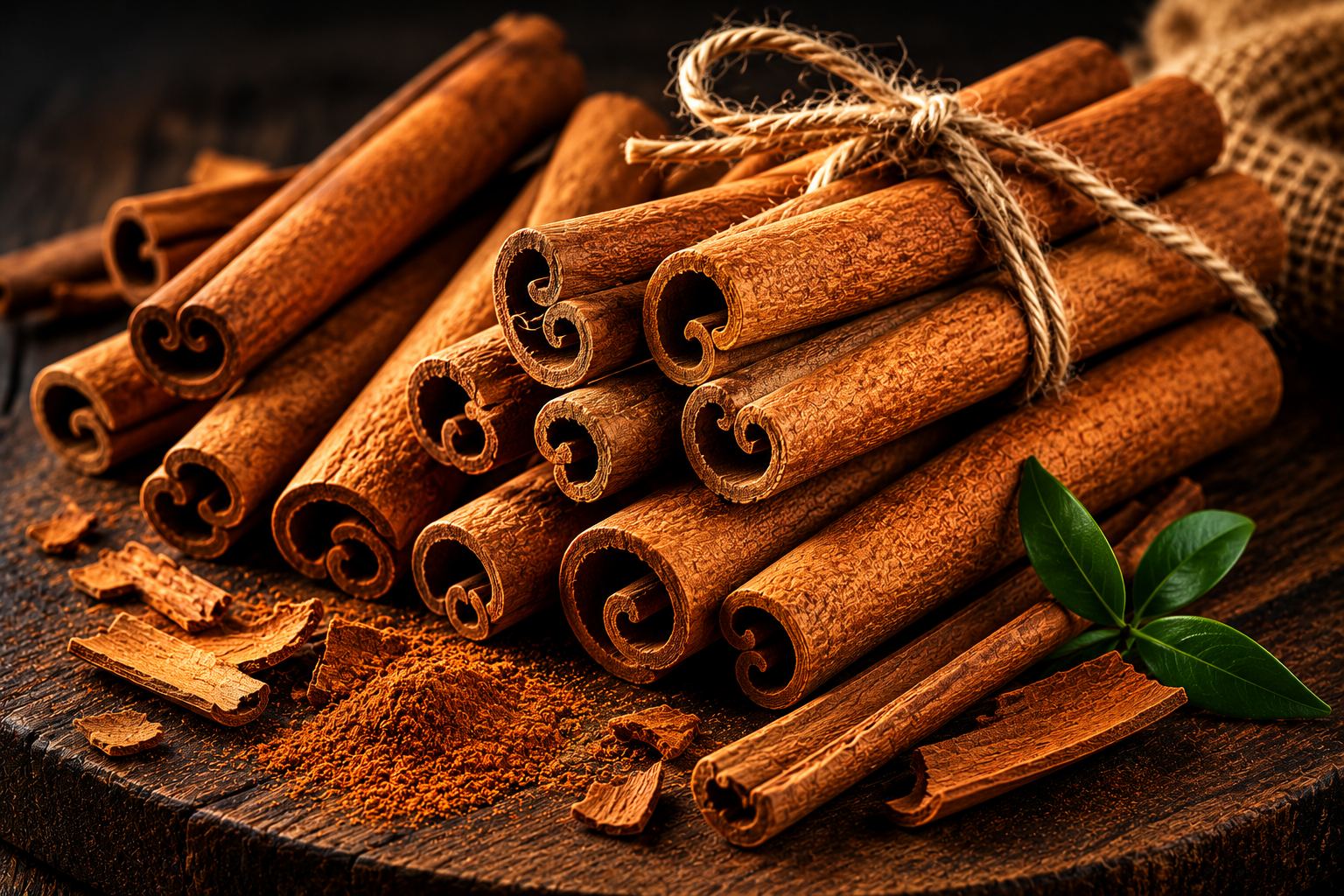
Cinnamon and cassia are often sold interchangeably under the name 'dalchini' in India, but they are botanically distinct species. True cinnamon (Cinnamomum verum, also called Ceylon cinnamon) is native to Sri Lanka — thin, papery rolls with a delicate, complex flavour. Cassia (Cinnamomum cassia) from China and Vietnam — thicker, harder bark with a sharper, more intense flavour and significantly higher coumarin content.
In Indian cooking, cassia is what most people use and what is sold as dalchini in Indian spice shops. True cinnamon is less widely available and significantly more expensive. For everyday cooking purposes, they are functionally interchangeable in Indian preparations, but true cinnamon is more nuanced and preferred in delicate desserts.
- Biryani's warm aromatic base is built on cinnamon sticks in the cooking ghee alongside cloves and cardamom
- Garam masala's sweetness comes significantly from cinnamon — without it, the blend is sharp and incomplete
- Milk-based desserts (kheer, payasam) use cinnamon sticks infused in the milk for warmth and sweet depth
- Pulao — rice pilaf — is architecturally built on cinnamon, cardamom, and cloves as the three primary whole spices
- The combination of cinnamon's cinnamaldehyde with cardamom's cineole defines the aromatic signature of Mughlai cooking
Cinnamon Through History
True cinnamon from Sri Lanka was one of the most valuable commodities in ancient and medieval world trade. Arab traders maintained a monopoly on the source for centuries by claiming (falsely) that cinnamon came from the nests of the Cinnamologus bird — too fantastical for competitors to verify. When Portuguese explorer Vasco da Gama reached Sri Lanka in 1505, cinnamon was one of the primary prizes.
In India, cinnamon appears in Sanskrit texts as tvak and in Ayurvedic formularies as a warming digestive spice. The Mughal court used cinnamon extensively — the combination of cinnamon, cardamom, cloves, and saffron defines the aromatic signature of Mughlai biryani to this day. Cassia, the cheaper alternative from China and Vietnam, gradually replaced true cinnamon in Indian markets over centuries of trade.
The Science of Cinnamon
How to Store Cinnamon
How to Buy Good Cinnamon
How to Use Cinnamon Correctly
- Biryani: add 1 stick (5cm) to hot ghee with cardamom and cloves at the start
- Chai: add a 2cm piece to each cup or to the pot
- For garam masala: lightly roast whole, then grind with other spices
- Ground: add during masala stage — 1/2 tsp per curry for 4 people
- Remove whole sticks before serving
- For infusing milk: simmer 1 stick in 500ml milk for 10 minutes
What Cinnamon Pairs Well With
Dishes That Use Cinnamon
Where Cinnamon Matters Most
| North Indian Cuisine | Essential |
| Mughlai Cuisine | Essential |
| Kashmiri Cuisine | Essential |
| South Indian Cuisine | Common |
| Bengali Cuisine | Essential |
| Jain Cooking | Common |
| Sattvic Cooking | Common |
True Cinnamon vs Cassia
| Feature | True Cinnamon (Ceylon) | Cassia |
|---|---|---|
| Botanical name | Cinnamomum verum | Cinnamomum cassia |
| Origin | Sri Lanka | China / Vietnam |
| Bark thickness | Thin, papery | Thick, hard |
| Rolls | Multiple thin layers | Single or few layers |
| Coumarin content | Very low (safe in quantity) | High (limit large daily doses) |
| Flavour | Delicate, complex, sweet | Stronger, sharper, more intense |
| Price | Higher | Lower |
| Indian market | Less common | Standard — labelled 'dalchini' |