Ingredient identity
Ingredient DNA
Bajra Flour — Pearl Millet Flour
Pennisetum glaucum (ground) · Family: Poaceae / Fabaceae · Genus: Pennisetum
Origin
South Asia / Middle East
Form
Fine to coarse powder
Primary Use
Bajra Roti · Khichdi · Thepla
Taste profile
What Does Bajra Flour Taste Like?
Flavour Profile — Bajra Flour
Botanical classification
Species
Pennisetum glaucum (ground)
Names across India
Bajra Flour in Every Indian Language
| Language | Name | Pronunciation |
|---|
| English | Pearl Millet Flour | |
| Hindi | Bajra Atta | |
| Tamil | கம்பு மாவு — Kambu Maavu | |
| Telugu | సజ్జ పిండి — Sajja Pindi | |
| Malayalam | കമ്പ് — Kambu | |
| Kannada | ಸಜ್ಜೆ ಹಿಟ್ಟು — Sajje Hittu | |
| Gujarati | Bajra Atta | |
| Marathi | Bajra Atta | |
| Punjabi | Bajra Atta | |
Origin and identity
What Is Bajra Flour?
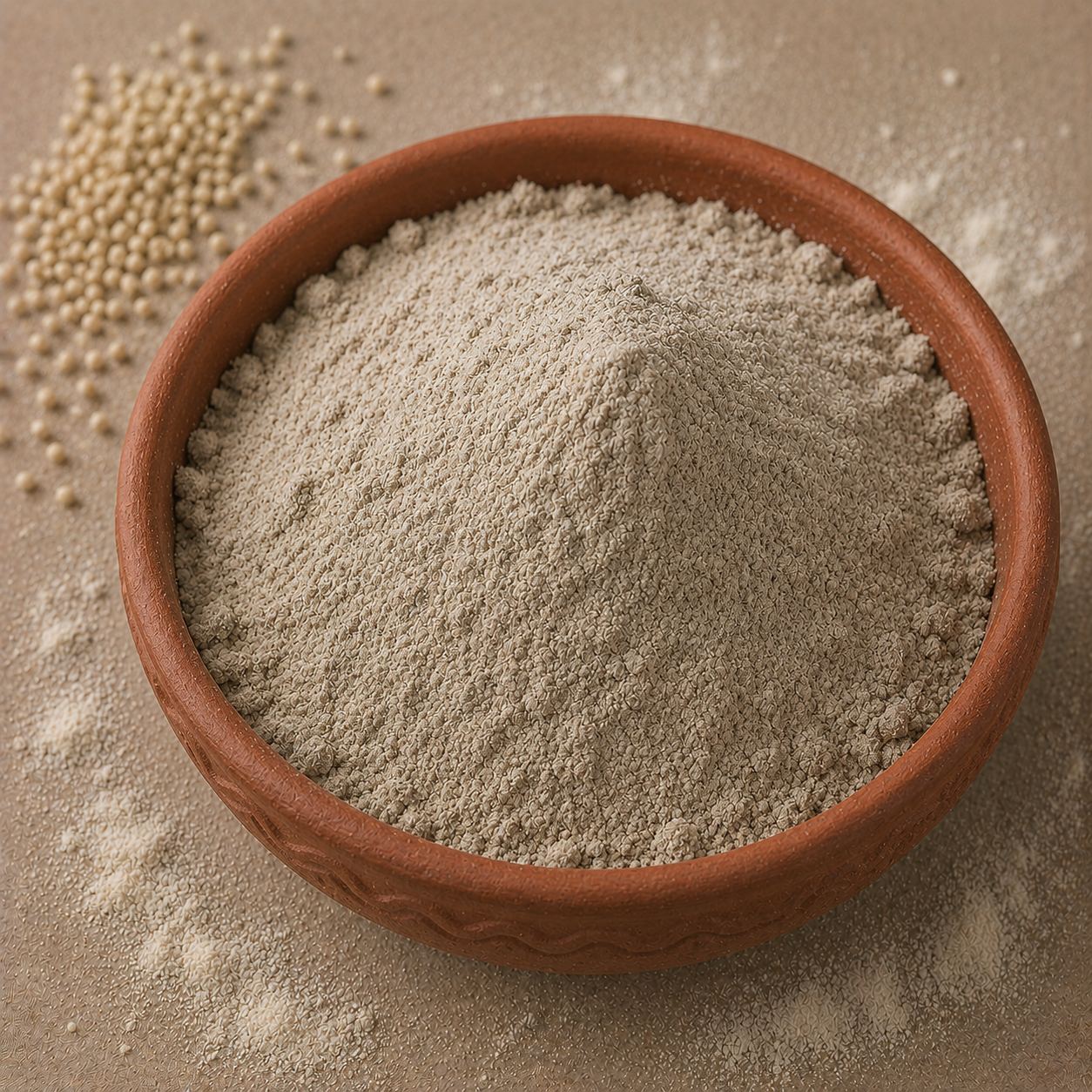
Bajra flour is ground pearl millet — Rajasthan's winter flatbread flour. Dense, dark grey, with an earthy, slightly bitter flavour. Bajra roti (thicker than chapati, eaten with ghee and jaggery) is Rajasthan's traditional winter meal, providing warmth and sustained energy in the cold desert winter.
Bajra flour is gluten-free and has the highest iron content of any common Indian grain flour — approximately 8mg/100g. This makes it particularly valuable for vegetarian populations managing iron intake.
What Indian Cooking Loses Without Bajra Flour
- Bajra roti is Rajasthan's winter comfort food — the combination with ghee, jaggery, and buttermilk provides complete winter nutrition
- The iron content of bajra flour is among the best plant sources — important for vegetarians
- Bajra flour is Ayurvedically classified as warming — appropriate for winter consumption in cold regions
- The traditional bajra-garlic chutney combination in Rajasthan is one of India's most complete flavour pairings
Historical significance
Bajra Flour Through History
Historical Record
Rajasthan's Winter Grain
Pearl millet (bajra) has been cultivated in Rajasthan for at least 5,000 years — it is the grain most adapted to the Thar Desert's extreme heat and poor soil. Bajra flour and bajra roti have sustained Rajasthan's population through droughts, famines, and hardship that would have destroyed wheat-based agriculture.
Cooking science
The Science of Bajra Flour
Iron Without Haeme — Maximising Bajra's Benefit
Bajra flour's iron (~8mg/100g) is non-haeme iron — lower bioavailability than meat iron. Consuming bajra roti with lime juice or tamarind (Vitamin C sources) significantly improves iron absorption. The traditional Rajasthani combination of bajra roti with tamarind-based sour chutney is nutritionally optimal — an ancient dietary practice with scientific validation.
Storage science
How to Store Bajra Flour
Airtight container
Up to 1 year
Key note
Store away from moisture — flour absorbs humidity quickly
Buying guide
How to Buy Good Bajra Flour
✓ Look For
- Fresh milling date where possible
- No rancid or musty smell
- Fine, uniform powder
- From reputable mills
✗ Avoid
- Old, rancid smell
- Lumpy or clumped flour
- No milling date
- Adulterated with other flour
Technique
How to Use Bajra Flour Correctly
Technique, quantity, and what to avoid
- Store in airtight container
- Use within 3–6 months of milling
- Sieve before use for smoother dough
- Rest dough 15–30 minutes after mixing for better texture
Pairings
What Bajra Flour Pairs Well With
Best Pairings — Bajra Flour
Famous dishes
Dishes That Use Bajra Flour
Regional use
Where Bajra Flour Matters Most
Regional Importance
★★★★★
All India
Universal flour
★★★★★
North India
Primary wheat flour use
★★★★★
South India
Rice and millet flours
★★★★☆
Rural India
Traditional millet flours
| All Indian Cuisines | Essential |
| Jain Cooking | Essential |
| Sattvic Cooking | Essential |
Comparison
Bajra Flour vs Other Indian Flours
| Feature | Bajra Flour | Maida (Refined) | Besan (Chickpea) |
|---|
| Gluten | Yes (if wheat) | Yes | None |
| Fibre | High (whole wheat) | Low | High |
| Primary use | Bajra Roti · Khichdi · Thepla | Baking, maida items | Pakoda, kadhi |
| Protein | 12–14g/100g | 10g/100g | 22g/100g |
Nutrition
Nutrition and Key Compounds
Bajra Flour — Honest Nutritional Picture
Culinary quantities — aromatic and flavour contribution, not macro nutrition
Bajra flour (dry): ~11g protein, 67g carbohydrate, 8g fibre per 100g. ~8mg iron (highest common grain). High zinc, magnesium. Gluten-free. GI ~54.
Substitutions
Substitutes for Bajra Flour
What Works and What Does Not
Other flours in 25% blend
Most Indian flours can be combined without dramatic effect on most preparations.
For traditional preparations
Each flour's specific properties are required for traditional dishes.
Chef's notes
Practical Insight
From the Kitchen
Bajra roti is best eaten immediately — it becomes hard as it cools. Drench in ghee while hot and eat with garlic chutney. The combination of bajra's high iron, ghee's fat-soluble vitamins, and chutney's Vitamin C is one of India's most nutritionally complete traditional meals.