What Does Ragi Flour Taste Like?
Ragi Flour in Every Indian Language
| Language | Name | Pronunciation |
|---|---|---|
| English | Finger Millet Flour | |
| Hindi | Ragi Atta / Nachni Atta | |
| Tamil | கேழ்வரகு மாவு — Kezhvaragu Maavu | |
| Telugu | రాగి పిండి — Ragi Pindi | |
| Malayalam | റാഗി — Ragi | |
| Kannada | ರಾಗಿ ಹಿಟ್ಟು — Ragi Hittu | |
| Gujarati | Ragi Atta / Nachni Atta | |
| Marathi | Ragi Atta / Nachni Atta | |
| Punjabi | Ragi Atta / Nachni Atta |
What Is Ragi Flour?
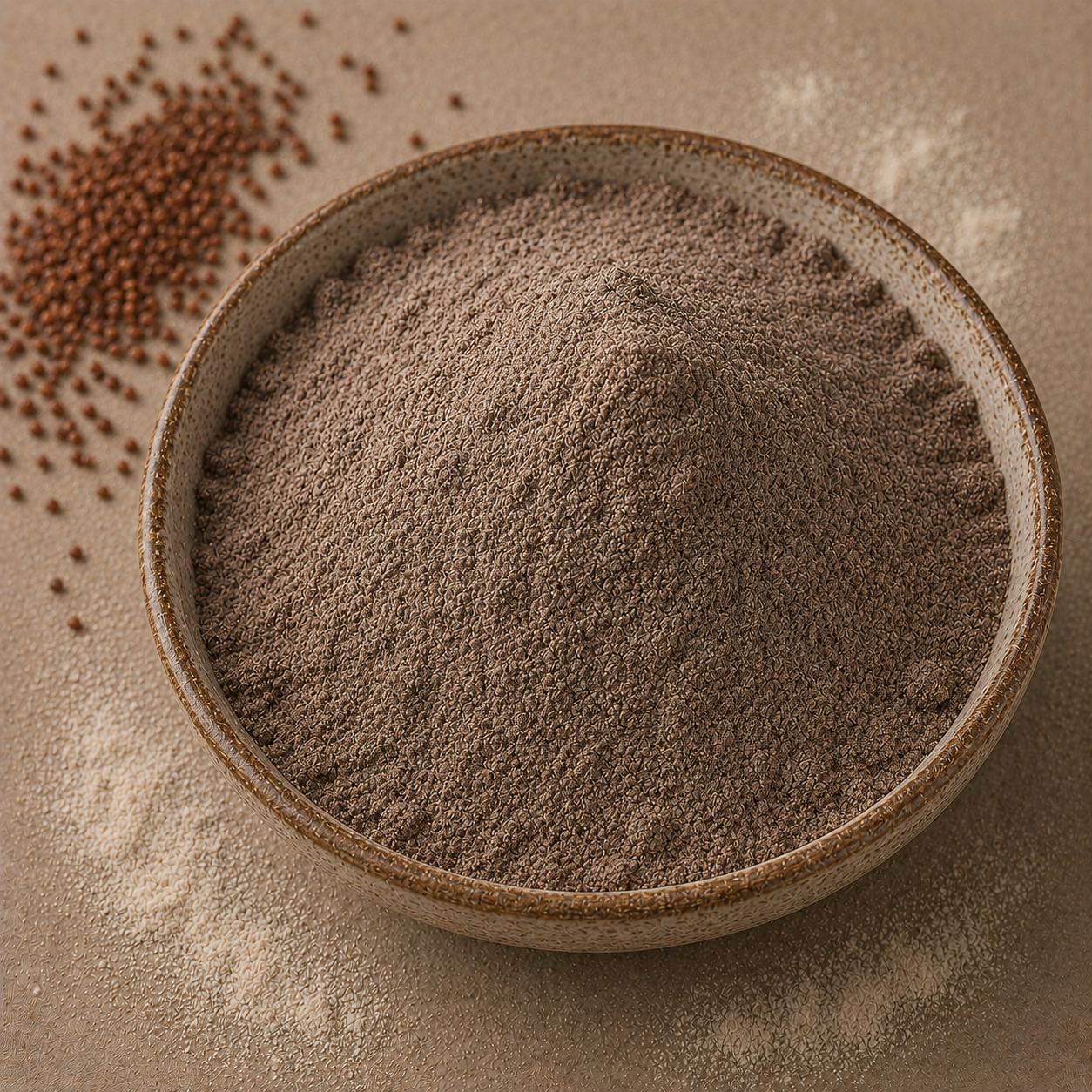
Ragi flour is ground finger millet — dark brownish-grey, with a distinctive earthy, slightly mineral flavour. It is the most calcium-dense of all commonly available Indian flours: 344mg calcium per 100g dry — significantly more than milk (120mg/100ml). This extraordinary calcium content makes ragi flour invaluable for bone health, particularly in communities where dairy consumption is limited.
Ragi flour is gluten-free and has a low glycemic index (~54), making it suitable for diabetics. It is the flour used in ragi mudde (Karnataka's traditional agriculture worker food — a dense ball of cooked ragi eaten with sambar), ragi dosa, and ragi porridge.
- Ragi mudde — Karnataka's traditional labour food — provides more sustained energy than rice
- Ragi kanji is the first solid food given to South Indian infants — its calcium is important for infant bone development
- The combination of ragi's high calcium with Vitamin D from sunlight (a traditional outdoor agricultural lifestyle) represents one of India's most effective dietary calcium strategies
- Ragi flour mixed with milk for porridge is one of the most calcium-dense foods possible from local ingredients
- For post-menopausal women with bone density concerns, ragi consumption is particularly relevant
Ragi Flour Through History
Finger millet has been cultivated in India for at least 5,000 years, with evidence from Karnataka predating 1800 BCE. It was the foundational grain of South India's agricultural communities. The 'superfood' label applied to ragi in modern health marketing is commercially motivated, but the underlying nutritional facts are genuine.
The Science of Ragi Flour
How to Store Ragi Flour
How to Buy Good Ragi Flour
How to Use Ragi Flour Correctly
- Store in airtight container
- Use within 3–6 months of milling
- Sieve before use for smoother dough
- Rest dough 15–30 minutes after mixing for better texture
What Ragi Flour Pairs Well With
Dishes That Use Ragi Flour
Where Ragi Flour Matters Most
| All Indian Cuisines | Essential |
| Jain Cooking | Essential |
| Sattvic Cooking | Essential |
Ragi Flour vs Other Indian Flours
| Feature | Ragi Flour | Maida (Refined) | Besan (Chickpea) |
|---|---|---|---|
| Gluten | Yes (if wheat) | Yes | None |
| Fibre | High (whole wheat) | Low | High |
| Primary use | Ragi Mudde · Dosa · Kanji · Baby food | Baking, maida items | Pakoda, kadhi |
| Protein | 12–14g/100g | 10g/100g | 22g/100g |