Ingredient identity
Ingredient DNA
Jowar Flour — Sorghum Flour
Sorghum bicolor (ground) · Family: Poaceae / Fabaceae · Genus: Sorghum
Origin
South Asia / Middle East
Form
Fine to coarse powder
Primary Use
Bhakri · Jowar Roti · Porridge
Taste profile
What Does Jowar Flour Taste Like?
Flavour Profile — Jowar Flour
Botanical classification
Species
Sorghum bicolor (ground)
Names across India
Jowar Flour in Every Indian Language
| Language | Name | Pronunciation |
|---|
| English | Sorghum Flour | |
| Hindi | Jowar Atta | |
| Tamil | சோளம் மாவு — Cholam Maavu | |
| Telugu | జొన్న పిండి — Jonna Pindi | |
| Malayalam | ചോളം — Cholam | |
| Kannada | ಜೋಳದ ಹಿಟ್ಟು — Jolada Hittu | |
| Gujarati | Jowar Atta | |
| Marathi | Jowar Atta | |
| Punjabi | Jowar Atta | |
Origin and identity
What Is Jowar Flour?
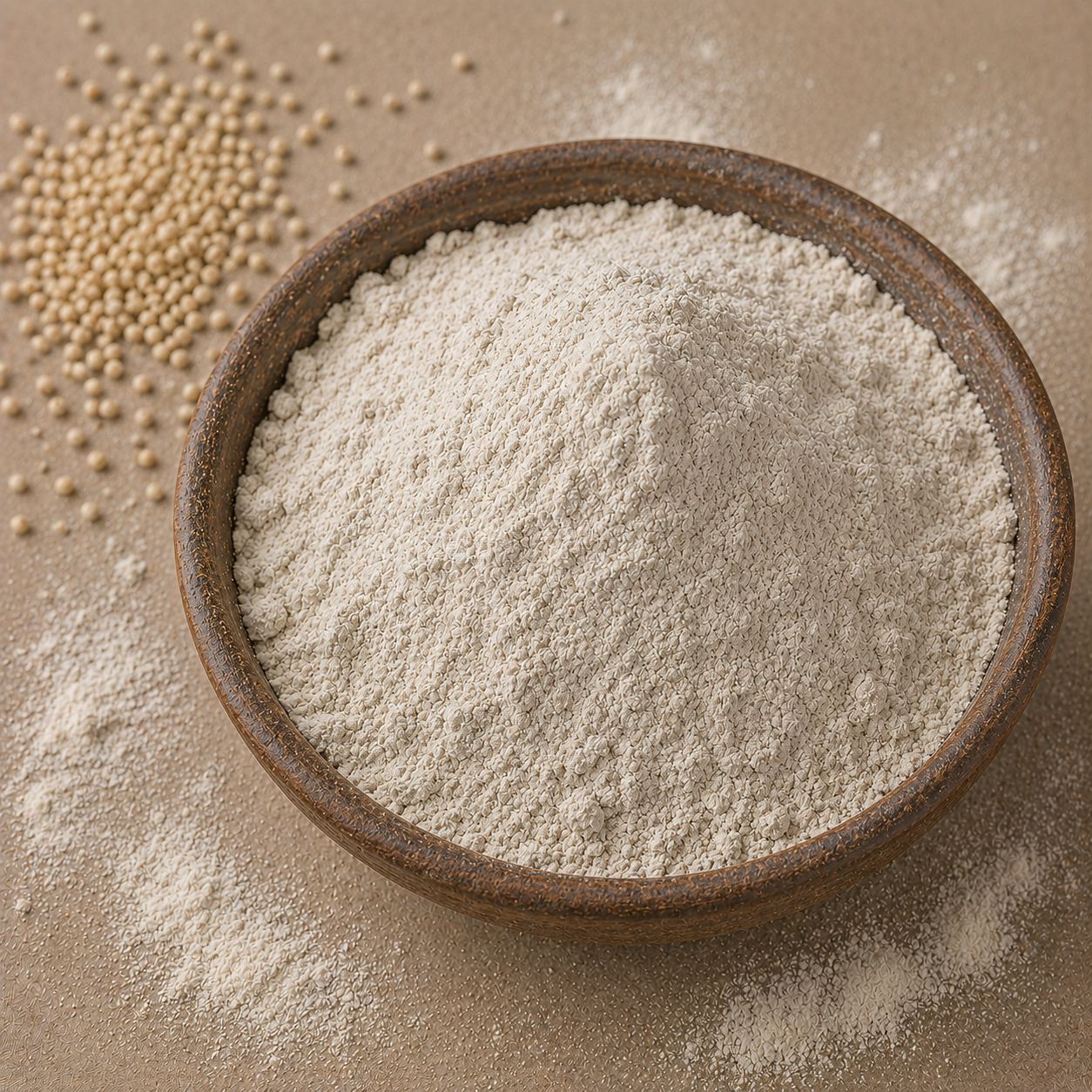
Jowar flour is ground sorghum — the primary flatbread flour of Maharashtra and Karnataka. Gluten-free, with a mild, slightly earthy flavour. Making bhakri (the traditional jowar flatbread) requires specific technique — the dough must be made with hot water to partially gelatinise the starch, then shaped by hand (not rolled with a pin).
With the growing awareness of millets' nutritional advantages, jowar flour is experiencing a revival in urban kitchens as a healthy, gluten-free alternative to wheat flour.
What Indian Cooking Loses Without Jowar Flour
- Bhakri — Maharashtra and Karnataka's traditional flatbread — requires jowar flour and specific technique
- The fibre and micronutrient content of jowar flour is superior to refined wheat
- As a gluten-free flour, it enables those with wheat sensitivity to participate in the Indian flatbread tradition
- Jowar flour mixed with atta in partial substitution increases the nutritional profile of everyday bread
Historical significance
Jowar Flour Through History
Historical Record
Maharashtra's Ancient Flatbread Flour
Jowar (sorghum) has been cultivated in India for at least 5,000 years and was the primary grain crop of the Deccan Plateau before rice displaced it from prestige tables. Bhakri is the traditional bread of Maharashtra's farming communities — eaten with pithla (besan curry), sabji, and chutney.
Cooking science
The Science of Jowar Flour
Hot Water Gelatinisation — The Bhakri Technique
Jowar flour has no gluten, so it cannot form dough through protein network formation. Traditional bhakri technique mixes jowar flour with very hot water — the heat partially gelatinises the starch granules, creating enough cohesion to shape the bread by hand. This is why bhakri is shaped by patting between wetted palms rather than rolling with a pin — the dough is too fragile for rolling.
Storage science
How to Store Jowar Flour
Airtight container
Up to 1 year
Key note
Store away from moisture — flour absorbs humidity quickly
Buying guide
How to Buy Good Jowar Flour
✓ Look For
- Fresh milling date where possible
- No rancid or musty smell
- Fine, uniform powder
- From reputable mills
✗ Avoid
- Old, rancid smell
- Lumpy or clumped flour
- No milling date
- Adulterated with other flour
Technique
How to Use Jowar Flour Correctly
Technique, quantity, and what to avoid
- Store in airtight container
- Use within 3–6 months of milling
- Sieve before use for smoother dough
- Rest dough 15–30 minutes after mixing for better texture
Pairings
What Jowar Flour Pairs Well With
Best Pairings — Jowar Flour
Famous dishes
Dishes That Use Jowar Flour
Regional use
Where Jowar Flour Matters Most
Regional Importance
★★★★★
All India
Universal flour
★★★★★
North India
Primary wheat flour use
★★★★★
South India
Rice and millet flours
★★★★☆
Rural India
Traditional millet flours
| All Indian Cuisines | Essential |
| Jain Cooking | Essential |
| Sattvic Cooking | Essential |
Comparison
Jowar Flour vs Other Indian Flours
| Feature | Jowar Flour | Maida (Refined) | Besan (Chickpea) |
|---|
| Gluten | Yes (if wheat) | Yes | None |
| Fibre | High (whole wheat) | Low | High |
| Primary use | Bhakri · Jowar Roti · Porridge | Baking, maida items | Pakoda, kadhi |
| Protein | 12–14g/100g | 10g/100g | 22g/100g |
Nutrition
Nutrition and Key Compounds
Jowar Flour — Honest Nutritional Picture
Culinary quantities — aromatic and flavour contribution, not macro nutrition
Jowar flour (dry): ~11g protein, 72g carbohydrate, 6g fibre per 100g. Gluten-free. High in antioxidants. Higher GI than most millets (~55). Rich in policosanols (heart health compounds).
Substitutions
Substitutes for Jowar Flour
What Works and What Does Not
Other flours in 25% blend
Most Indian flours can be combined without dramatic effect on most preparations.
For traditional preparations
Each flour's specific properties are required for traditional dishes.
Chef's notes
Practical Insight
From the Kitchen
The secret to good bhakri: use very hot water (near boiling), work quickly before it cools, and shape by patting with wetted hands — not rolling. Bhakri should be eaten fresh — it hardens quickly as the gelatinised starch retrogrades.