★★★★★ All India
What Does Paneer Taste Like?
Paneer in Every Indian Language
| Language | Name | Pronunciation |
|---|---|---|
| English | Paneer | pah-NEER |
| Hindi | पनीर — Paneer | pah-NEER |
| Bengali | ছানা / পনির — Channa / Ponir | CHAH-nah |
| Tamil | பன்னீர் — Paneer | pah-NEER |
| Telugu | పనీర్ — Paneer | pah-NEER |
| Malayalam | പനീർ — Paneer | pah-NEER |
| Kannada | ಪನೀರ್ — Paneer | pah-NEER |
| Gujarati | પનીર — Paneer | pah-NEER |
| Marathi | पनीर — Paneer | pah-NEER |
| Punjabi | ਪਨੀਰ — Paneer | pah-NEER |
| Urdu | پنیر — Paneer | pah-NEER |
What Is Paneer?
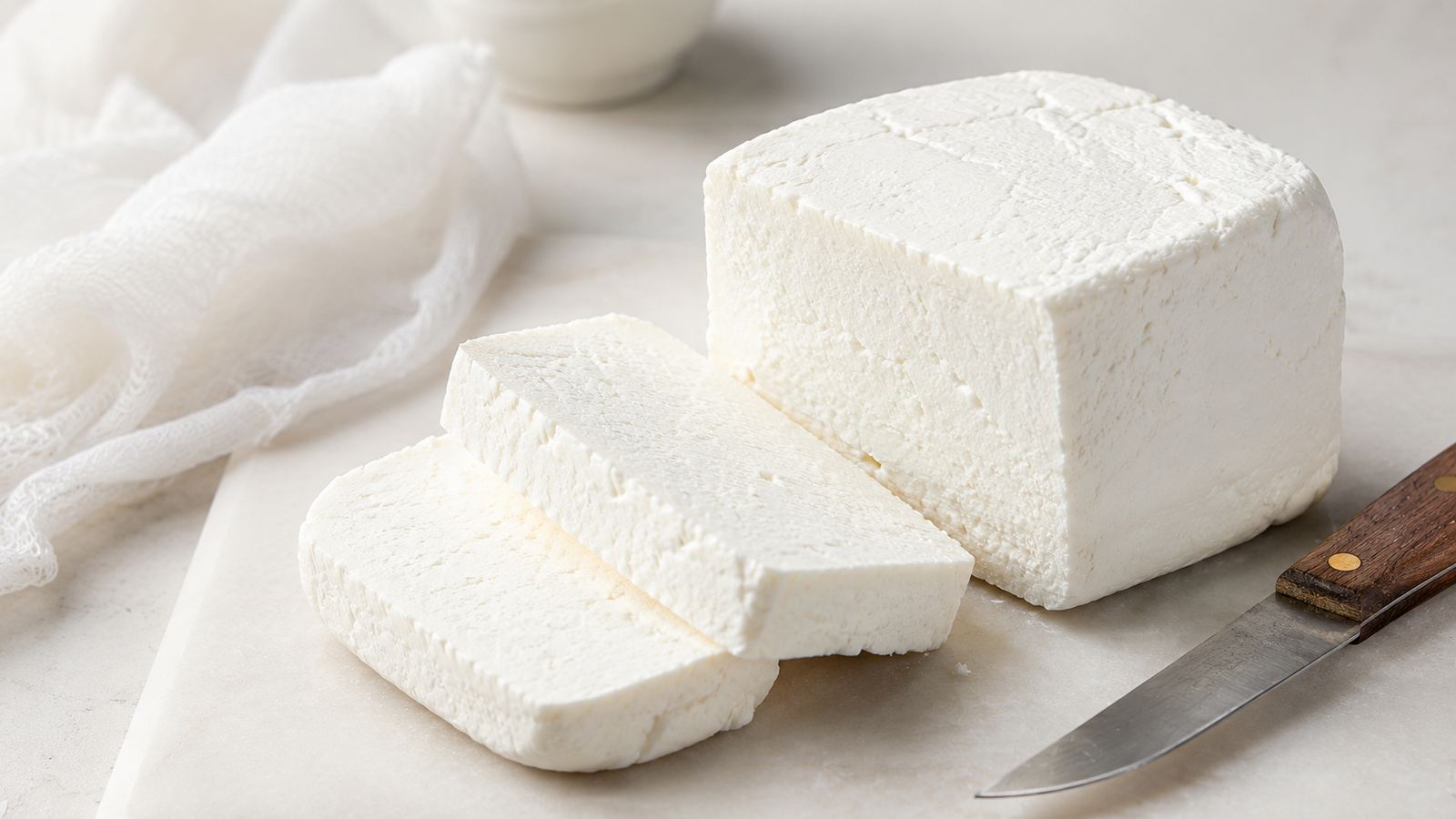
Paneer is India's fresh curd cheese — made by curdling hot milk with an acid (lemon juice, vinegar, or yogurt), draining the whey, and pressing the curds into a firm block. It is the only traditional Indian cheese and one of the primary protein sources for India's largely vegetarian North Indian population.
Paneer's defining characteristic is that it does not melt when heated — unlike most Western cheeses. This makes it uniquely suitable for grilling (paneer tikka), frying (paneer pakoda), and cooking in curries without the cheese dissolving. When grilled or fried, paneer develops a golden crust while remaining firm inside.
- Paneer is the primary protein source in North Indian vegetarian cooking — matar paneer, palak paneer, and shahi paneer are among India's most-eaten dishes
- Paneer tikka is one of India's most beloved restaurant preparations — the non-melting property enables grilling at high temperatures
- Chenna (the softer unset version) is the foundation of Bengali sweets — rasgulla and sandesh cannot be made without it
- Homemade paneer is dramatically superior to commercially made — fresh paneer has a texture and flavour that stored, preservative-treated paneer cannot match
- As a complete protein from dairy, paneer is nutritionally important in vegetarian Indian diet
Paneer Through History
Paneer-making is an ancient South Asian tradition, with evidence in Sanskrit texts. Unlike the aged cheese traditions of Europe, Indian cheese is always fresh — consumed within days of making. The technique of curdling milk with acid rather than rennet (which is used for most Western cheese) is what produces paneer's characteristic non-melting behaviour. Bengali chenna-based sweets (rasgulla, sandesh) represent a sophisticated confectionery tradition built entirely on fresh curd cheese.
The Science of Paneer
How to Store Paneer
How to Buy Good Paneer
How to Use Paneer Correctly
- Cut into cubes for curries (2–3cm)
- Marinate and grill/bake for tikka
- Fry in oil until golden before adding to curry
- For crumbling: use in bhurji, paratha stuffing
- Soak in hot water 30 min before using if paneer is dry
- Homemade is superior — make fresh when possible
What Paneer Pairs Well With
Dishes That Use Paneer
Where Paneer Matters Most
| North Indian Cuisine | Essential |
| Mughlai Cuisine | Essential |
| All Indian Cuisines | Essential |
| Jain Cooking | Essential |
| Sattvic Cooking | Essential |
Paneer vs Tofu vs Halloumi (Non-Melting Proteins)
| Feature | Paneer | Tofu | Halloumi |
|---|---|---|---|
| Source | Cow/buffalo milk | Soybean | Sheep/goat milk |
| Melts? | No | No (firm tofu) | No |
| Flavour | Mild dairy | Neutral | Salty, tangy |
| Indian use | Essential | Not traditional | Not traditional |
| Protein/100g | ~18g | ~8g (firm) | ~20g |