★★★★☆ All India
What Does Amchur Taste Like?
Amchur in Every Indian Language
| Language | Name | Pronunciation |
|---|---|---|
| English | Dry Mango Powder | AHM-choor |
| Hindi | आमचूर — Amchur | AHM-choor |
| Bengali | আমচুর — Amchur | AHM-choor |
| Tamil | மாங்காய் பொடி — Mangai Podi | MAN-gye POH-dee |
| Telugu | మామిడి పొడి — Mamidi Podi | MAH-mih-dee POH-dee |
| Malayalam | മാങ്ങ പൊടി — Manga Podi | MAHN-gah POH-dee |
| Kannada | ಮಾವಿನಕಾಯಿ ಪುಡಿ — Mavinakaayi Pudi | MAH-vin-ah-kye POO-dee |
| Gujarati | કાચી કેરી પાઉડર — Kachi Keri Powder | KAH-chee KEH-ree |
| Marathi | कच्च्या आंब्याची पूड — Kachchi Ambyachi Pood | KACH-chee AHM-byah-chee |
| Punjabi | ਆਮਚੂਰ — Amchur | AHM-choor |
| Urdu | آمچور — Amchur | AHM-choor |
| Sanskrit | आम्रचूर्ण — Amrachurna | AHM-rah-CHOOR-nah |
What Is Amchur?
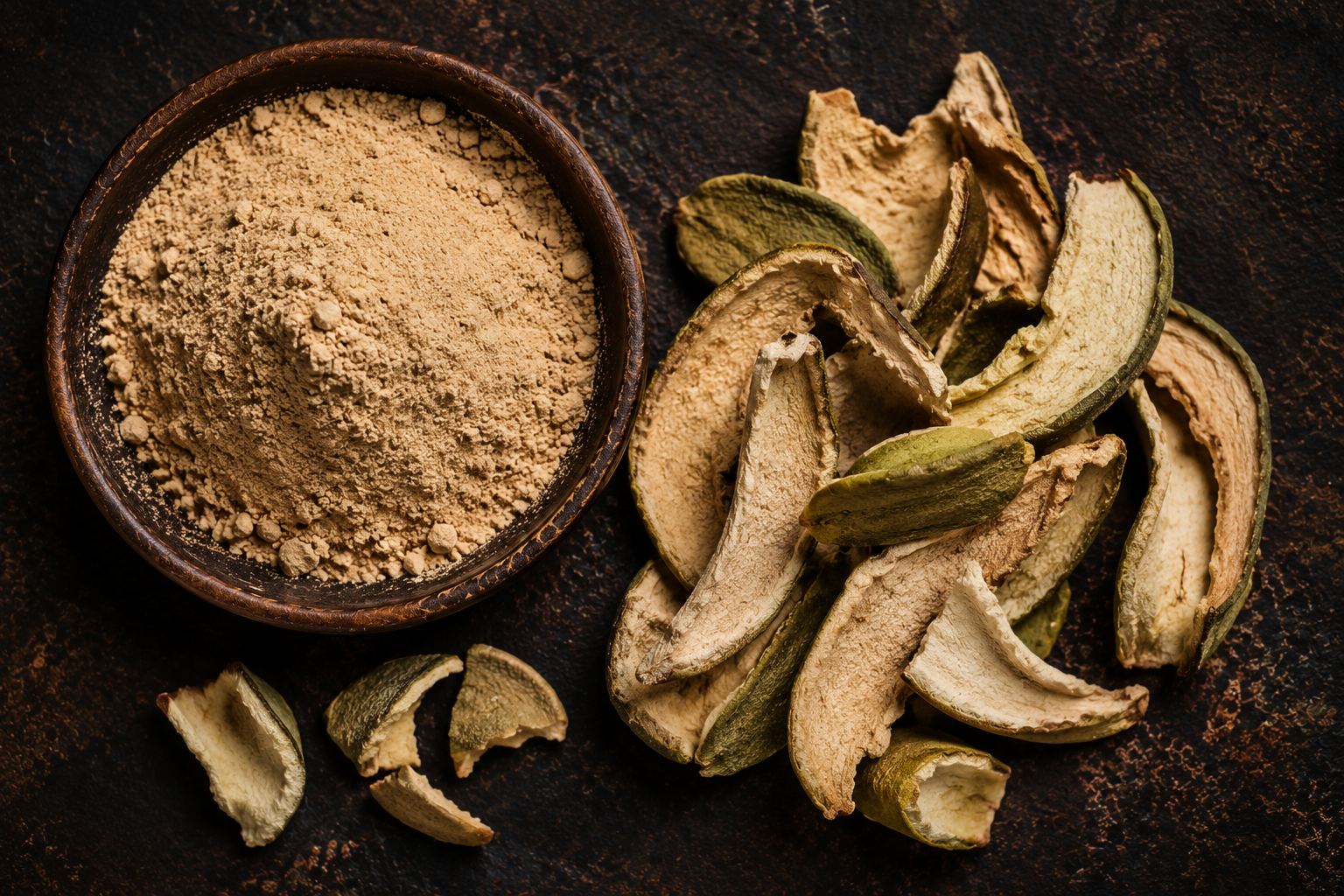
Amchur is the powder made from unripe green mangoes that have been sliced, sun-dried, and ground. The green (unripe) mango is intensely sour — it has not yet converted its organic acids to sugars — and drying concentrates this sourness further. The result is a sharp, fruity, citric-acid-forward souring powder.
Amchur's primary advantage over tamarind or lime is that it adds sourness without adding liquid — critical in dry preparations (spice rubs, dry chutneys, snack seasoning) where extra moisture would ruin the texture. It is one of the essential components of chaat masala and is widely used in North Indian cooking as a convenient, long-shelf-life souring agent.
- Chaat masala cannot exist without amchur — it provides the sharp, fruity tang that defines the blend
- Dry-spiced preparations (tandoori marinades, tikka seasonings) use amchur for sourness without adding moisture
- Aloo matar and many North Indian vegetable preparations use amchur as a finishing souring agent
- As a powder, amchur keeps indefinitely and doesn't require preparation — unlike tamarind which needs soaking
- The mango flavour note in amchur adds fruitiness that neither lime juice nor tamarind provides
Amchur Through History
Mango (Mangifera indica) has been cultivated in India for at least 4,000 years. The practice of drying unripe mango slices and grinding them into powder is ancient — it converts a highly seasonal fruit into a year-round souring agent. Uttar Pradesh, with its dense mango cultivation, produces the majority of India's amchur. The powder appears in medieval Indian texts as a preserve and souring spice.
The Science of Amchur
How to Store Amchur
How to Buy Good Amchur
How to Use Amchur Correctly
- Add at end of cooking or as finishing spice — like other souring agents
- 1 tsp in chaat masala base
- For dal: add 1/2 tsp during cooking instead of tamarind
- For marinades: incorporate into dry rub — no liquid needed
- For aloo matar: add 1 tsp in last 5 minutes of cooking
- Adjust quantity to taste — start with 1/2 tsp per dish
What Amchur Pairs Well With
Dishes That Use Amchur
Where Amchur Matters Most
| North Indian Cuisine | Essential |
| Street Food | Essential |
| All Indian Cuisines | Common |
| Jain Cooking | Essential |
| Sattvic Cooking | Common |
Amchur vs Tamarind vs Lime
| Feature | Amchur | Tamarind | Lime Juice |
|---|---|---|---|
| Form | Dry powder | Wet paste/block | Liquid |
| Acid type | Citric / Malic | Tartaric | Citric |
| Adds liquid? | No — key advantage | Yes | Yes |
| Flavour | Fruity, sharp | Complex, earthy | Clean, bright |
| For dry rubs? | Yes — ideal | No | No |
| Shelf life | 1 year | 18 months | Days (fresh) |