★★★★★ All India
★★★★☆ Global (Pad Thai)
What Does Tamarind Taste Like?
Tamarind in Every Indian Language
| Language | Name | Pronunciation |
|---|---|---|
| English | Tamarind | TAM-ah-rind |
| Hindi | इमली — Imli | IM-lee |
| Bengali | তেঁতুল — Tentul | TEN-tool |
| Tamil | புளி — Puli | POO-lee |
| Telugu | చింతపండు — Chinthapandu | CHIN-thah-PAN-doo |
| Malayalam | പുളി — Puli | POO-lee |
| Kannada | ಹುಣಸೆ — Hunase | HOO-nah-seh |
| Gujarati | આમળી — Amli | AHM-lee |
| Marathi | चिंच — Chinch | CHINCH |
| Punjabi | ਇਮਲੀ — Imli | IM-lee |
| Urdu | إملي — Imli | IM-lee |
| Sanskrit | अम्लिका — Amlika | AHM-lee-kah |
What Is Tamarind?
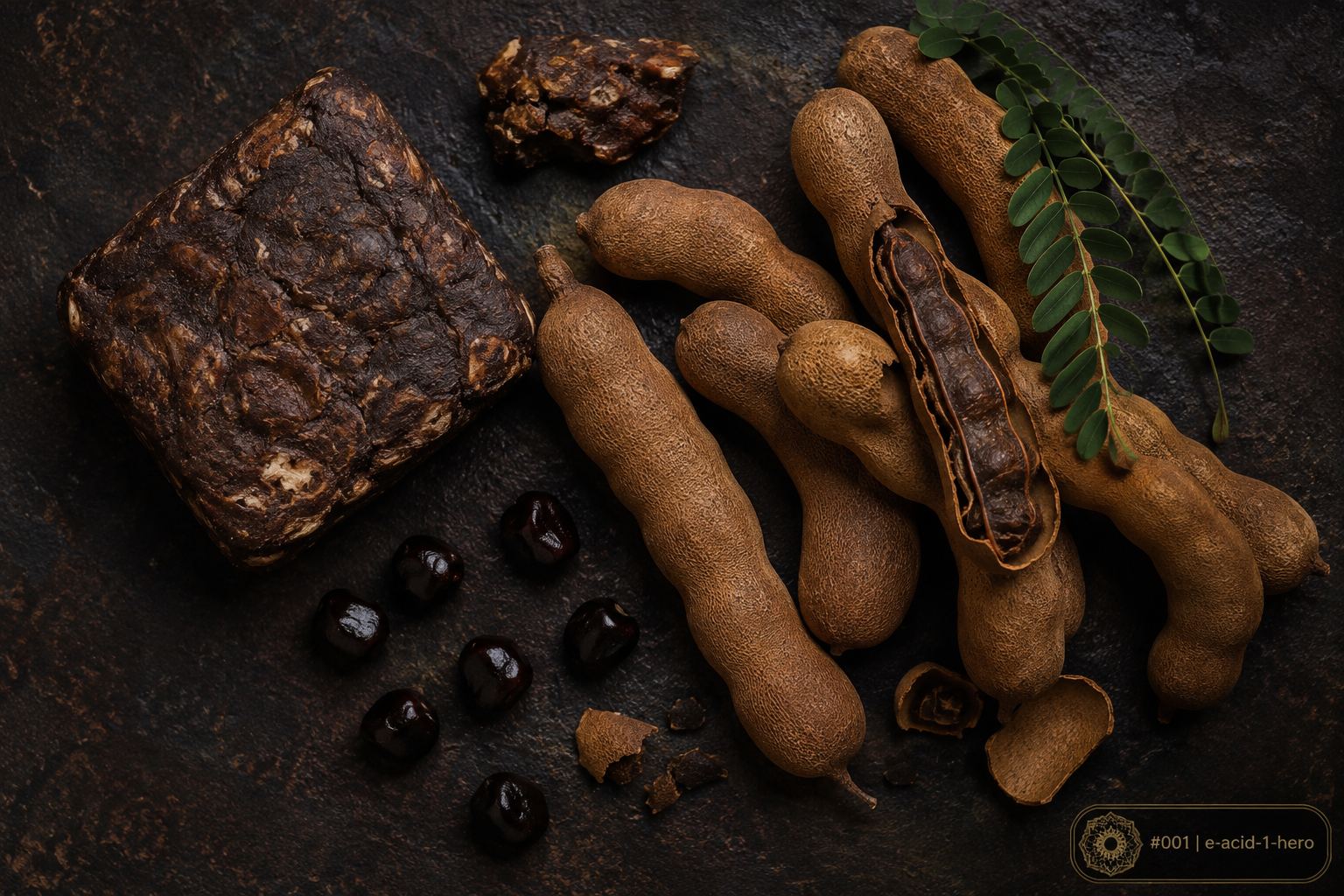
Tamarind is the fruit pod of Tamarindus indica — a large tree native to Africa but cultivated in South Asia for at least 3,000 years. The pod contains sticky, dark brown pulp surrounding seeds. The pulp has a complex flavour — intensely sour from tartaric acid, with background sweetness and depth that distinguishes it from citrus sourness.
In Indian cooking, tamarind is used primarily as the souring agent in South Indian dishes — sambhar, rasam, kolambu, and tamarind rice — and as the base of chutneys and pani puri water. It is used in three main forms: compressed block (soaked in water to extract paste), commercial paste (convenient but less complex), and fresh pods (seasonal).
- Sambhar and rasam derive their fundamental sourness from tamarind — lime or vinegar cannot replicate the depth
- Pani puri water across North India is based on tamarind extract and chaat masala — without it the preparation doesn't work
- Tamarind rice (puliyodarai) is a South Indian temple food with ancient tradition — made exclusively with tamarind
- South Indian chutneys — particularly the dark, complex chutneys served with idli and dosa — use tamarind as a base
- India produces the majority of the world's tamarind — it is both agricultural export and culinary foundation
Tamarind Through History
Tamarind is native to tropical Africa but has been cultivated in India for at least 3,000 years, and possibly much longer. Ancient Sanskrit texts reference amlika (tamarind) in both culinary and medicinal contexts. Arab traders gave it the name tamr hindi ('Indian date'), which became the English 'tamarind' — reflecting that Arab traders first encountered it through Indian trade.
In South India, tamarind is so deeply embedded in cooking that the Tamil word puli (sour) is effectively synonymous with tamarind. Temple cooking across South India has used tamarind for millennia — puliyodarai (tamarind rice) is one of the most ancient South Indian temple preparations.
The Science of Tamarind
How to Store Tamarind
How to Buy Good Tamarind
How to Use Tamarind Correctly
- Soak 50g block in 200ml warm water 20 minutes, squeeze and strain for extract
- For sambhar: add tamarind water after the lentil base is established — simmer 10 minutes
- For rasam: add tamarind water at start — cook down to develop the flavour
- For chutney: add 2–3 tbsp extract with jaggery, dates, and spices
- Tamarind paste: use 1 tsp in place of 50g soaked block
- 1/4 lemon-sized ball of block per dish for 4 people
What Tamarind Pairs Well With
Dishes That Use Tamarind
Where Tamarind Matters Most
| South Indian Cuisine | Essential |
| North Indian Cuisine | Essential |
| Street Food | Essential |
| Jain Cooking | Essential |
| Sattvic Cooking | Common |
Tamarind vs Kokum vs Amchur (Souring Agents)
| Feature | Tamarind | Kokum | Amchur (Dry Mango) |
|---|---|---|---|
| Primary acid | Tartaric | Hydroxy citric | Citric |
| Colour | Dark brown | Pink-purple | Pale |
| Flavour depth | Complex, rich | Fruity, clean | Sharp, direct |
| Region | All India / South India | Goa, Konkan coast | North India primarily |
| Form | Block, paste, pods | Dried rinds | Powder |