Ingredient identity
Ingredient DNA
Kokum — Garcinia Indica
Garcinia indica · Family: Clusiaceae · Genus: Garcinia
Origin
Konkan coast — endemic to coastal India
Category
Souring Agent (dried fruit rind)
Form
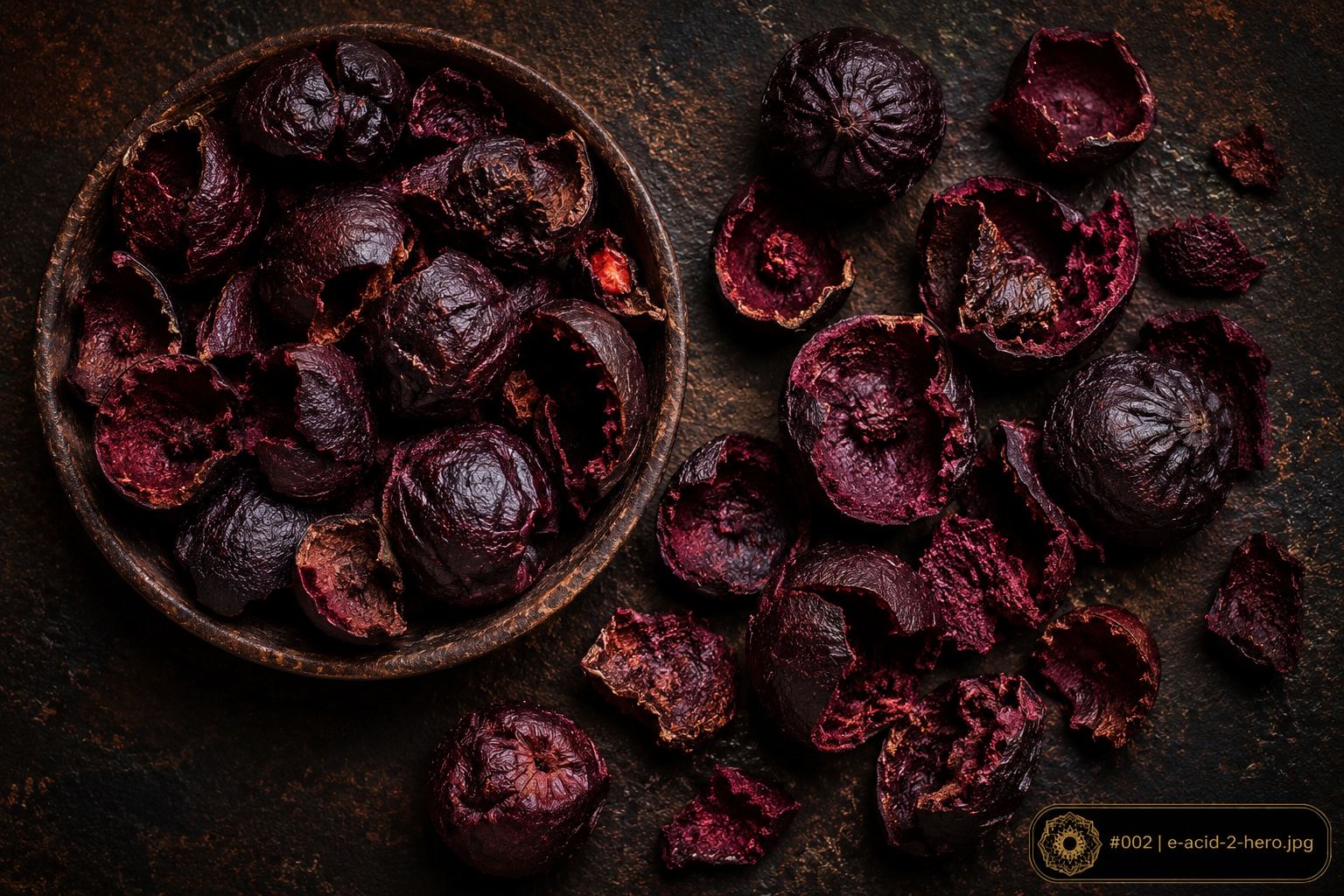
Dried purple-maroon fruit rinds
Primary Use
Sol kadhi · Fish curry · Sharbat · Kokum kadhi
Key Acid
Hydroxy citric acid (HCA)
Colour
Deep pink-purple from anthocyanins
Regional Weight
★★★★★ Goa
★★★★★ Konkan coast
★★★★☆ Gujarat
Taste profile
What Does Kokum Taste Like?
Botanical classification
Names across India
Kokum in Every Indian Language
| Language | Name | Pronunciation |
|---|
| English | Kokum | KOH-kum |
| Hindi | कोकम — Kokum | KOH-kum |
| Bengali | কোকুম — Kokum | KOH-kum |
| Tamil | முர்க்காலி — Murkkali | MUR-kah-lee |
| Telugu | కోకం — Kokam | KOH-kum |
| Malayalam | కుడంపులి — Kudampuli (related) | koo-dum-POO-lee |
| Kannada | ರಟಂಬ — Ratamba | RAH-tum-bah |
| Gujarati | કોકમ — Kokam | KOH-kum |
| Marathi | कोकम / आमसुल — Kokam / Amsul | KOH-kum |
| Konkani | मुर्गाळ — Murgal | MUR-gal |
| Sanskrit | वृक्षाम्ल — Vrikshamla | VRIK-shahm-lah |
Origin and identity
What Is Kokum?
Kokum is the dried rind of Garcinia indica fruit — a tree native to the Konkan coast. Unlike tamarind's deep earthiness, kokum's sourness is clean, fruity, and slightly astringent with a beautiful pink-purple colour from anthocyanins. Sol kadhi — Goa's signature coconut-kokum drink — is impossible without kokum; tamarind would destroy the delicate pink colour and produce a completely different flavour.
What Indian Cooking Loses Without Kokum
- Sol kadhi exists only because of kokum — it defines Goa's culinary identity
- Goan and Konkan fish curries use kokum for a lighter, fruitier sourness compatible with delicate seafood
- The pink colour of kokum-based dishes is a visual signature of Konkan coastal cooking
- Kokum sharbat is a traditional cooling drink of the Konkan coast — drunk during summer heat
Historical significance
Kokum Through History
Historical Record
The Konkan's Endemic Souring Agent
Kokum is endemic to the Konkan coast — it grows nowhere else naturally. This geographic exclusivity shaped the culinary identity of Goa, coastal Maharashtra, and coastal Karnataka. Ancient Sanskrit texts reference vrikshamla (Garcinia species) in Ayurvedic medicine for digestive support — an application continuing in sol kadhi (traditionally served as a digestive after fish meals).
Cooking science
The Science of Kokum
HCA and the Pink Chemistry
Kokum's sourness comes from hydroxy citric acid (HCA) — a compound also found in the famous diet supplement Garcinia cambogia (a related species). HCA provides a clean, slightly astringent sour note. The pink colour comes from anthocyanins — pH-sensitive pigments that turn pink in acidic environments (sol kadhi) and blue-green in alkaline conditions. This pH sensitivity is why sol kadhi sometimes turns blue-grey if coconut milk (slightly alkaline) is added too aggressively or if the mixture is heated.
Storage science
How to Store Kokum
Key note
Keep very dry — moisture causes mould quickly
Note
Store in airtight container away from heat and light
Buying guide
How to Buy Good Kokum
✓ Look For
- Dark purple-maroon dried rinds
- Fruity-sour smell
- From Goan or Maharashtrian coastal stores
✗ Avoid
- Brown or pale — old
- Sticky or moist — will mould
- No fruity aroma
Technique
How to Use Kokum Correctly
Technique, quantity, and what to avoid
- Soak 4–6 pieces in 1 cup warm water 15–20 minutes
- Use soaking liquid in dishes
- For sol kadhi: extract kokum liquid, add to coconut milk with green chilli and salt
- For fish curry: add soaking liquid after spice base
- Start with less — HCA sourness builds gradually during cooking
Pairings
What Kokum Pairs Well With
Famous dishes
Dishes That Use Kokum
Regional use
Where Kokum Matters Most
Regional Importance
★★★★★
Goa
Defines the cuisine
★★★★★
Konkan Maharashtra
The souring agent of the coast
★★★★★
Coastal Karnataka
Fish and vegetable preparations
★☆☆☆☆
North India
Rarely used
| Goan Cuisine | Essential |
| Konkan Cuisine | Essential |
| Coastal Maharashtrian | Essential |
| Gujarati Cuisine | Common |
| North Indian Cuisine | Rare |
| Jain Cooking | Common |
Comparison
Kokum vs Tamarind vs Amchur
| Feature | Kokum | Tamarind | Amchur |
|---|
| Acid type | HCA | Tartaric | Citric |
| Colour | Pink-purple | Dark brown | Pale |
| Flavour | Clean, fruity | Complex, earthy | Sharp, fruity |
| Region | Goa, Konkan | All India | North India |
| In fish curries? | Essential (coastal) | Common (South) | Rarely |
Nutrition
Nutrition and Key Compounds
Kokum — Honest Nutritional Picture
Culinary quantities — aromatic and flavour contribution, not macro nutrition
Negligible at culinary quantities. HCA is the primary bioactive compound. Anthocyanins provide antioxidant properties. Traditional Ayurvedic digestive use has empirical basis.
Substitutions
Substitutes for Kokum
What Works and What Does Not
Tamarind (half quantity)
Provides sourness but earthier, brown colour — completely different appearance.
Lime juice
Clean sourness but no colour, no HCA.
For Sol Kadhi
The specific pink colour and fruity sourness cannot be replicated.
Chef's notes
Practical Insight
From the Kitchen
Sol kadhi turns its most beautiful pink when fresh kokum liquid and fresh coconut milk meet in correct proportions. Add coconut milk gently — vigorous mixing in warm conditions can break the emulsion. Serve immediately or refrigerate — it separates and discolours over time.