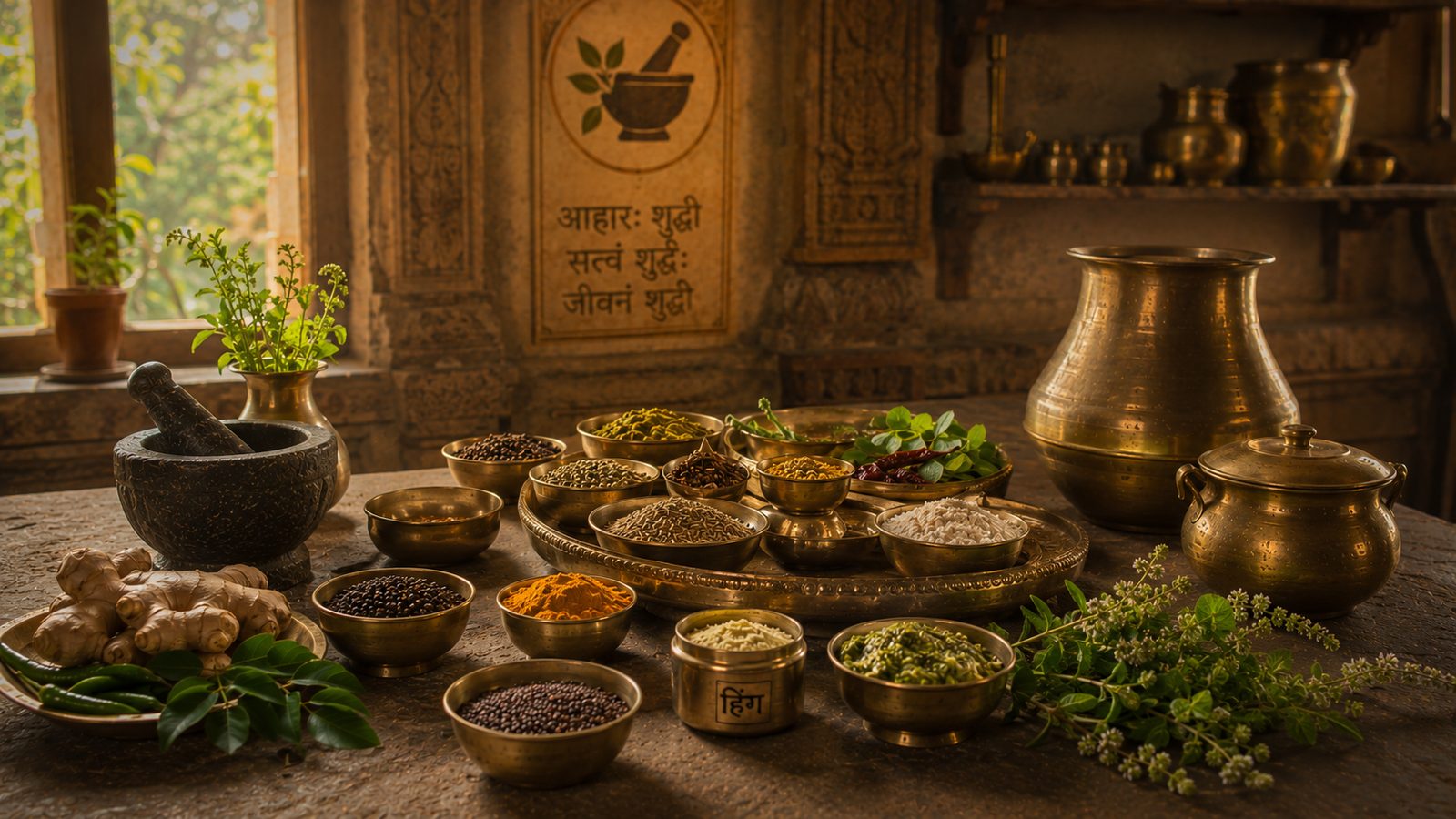
Open any North Indian cookbook and garlic appears on nearly every page. Now visit a Jain household, a Vaishnav temple kitchen, or an Ayurvedic ashram. Garlic is entirely absent — not reduced, not occasional. Absent. And the food produced there is extraordinary. These two worlds have coexisted for at least two and a half thousand years. The garlic-free world is not a lesser tradition. It is the more ancient one.
Garlic Was Ancient in India
Garlic is ancient in India — this must be established clearly before discussing the traditions that avoid it. Archaeological evidence suggests garlic cultivation in the subcontinent from at least 3000 BCE, and it appears in ancient Sanskrit texts, in Ayurvedic medical literature, and in classical Indian poetry. The Charaka Samhita and Sushruta Samhita both discuss garlic extensively — not primarily as a food but as a medicine, with documented uses for digestive health, circulatory function, respiratory conditions, and antimicrobial properties.
The ancient Indian understanding of garlic's medicinal potency was sophisticated and largely confirmed by modern pharmacological research. This medicinal potency is precisely why certain traditions excluded garlic from daily eating. If garlic is a powerful medicine, it affects the body powerfully — which means it also affects the mind, the nervous system, and spiritual practice. Ancient Indian philosophy was not wrong about this: garlic contains allicin and related sulfur compounds that have documented physiological effects. The communities that avoided garlic were not ignorant of it. They knew exactly what it was and chose not to eat it for considered reasons.
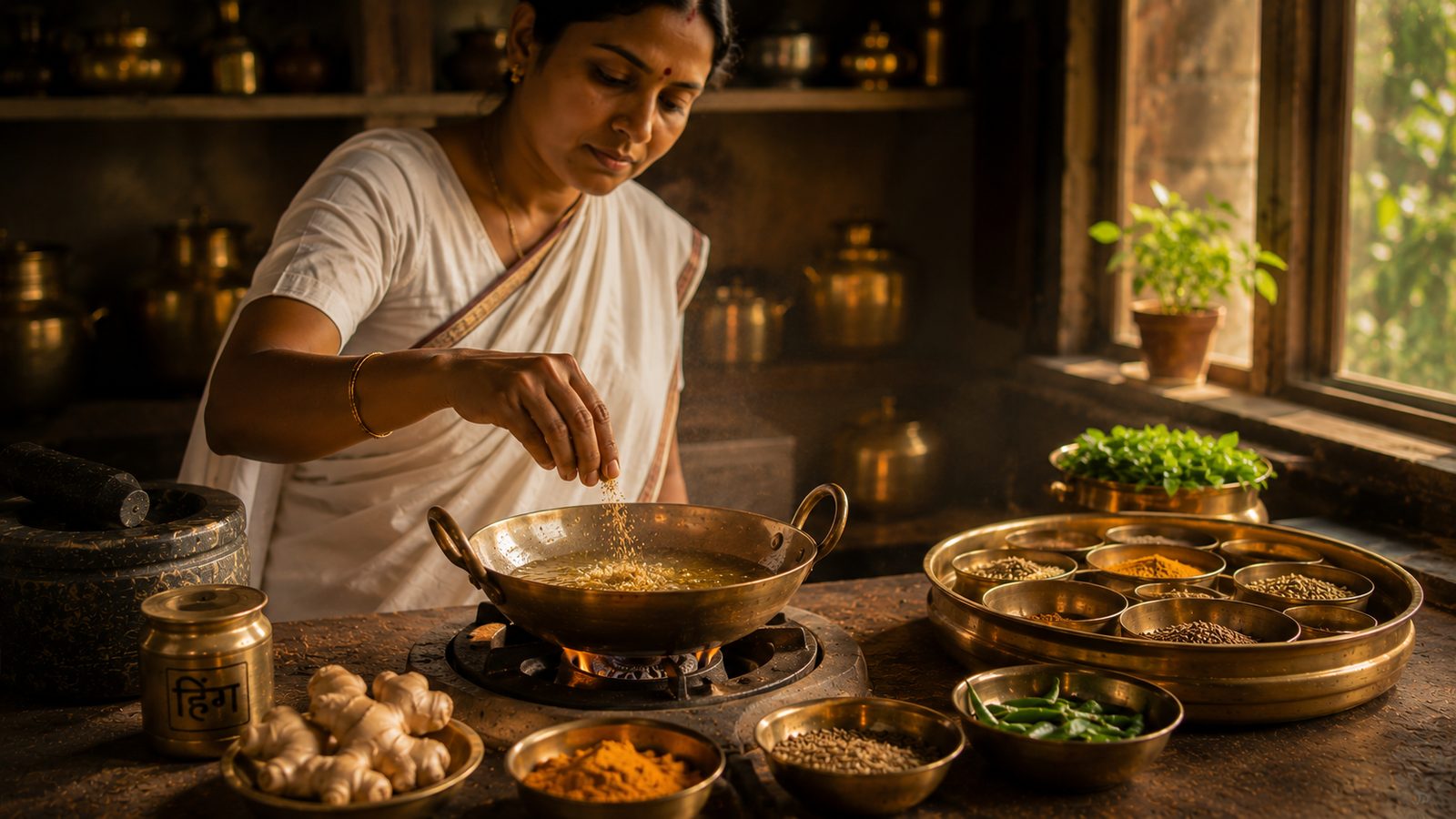
A sattvic kitchen: cooking that achieves extraordinary flavour complexity without garlic or onion — through mastery of spice, timing, and technique rather than the shortcut of pungent aromatics.
What the Archaeology Tells Us
Archaeological Evidence at a Glance
c. 3000 BCE: Garlic cultivation in the Indian subcontinent documented in early archaeological and textual evidence.
Vedic Period: Garlic classified as rajasic in early Ayurvedic and philosophical texts. Avoided by certain priestly and meditative traditions from this period.
c. 600 BCE: Jain traditions codify garlic avoidance alongside other root vegetables under the principle of ahimsa.
Ayurvedic texts (Charaka Samhita, Sushruta Samhita): Extensive documentation of garlic's medicinal properties. The same texts that document its therapeutic power also note its rajasic classification.
Medieval India: Garlic-free temple and sattvic traditions firmly established. Temple cooking across South India and North India functions without garlic.
Timeline
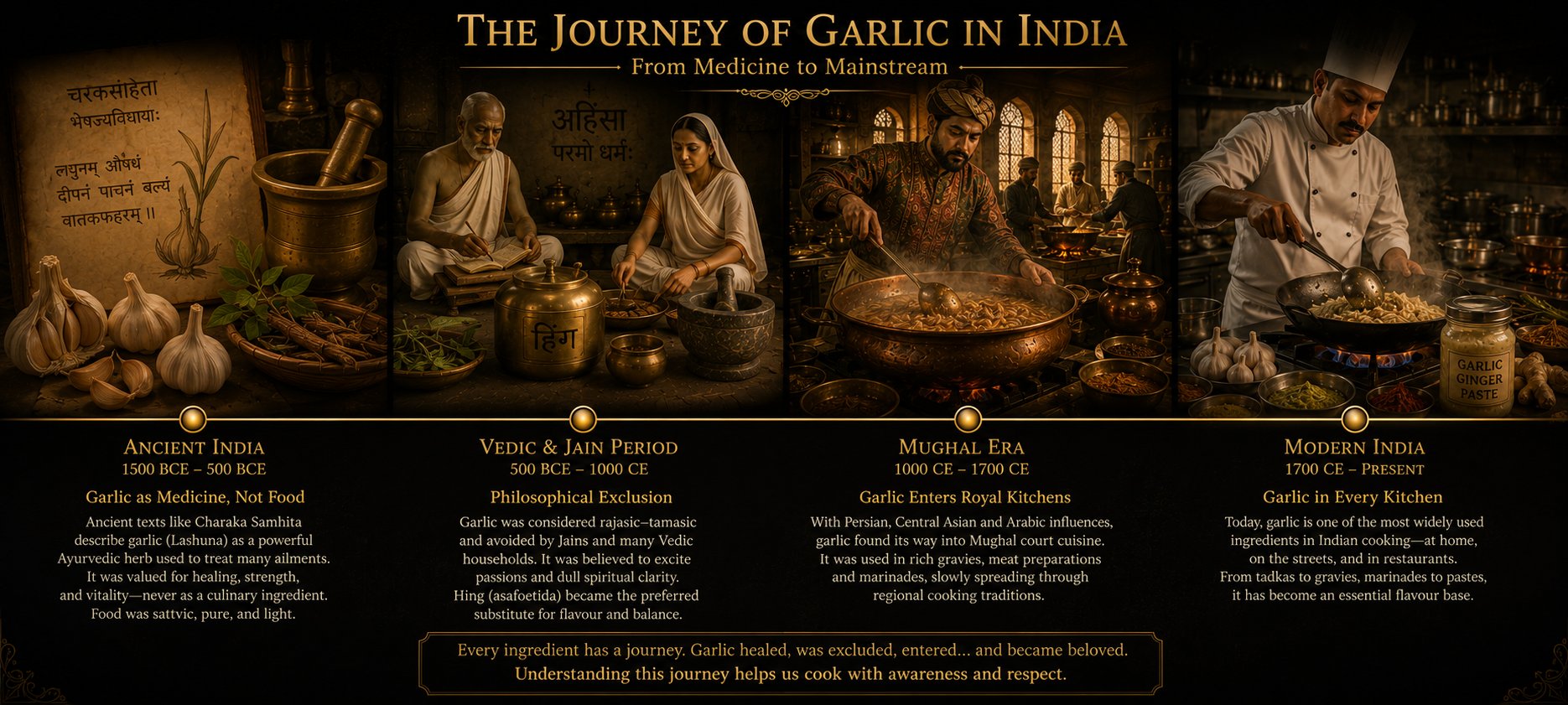
Five thousand years of garlic history in India — and the parallel traditions that chose to build without it. Click to enlarge.
| Period | Development |
|---|---|
| c. 3000 BCE | Garlic cultivation in India; documented in ancient texts and archaeological evidence. |
| Vedic Period | Garlic classified as rajasic; avoided by priestly and meditative traditions. |
| c. 600 BCE | Jain traditions codify garlic avoidance alongside all root vegetables. |
| Ayurvedic Period | Charaka Samhita and Sushruta Samhita document garlic's medicinal properties in detail. |
| Medieval India | Garlic-free temple and sattvic traditions firmly established across multiple regions. |
| Mughal Period | Garlic-ginger paste enters Mughal court cuisine; the combination becomes standard in North Indian cooking. |
| Modern India | Garlic dominant in restaurant cooking. Garlic-free Jain, Vaishnav, temple, and sattvic traditions persist and thrive. |
The Science of Garlic Flavour
Garlic's extraordinary flavour intensity comes from allicin — a sulfur-containing compound created when garlic cells are damaged by cutting, crushing, or chewing. Allicin is one of the most potent flavour molecules in any common food: a single clove of garlic contains enough allicin to flavour an entire dish. When cooked, allicin and related compounds undergo further chemical transformations, producing over a hundred different flavour molecules that range from sweet and nutty in slow-cooked preparations to sharp and pungent when used raw or briefly heated.
Raw garlic and cooked garlic are genuinely different flavour experiences. Raw garlic is harsh, penetrating, and persistent. Slow-cooked garlic loses most of this pungency as allicin converts to sweeter, nuttier compounds — this is why roasted garlic tastes almost mild. Indian cooking uses garlic across the full spectrum of these transformations: raw in raitas and chutneys, briefly fried in tadka, slow-cooked into gravies, and everything in between.
Hing vs Garlic — The Same Molecular Family, Different Character
Both hing and garlic derive their characteristic flavour from organosulfur compounds, which is why hing is an effective flavour substitute for garlic in onion-free and garlic-free cooking. But they are not identical.
Garlic produces a sweet, building warmth when cooked slowly and a sharp pungency when used briefly. Hing provides an immediate, penetrating savoury depth with no sweetness — more similar to the sharp end of garlic than the caramelised end. Used well, hing creates a savoury foundation that satisfies the flavour role garlic fills in other kitchens. Used carelessly, it dominates and overwhelms. The garlic-free tradition demands a different set of culinary skills: more reliance on spice management, timing, and technique — less ability to correct errors by adding more of a dominant flavouring.
Before vs After: Two Flavour Architectures
The Great Garlic-Free Traditions
Jain cuisine avoids garlic as a root vegetable on grounds of ahimsa — harvesting it destroys the entire plant. This is the most rigorous garlic-free tradition and has produced the most elaborately developed alternative approach to flavour construction. Vaishnav traditions — the cooking of communities devoted to Vishnu and Krishna — avoid garlic because it is considered disrespectful in food offered to the deity. Temple cooking across India follows similar principles. Sattvic cooking in yoga ashrams and Ayurvedic practice contexts avoids garlic on grounds of its rajasic classification.
Each of these traditions has independently developed sophisticated approaches to flavour construction that produce extraordinary cooking without garlic. They are living evidence that garlic is a convenience rather than a necessity — a very powerful convenience, but not an irreplaceable one.
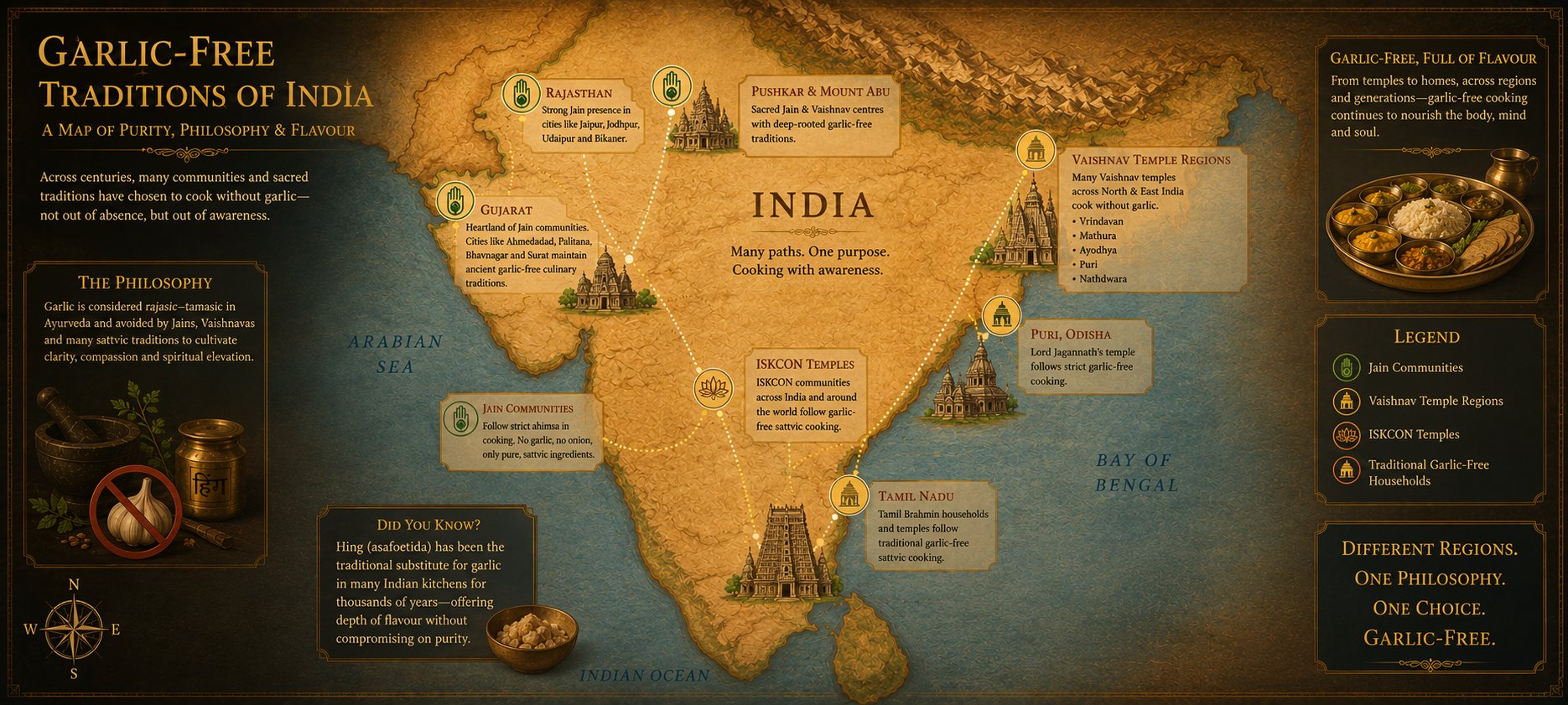
The geography of garlic-free Indian cooking — spread across the subcontinent, in Jain communities, Vaishnav temples, and sattvic traditions, demonstrating that the practice is not regional but philosophical. Click to enlarge.
Debate & Myths
Is Garlic-Free Cooking Just Mild Cooking?
This is perhaps the most common misconception. Garlic-free cooking in the Jain and sattvic traditions is not mild — it is differently structured. The spice vocabulary of Jain cooking includes chillies, black pepper, ginger, cumin, coriander, mustard seeds, and a full range of aromatic spices. What it lacks is garlic's specific pungency, not spice intensity in general.
Some of the most intensely flavoured Indian food is garlic-free. Jain festival food in Gujarat can be extraordinarily complex in its spicing. South Indian temple cooking uses the full vocabulary of Tamil and Telugu spice traditions. The absence of garlic requires the cook to develop other flavour dimensions more fully — which is why experienced practitioners of garlic-free cooking often produce dishes of greater subtlety and complexity than those that rely on garlic as a dominant flavouring.
Did Ancient Indians Actually Eat Garlic Freely?
The textual evidence suggests that garlic was used widely in cooking among communities not observing philosophical restrictions, while simultaneously being avoided by priestly, meditative, and later Jain communities. This two-track relationship — widespread culinary use alongside principled avoidance — is clearly documented in ancient literature.
The Arthashastra references garlic as a traded commodity, indicating common use. The same period's Jain texts codify its avoidance. Both were true simultaneously, which is exactly the situation that continues today — garlic-using and garlic-free traditions have always coexisted in Indian culture, not as majority and minority but as distinct philosophical approaches to the same ingredient.
What If Garlic Had Always Been Avoided?
If the sattvic and Jain traditions had become dominant rather than the garlic-using Mughal and restaurant style, Indian cooking globally would be built on hing rather than garlic-ginger paste. The flavour architecture of restaurant Indian food would be entirely different — more delicate, more spice-dependent, more demanding of technique.
The global spread of Indian restaurant cooking was partly enabled by garlic's role as a forgiving, powerful flavouring that can compensate for imprecise technique. Without it, the democratisation of Indian food through the restaurant tradition would have been slower and the style that spread globally would have been more faithful to the ancient spice tradition — and considerably more complex to produce.
"The garlic-free tradition is not deprivation. It is discipline — the discipline of building flavour through understanding rather than through the shortcut of one of the world's most powerful ingredients."
What Survived
The Pre-Garlic Tradition That Remains
Modern Legacy
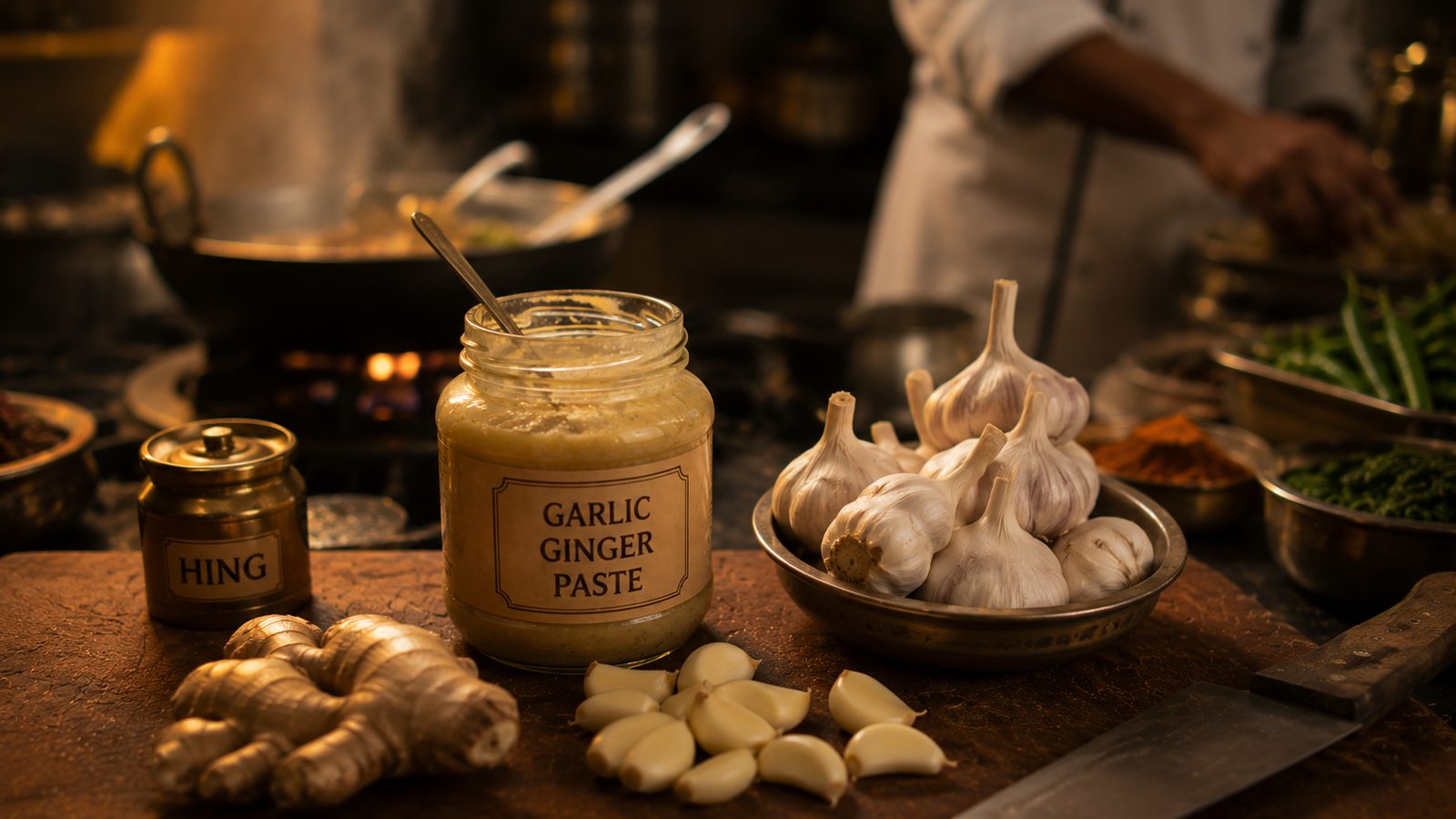
Modern Indian cooking is garlic-dominant in restaurants and most homes — yet the garlic-free tradition has never been stronger, practised daily by millions across Jain, Vaishnav, and sattvic communities.
Garlic today is so fundamental to restaurant Indian cooking that its 3,000-year history as a deliberately avoided ingredient is almost invisible. The garlic-ginger paste that begins most Indian restaurant preparations is assumed to be ancient and essential — yet the tradition that preceded it, which built extraordinary flavour without garlic, is still alive and producing food of comparable sophistication.
The existence of the garlic-free tradition is one of Indian cooking's most remarkable achievements. Over two and a half millennia, Jain, Vaishnav, temple, and sattvic cooks have consistently demonstrated that Indian culinary complexity is not dependent on garlic. That demonstration continues every day, in every temple kitchen and Jain household in India.
Food History Scorecard
| Impact Area | Change | Still Visible? |
|---|---|---|
| Restaurant Cuisine | Extreme | Garlic-ginger paste is now the global standard for Indian cooking |
| Jain Cuisine | None | Garlic-free tradition maintained continuously for 2,500 years |
| Temple Cooking | None | Garlic-free — unbroken tradition across all major temple kitchens |
| Ayurvedic Cooking | None | Sattvic classification of garlic as rajasic still applied in traditional contexts |
| Global Indian Food Image | Extreme | Garlic-forward cooking is what the world identifies as Indian food |
| Flavour Diversity | High | Two parallel traditions — garlic-using and garlic-free — produce genuinely different flavour architectures |
Confidence Scale
| Claim | Confidence | Basis |
|---|---|---|
| Garlic cultivation in India from at least 3000 BCE | High | Archaeological and textual evidence consistent; some specific dating continues to be refined. |
| Jain avoidance of garlic is 2,500 years old | Very High | Well-documented in Jain canonical literature from the time of Mahavira. |
| Hing and garlic share the same organosulfur molecular family | Very High | Established food chemistry. |
| Charaka Samhita documents garlic as a medicine | Very High | Directly documented in the text. |
| Garlic-ginger paste became dominant through Mughal-influenced restaurant cooking | High | Consistent with the historical record of Mughal culinary influence and the development of restaurant cuisine. |
Further Reading
- K.T. Achaya — Indian Food: A Historical Companion
- Colleen Taylor Sen — Feasts and Fasts
- Charaka Samhita (Ayurvedic text)
- Sushruta Samhita (Ayurvedic text)
- Padmanabh Jaini — The Jaina Path of Purification