Series 1 · The Chronological Story · Chapter 1 of 17
Food of the
Indus Valley
The Ingredients, The People,
And The World's First Urban Food System
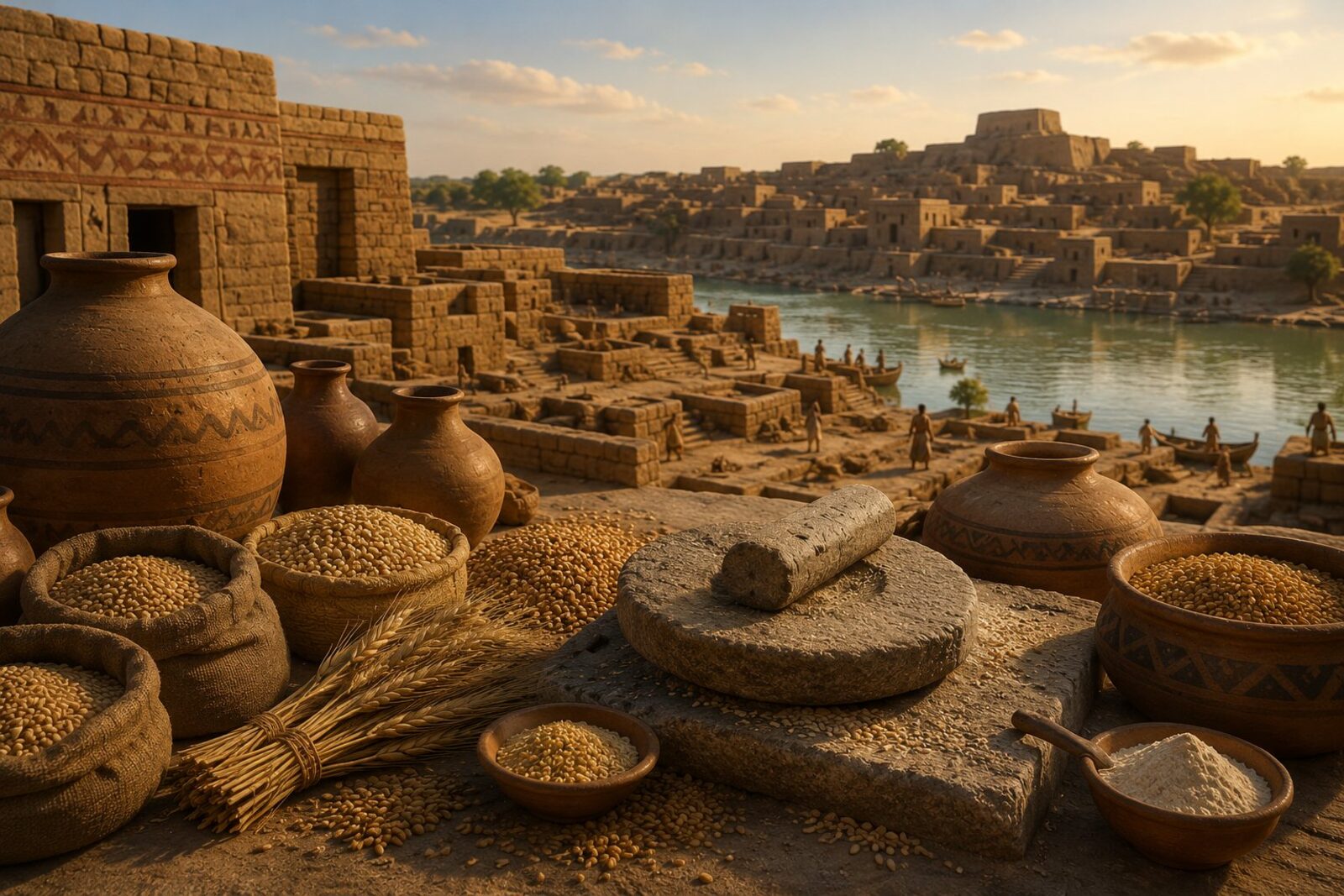
Artist's reconstruction based on archaeological evidence
The Ingredients, The People,
And The World's First Urban Food System
Artist's reconstruction based on archaeological evidence
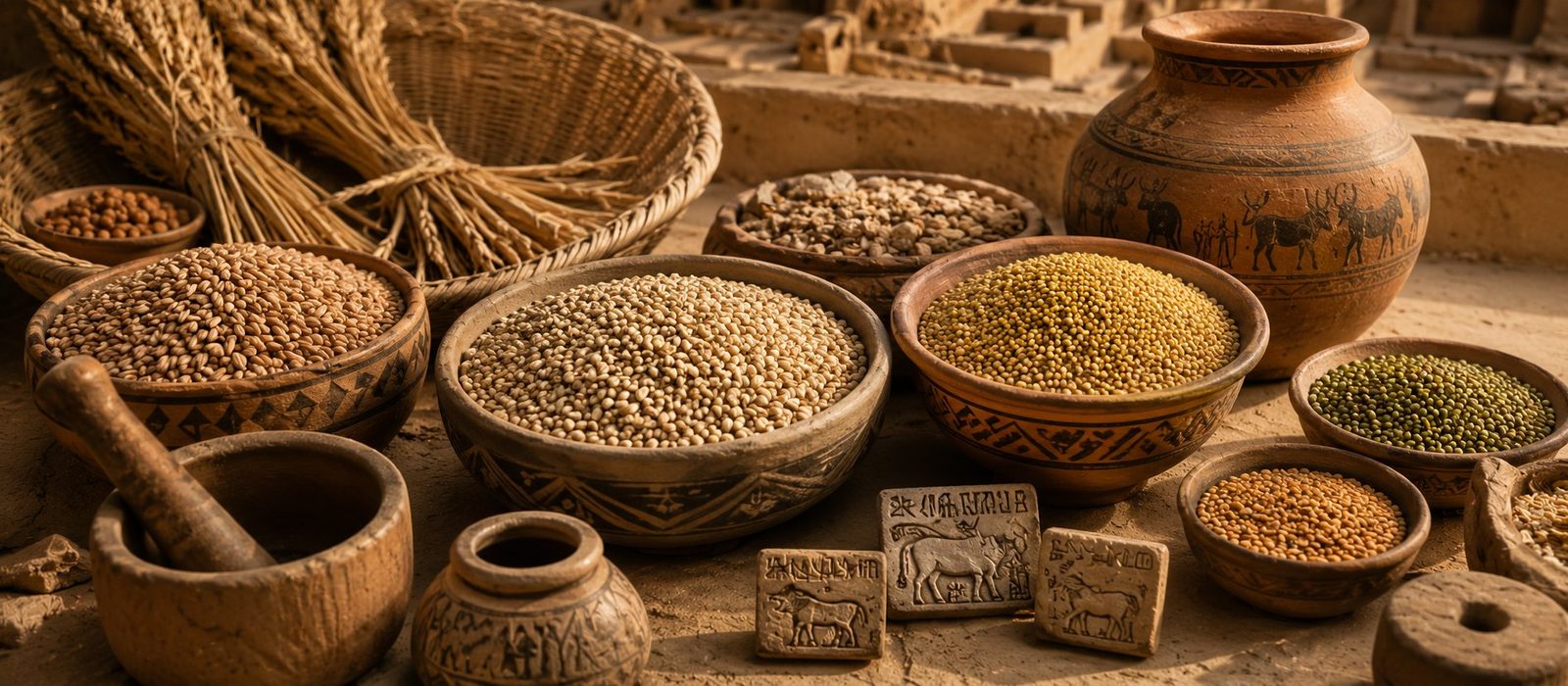
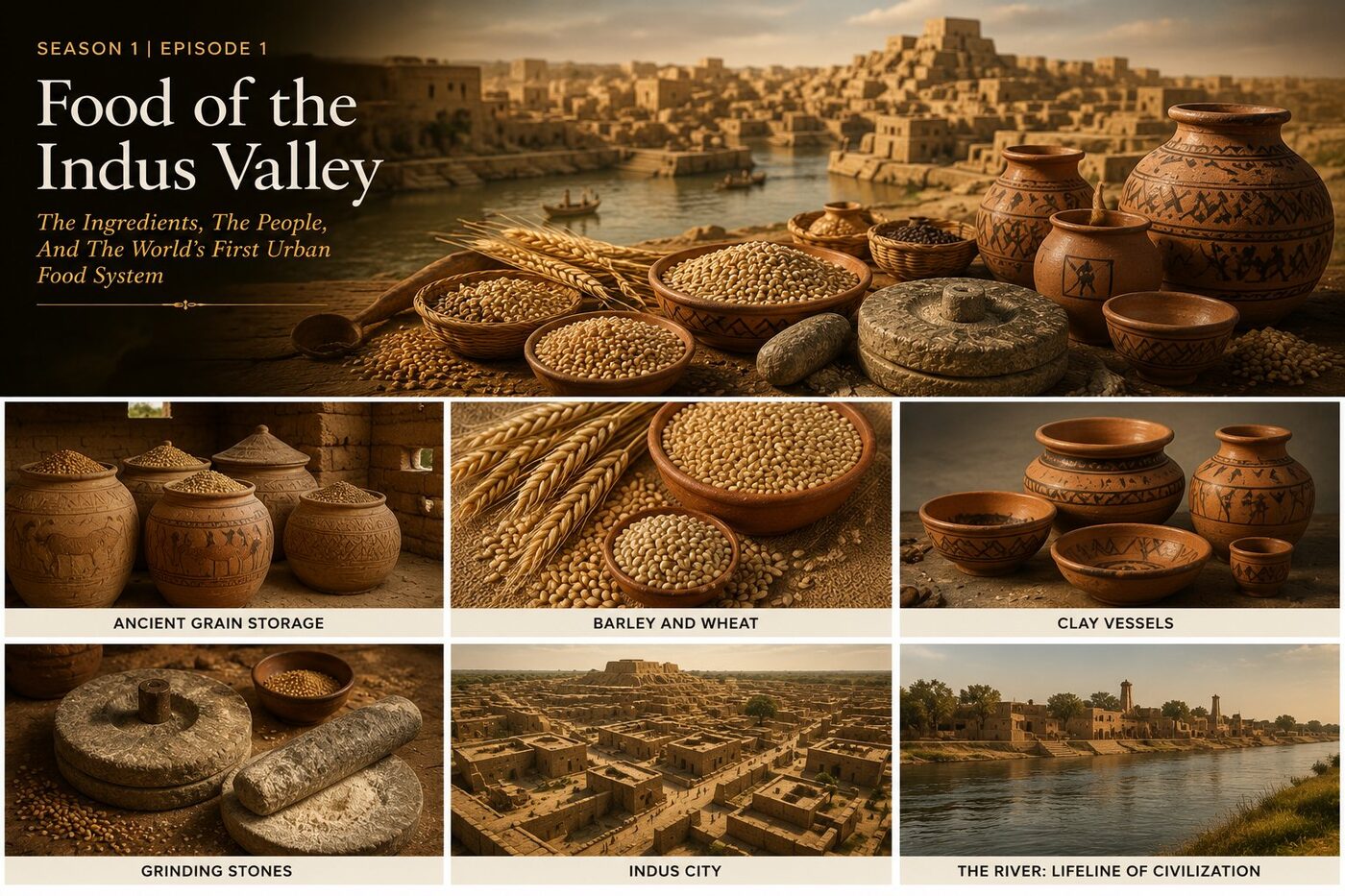
Imagine entering a kitchen four thousand years ago. The city outside has straight streets, a functioning drainage system, and a granary large enough to feed tens of thousands. The smell reaching you is not the sharp heat of chilli — there are no chillies anywhere in this world. What you smell is grain, sesame oil heating in a clay pot, and something unmistakable beneath it all: turmeric.
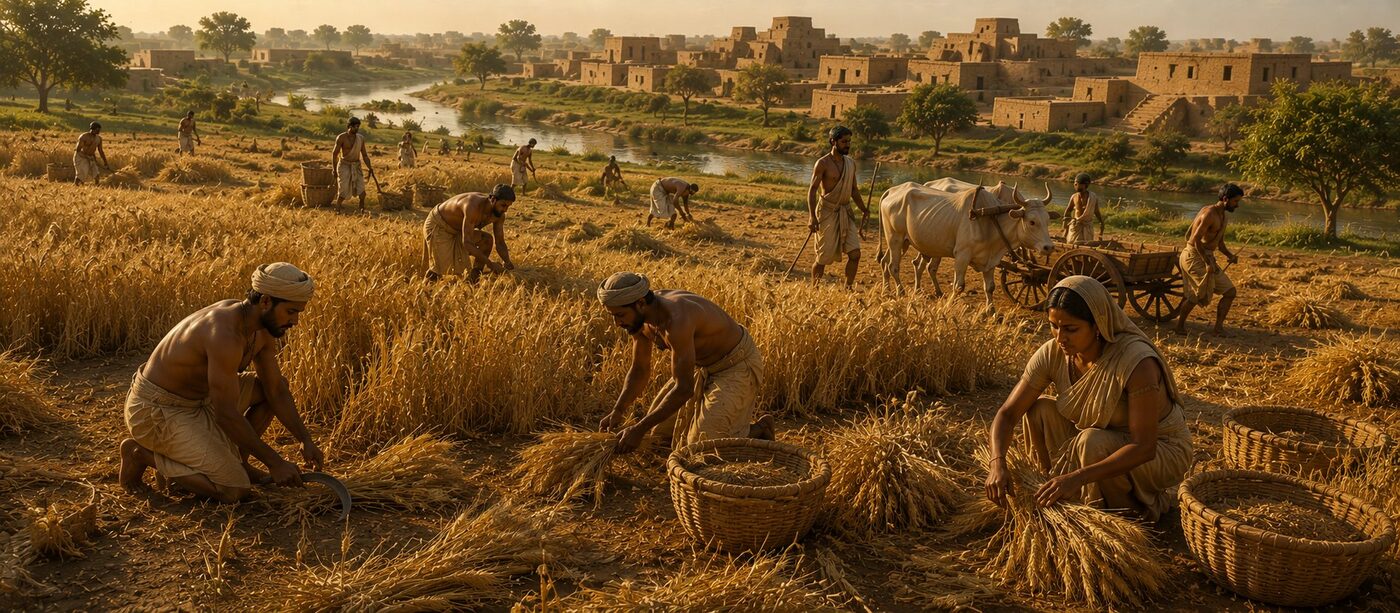
One of the most important corrections to the popular understanding of Indus Valley food is the role of barley. Modern readers often assume rice was the dominant grain of ancient India — partly because rice is so central to Indian cooking today. But the archaeological evidence tells a different story. At Indus Valley sites, barley (Hordeum vulgare) appears in greater quantity and across more sites than rice. It was the grain that built Harappa and Mohenjo-daro.
Rice certainly existed in the Indus Valley — charred rice grains have been found at multiple sites, particularly in the eastern and southern regions of the civilisation. But it was a secondary crop, likely restricted to wetter agricultural zones. The everyday staple for most Indus Valley people was barley: ground into flour for flatbreads, brewed into fermented beverages, stored in the great granaries that are among the most impressive architectural features of Harappan cities. Understanding this corrects a widespread misconception — and makes the eventual dominance of rice in Indian cooking one of the more interesting agricultural transitions in Indian food history.
 🔍 Click to enlarge
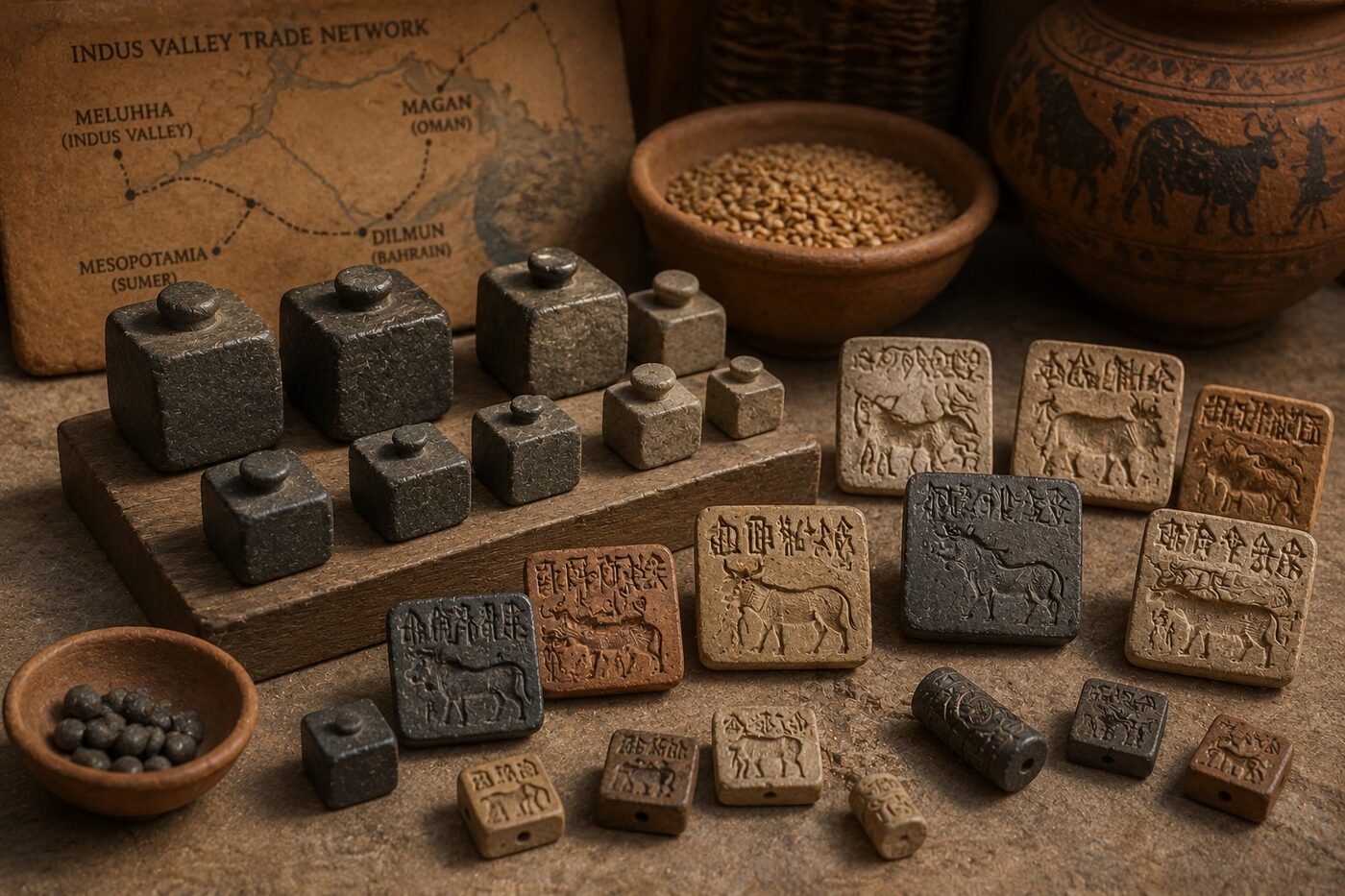
The most important fact about Indus Valley food culture is scale. These were not small farming settlements. At its height, the city of Mohenjo-daro likely housed between 40,000 and 80,000 people — comparable to ancient Rome at its republican peak. Feeding populations of this magnitude without any machinery, refrigeration, or modern logistics required agricultural sophistication that was genuinely extraordinary for the time.
The granaries are the clearest evidence of this. The great granary at Mohenjo-daro sat on a raised brick platform with ventilation ducts beneath the floor to prevent moisture build-up and the fungal spoilage that moisture enables. This is not a simple storage pit. This is engineered food infrastructure, built by people who understood grain biology and the catastrophic consequences of spoilage at city scale.
"The people of Mohenjo-daro were building ventilated granaries, using standardised weights, and trading spices internationally while most of Europe was still in the early Bronze Age. This was not a primitive food system. It was a mature one."
Indian Cooking Guide — History SeriesWheat and barley were the twin foundations of the Indus diet, cultivated across the vast floodplain of the Indus and its tributaries. They are nutritionally complementary — wheat provides more gluten, making it more suitable for bread; barley is hardier, more drought-tolerant, and higher in certain B vitamins. Growing both was not redundancy: it was risk management, reflecting generations of accumulated farming knowledge about seasonal variability and crop behaviour under different conditions.
Alongside the grains, lentils, chickpeas, and field peas have been confirmed archaeologically at multiple Indus sites. A diet of grain alone is nutritionally incomplete — grains provide carbohydrate energy but are limited in the essential amino acids lysine and threonine. Pulses complete the amino acid profile. The people of the Indus Valley were solving the protein challenge of feeding a large, primarily plant-eating urban population through dietary combination — through the observed fact, accumulated over generations, that people who ate grain with lentils were healthier than people who ate grain alone. This grain-and-pulse combination remains the nutritional foundation of Indian food today.
The most remarkable finding from modern Indus archaeology is the spice residue evidence. Residue analysis — identifying chemical traces left in ancient pottery using chromatography and spectroscopy — has found turmeric and ginger at Indus Valley sites. This is not interpretation. This is chemical identification of specific molecular compounds in specific vessels. Curcumin (turmeric) and gingerols (ginger) survive in pottery residues for millennia under the right conditions, and they have been positively identified.
What this tells us changes the story of Indian food fundamentally. The spice-forward character of Indian cooking is not a later cultural development. It appears to be among the oldest identifiable features of cooking on the Indian subcontinent. The people of Harappa were combining grain, pulse, and spice — turmeric providing colour and mild warmth, ginger adding aromatic heat — in ways that are structurally identical to the foundation of Indian cooking today.
The spice trade that would eventually reshape world history — driving the Portuguese around Africa, sending Columbus westward — has its origins in the Indus Valley period. By 2500 BCE, Indus merchants were trading regularly with Mesopotamian cities including Ur and Lagash. Indus seals have been found in Mesopotamian archaeological layers. Mesopotamian goods have been found at Indus sites. The evidence is unambiguous.
Mesopotamian cuneiform texts reference imports from "Meluhha" — the Mesopotamian name for the Indus region — including textiles, ivory, carnelian beads, copper, and specific aromatics. This is the Indian spice trade in its earliest documented form, operating three and a half thousand years before Vasco da Gama made it the economic engine of European colonialism.
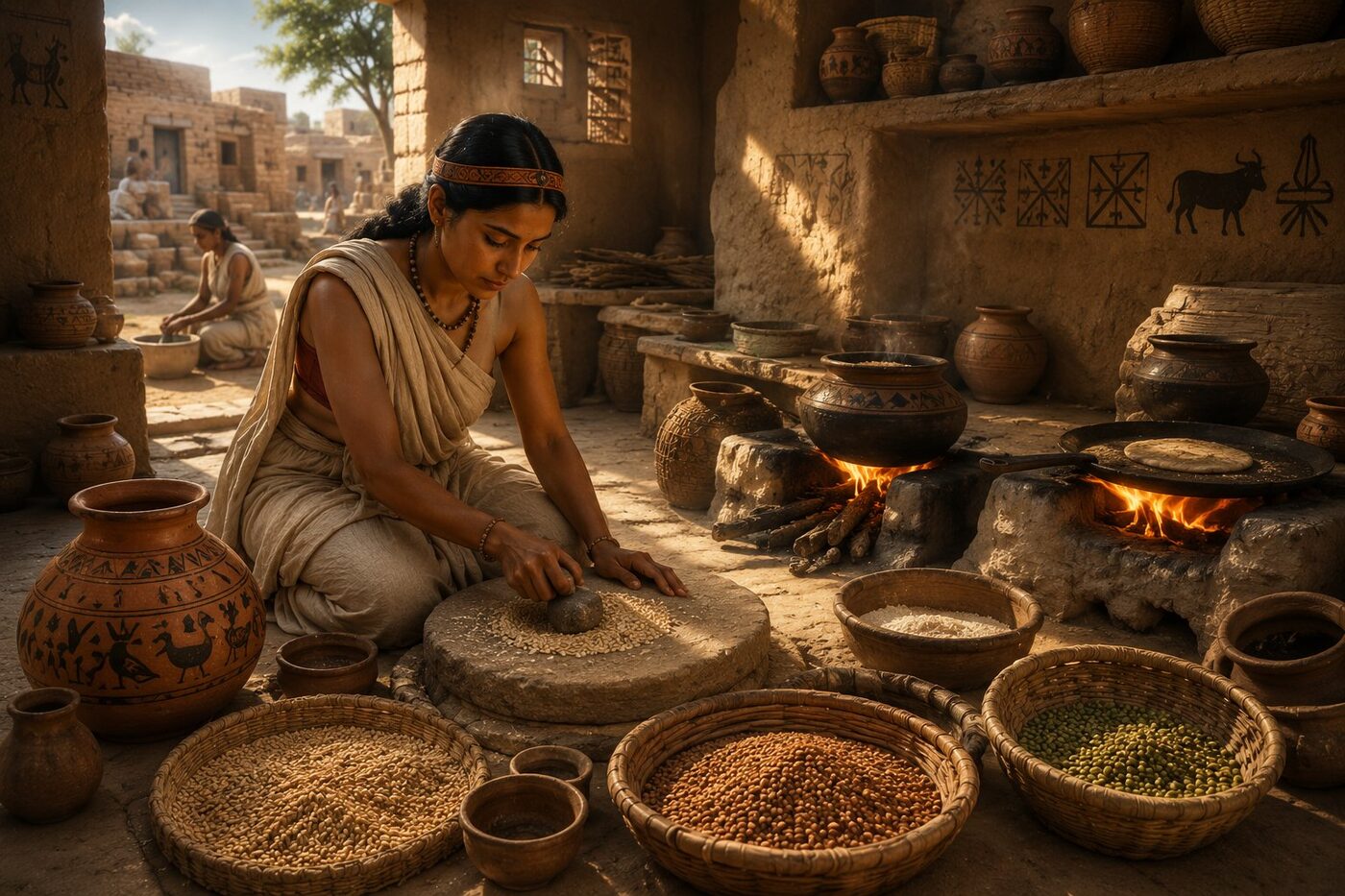
One of the most striking discoveries from Indus archaeology is the standardised weight system — small stone cubes calibrated to a common standard, found identically from Harappa to Dholavira to coastal trading sites thousands of kilometres apart. A standardised weight system implies regulated trade. You cannot cheat on grain weight when your buyer has the same standard weights. The weights are evidence of commercial sophistication that would not be matched elsewhere in the world for another thousand years.
| Food | Category | Evidence Level | Notes |
|---|---|---|---|
| Wheat | Grain | Strong | Archaeobotanical finds at 15+ sites across the civilisation |
| Barley | Grain | Strong | May have dominated the early period before wheat became primary |
| Lentils | Pulse | Strong | Multiple varieties confirmed; the dal tradition begins here |
| Chickpeas | Pulse | Strong | Confirmed at Harappa and other sites |
| Sesame | Oilseed / Spice | Strong | Primary cooking oil of the period; also consumed as seed |
| Turmeric | Spice | Strong | Curcumin residue identified in cooking vessels by spectroscopy |
| Ginger | Spice | Strong | Gingerol residue confirmed; wild ginger native to region |
| Mustard | Spice / Oilseed | Strong | Seeds found at multiple sites; likely both oil and tempering use |
| Dates | Fruit / Sweetener | Moderate | Primary sweetener of the period; date palm evidence present |
| Fish | Protein | Moderate | River and coastal site evidence; likely significant protein source |
| Cattle | Meat / Draft | Moderate | Bones present; consumption vs. agricultural role debated |
| Field Peas | Pulse | Moderate | Some archaeobotanical evidence; extent of cultivation unclear |
| Rice | Grain | Limited | Peripheral site evidence only; wheat and barley overwhelmingly dominant |
| Black Pepper | Spice | Limited | Native to Malabar; trade routes likely existed, direct evidence sparse |
| Millet | Grain | Limited | Present but minor crop in this period; becomes significant much later |
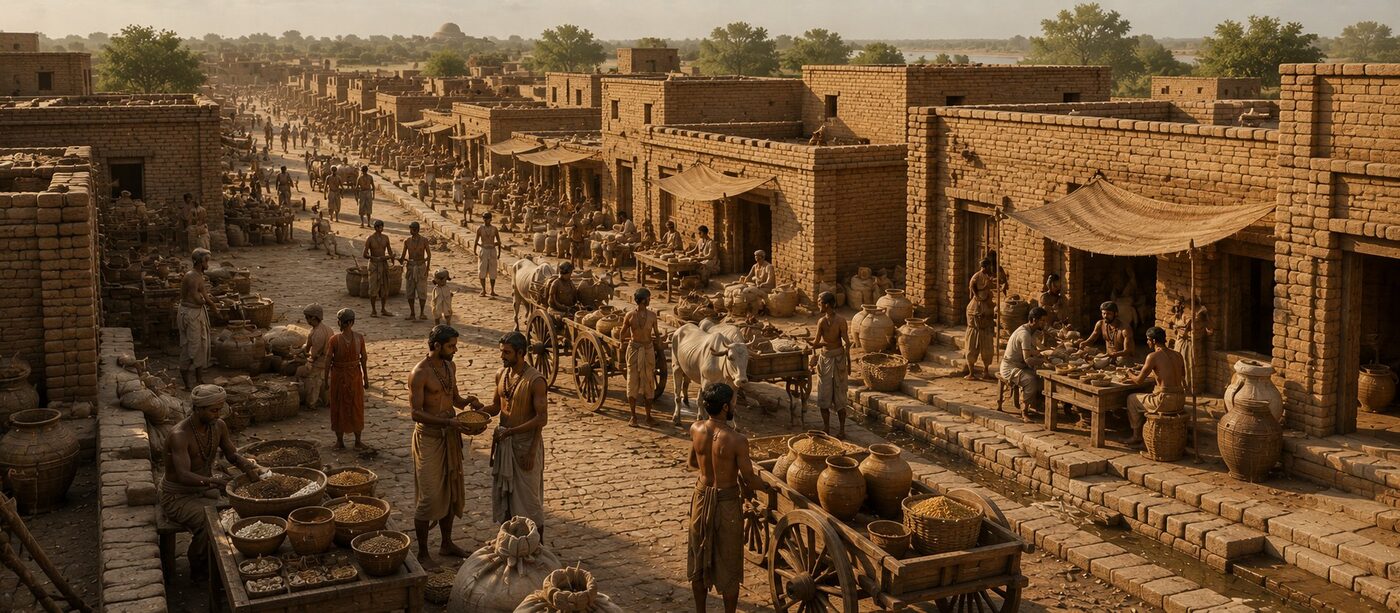
The kitchen is a ground-floor room in a two-storey brick house on a side street in Mohenjo-daro. The street outside has a covered drain — the city's famous drainage system is already functioning. Dawn has barely broken. The household has been awake for twenty minutes.
The first task is the grain. Yesterday's barley was soaked overnight in a clay storage jar. It is spread now on the lower grinding stone — a flat sandstone slab approximately 60 centimetres long, slightly hollowed from years of use — and the upper roller stone is worked back and forth under the cook's body weight. The sound is rhythmic and loud in the quiet house. The grain slowly becomes flour. This work takes close to an hour. It is always the first work of the day.
The flour is mixed with water in a clay bowl, kneaded on a stone surface until it holds together, and shaped into flat rounds. A clay griddle sits over the cooking fire — dried dung cakes burning steadily, as they always do. Each round goes on for two or three minutes on each side, developing char marks where it touches the clay. The smell of cooking barley fills the room and drifts into the street.
In a second clay pot, yesterday's lentils are being reheated. A thumb of dried ginger goes in. A pinch of mustard seed is dropped into a small ladle of sesame oil — it pops immediately, spattering across the lentils. Turmeric follows, turning everything gold. This is not decoration. This is the cooking logic of a culture that has learned, over generations, that these spice combinations make food more digestible, more appealing, and more antimicrobially stable in a hot climate.
Breakfast in Mohenjo-daro: flatbread and spiced lentils. The same meal, in its structural essentials, is still eaten by hundreds of millions of people every morning across India. The spices are the same. The cooking logic is the same. Four thousand years have passed.
What did people actually eat at different times of day? This reconstruction is built from archaeobotanical evidence, cooking vessel analysis, and comparison with documented ancient food cultures at similar technological levels. Each meal carries a confidence rating reflecting how strongly the evidence supports it.
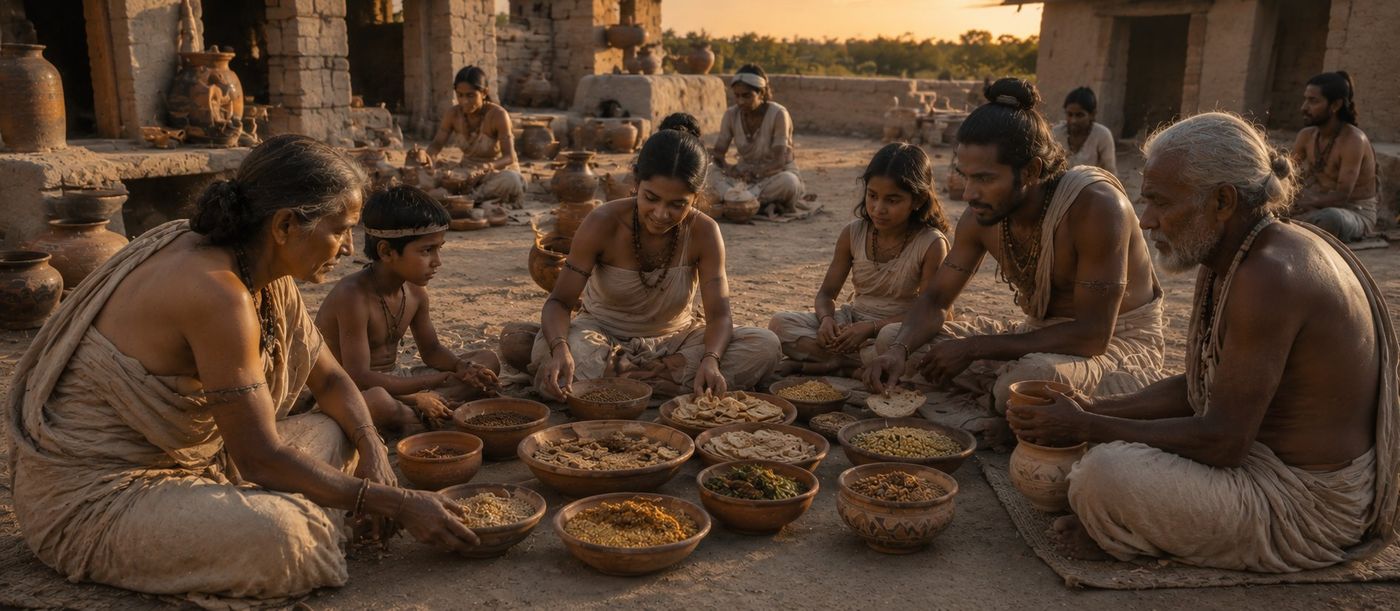
The evidence for this meal is the strongest of any reconstruction. Grinding stones confirm daily grain processing. Clay griddles confirm flatbread cooking. Lentil remains and spice residues in cooking vessels confirm the spiced pulse preparation. The combination of grain flatbread and cooked spiced lentils is the most archaeologically supported meal in Indus Valley food history — and it has survived in essentially unchanged form for four thousand years as dal-roti.
At the larger meal of the day, the evidence suggests a more substantial preparation. Barley porridge — grain simmered in water until thick — was almost certainly a significant part of the diet alongside flatbread. Fish bones at river and coastal Indus sites confirm fish consumption. The addition of sesame and dates fits the available evidence and the agricultural context, though the specific combination here is an informed reconstruction rather than a confirmed record.
The presence of cattle and pig bones at Indus sites — combined with evidence of communal spaces and the large-scale granary system — suggests that more substantial meals, potentially including meat, occurred on specific occasions. Whether these were religious, seasonal, or social celebrations is entirely unknown. This reconstruction is the most speculative: meat consumption is confirmed but its frequency, social context, and preparation methods remain unclear.
The discovery of turmeric residue in Indus Valley cooking vessels raises an immediate scientific question: how does a spice compound survive for four millennia? The answer lies in the chemistry of curcumin and the physics of fired clay.
Curcumin is a polyphenol — a large, stable organic molecule that resists bacterial degradation. Unlike proteins or fats, polyphenols do not readily break down in the absence of oxygen and moisture. When food containing turmeric is heated in a clay vessel, curcumin molecules are driven under heat and pressure into the microscopic pores of the clay walls. There they become physically embedded in the ceramic matrix — trapped and chemically stable, essentially isolated from the degradation processes that would otherwise destroy them.
The key insight: The same property that makes unglazed clay cooking vessels desirable to traditional cooks — their ability to absorb and slowly release flavour compounds — is the property that preserves food evidence for archaeologists four thousand years later. The flavour that entered the pot in 2500 BCE left a molecular signature that modern spectroscopy can read today.
The grinding stones found at Indus sites were not crude tools — they were precision instruments for a specific chemical transformation. When whole wheat or barley grain is ground on stone, friction breaks the outer bran layer and releases the starchy endosperm. The resulting flour has a fundamentally different digestibility profile: the starch is physically disrupted and more accessible to human amylase enzymes, producing faster energy release and making the flour suitable for bread-making.
Stone grinding also produces particles of varied size — some fine, some coarser — creating a flour with more textural complexity and flavour depth than roller-milled equivalents, because different starch and protein fractions cook at slightly different rates. This is why stone-ground atta is still prized by traditional Indian bakers despite cheaper industrial alternatives being widely available.
In modern Indian cooking, ghee is central. But the dominant cooking fat of the Indus Valley was almost certainly sesame oil. Sesame is a warm-season crop perfectly suited to the Indus basin — heat-tolerant, drought-resistant, productive in alluvial soil. It produces oil at approximately 50% of seed weight, with a smoke point of around 210°C, ideal for flatbread cooking and spice tempering.
Crucially, sesame oil contains sesamol and sesamolin — natural antioxidants that dramatically slow oxidative rancidity. In a pre-refrigeration climate where ambient temperatures regularly exceed 35°C, a cooking fat that resists going rancid for months is not a preference but a necessity. This antioxidant stability is why sesame oil was the dominant cooking fat of the ancient world across multiple civilisations — Egyptian, Mesopotamian, and Indus — before other options became available.
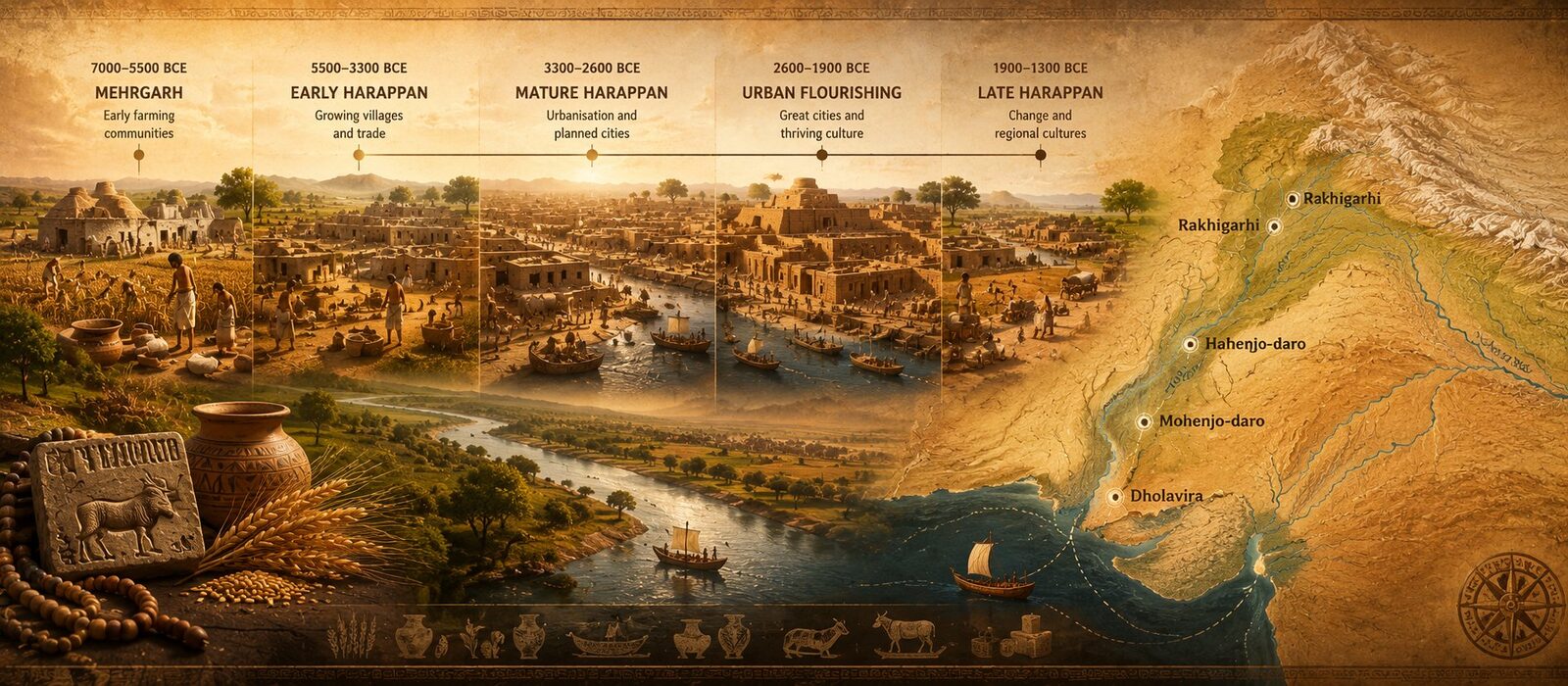
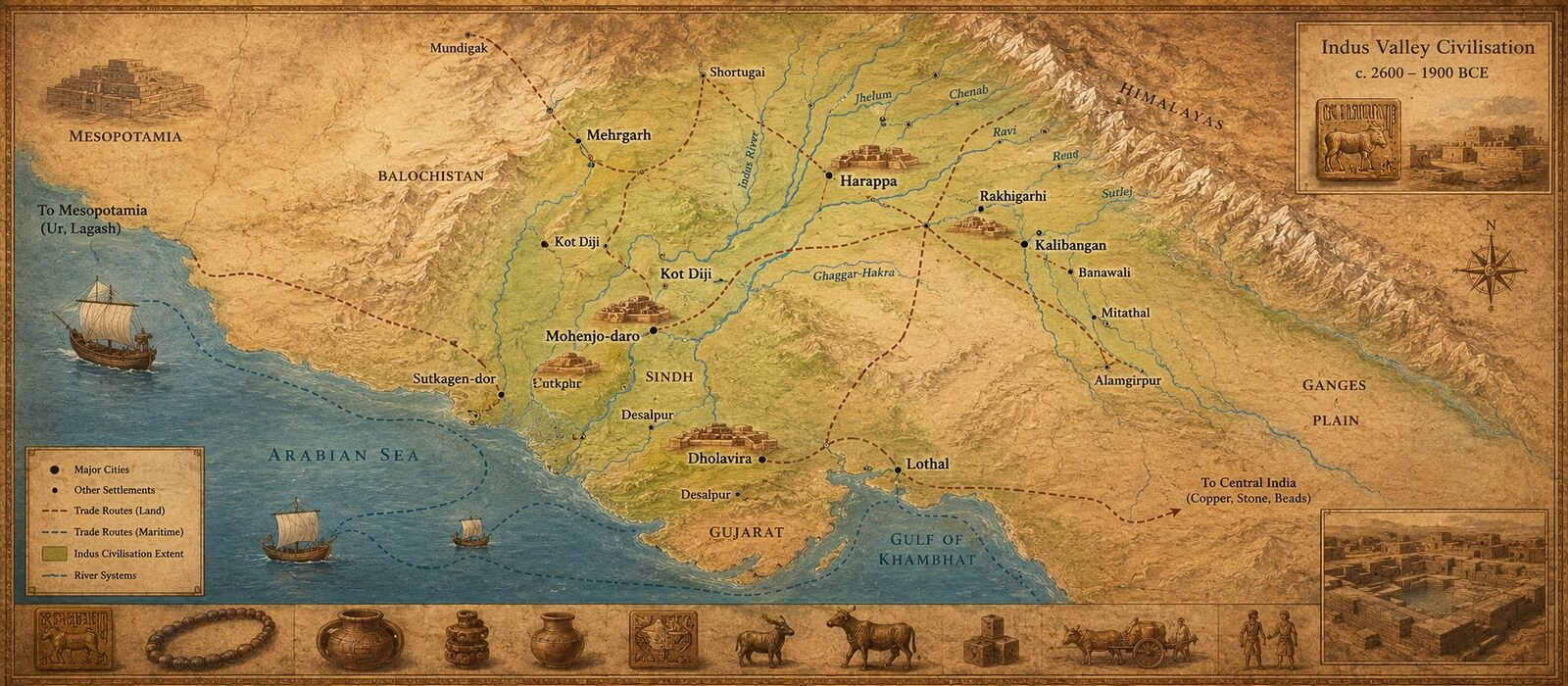
The Indus Valley Civilisation extended across an area larger than ancient Egypt and Mesopotamia combined. This map shows the major sites and the trade routes that connected them to the ancient world.
 🔍 Click to enlarge
Every ingredient below is now central to Indian cooking. None of them existed in the Indus Valley. Understanding their absence is as important as understanding what was present — it explains why Indian food changed so dramatically after 1500 CE.
Because you are cooking their food.
When you make dal for dinner tonight, you are performing a nutritional strategy that the people of Mohenjo-daro had already perfected four thousand years ago. The grain-and-pulse combination on your table is not a tradition of decades or centuries — it is a tradition of millennia, refined over a timespan that makes the entire recorded history of most civilisations look brief.
When you add turmeric to your cooking, you are using the same spice that left its molecular signature in clay vessels in a city that no longer exists. The curcumin that gives dal its gold colour today is chemically identical to the curcumin that archaeologists found in Indus pottery. The continuity is not metaphorical. It is molecular.
Understanding the Indus Valley changes how you see everything that comes after. Every chapter of Indian food history that follows — the Vedic period, the Buddhist era, the Mughal courts, the Portuguese connection — is a story of additions and modifications to a food system that was already sophisticated, already spice-forward, already built around grain and pulse. Knowing the baseline makes every change more meaningful.
| Indus Valley, c. 2500 BCE | Modern India |
|---|---|
| Barley and wheat as primary grains | Wheat dominant in North; rice in South and East — both grown continuously for 4,000+ years |
| Sesame oil as primary cooking fat | Regional oils — mustard in East, coconut in South, groundnut in West — plus ghee; sesame survives in specific dishes |
| Turmeric as spice and colourant | Turmeric in virtually every Indian kitchen; still typically the first spice added to a dish |
| Stone grinding for all flour and spice work | Industrial mills for flour; stone grinders (sil-batta) still used for fresh spice pastes and chutneys in traditional cooking |
| Unglazed clay pots for all cooking | Steel and aluminium dominant; clay pots still used for biryani, dal, and specific regional dishes for the flavour clay imparts |
| Grain + pulse as daily nutritional foundation | Dal-roti and dal-rice still the daily meal for hundreds of millions — structurally the same nutritional strategy |
| No chillies, no tomatoes, no potatoes | All three now central to most regional cuisines — all arrived within the last 500 years and feel completely ancient |
| Flatbread on a clay griddle over fire | Roti and chapati on a tawa over gas or electric — same preparation logic, four thousand years of continuity |
The Indus Valley Civilisation disappeared as a distinct urban culture approximately 3,300 years ago. Yet its food legacy is not difficult to find. It is in every Indian kitchen, every day.