★★★★★ South India
★★★★★ All Cuisines
What Does Turmeric Taste Like?
Turmeric in Every Indian Language
| Language | Name | Pronunciation |
|---|---|---|
| English | Turmeric | TUR-meh-rik |
| Hindi | हल्दी — Haldi | HAL-dee |
| Bengali | হলুদ — Holud | HOH-lood |
| Tamil | மஞ்சள் — Manjal | MAN-jal |
| Telugu | పసుపు — Pasupu | PAH-soo-poo |
| Malayalam | മഞ്ഞൾ — Manjal | MAN-jal |
| Kannada | ಅರಿಶಿನ — Arishina | ah-REE-shee-nah |
| Gujarati | હળદર — Haldar | HAL-dar |
| Marathi | हळद — Halad | HAH-lad |
| Punjabi | ਹਲਦੀ — Haldi | HAL-dee |
| Urdu | ہلدی — Haldi | HAL-dee |
| Sanskrit | हरिद्रा — Haridra | hah-RID-rah |
What Is Turmeric?
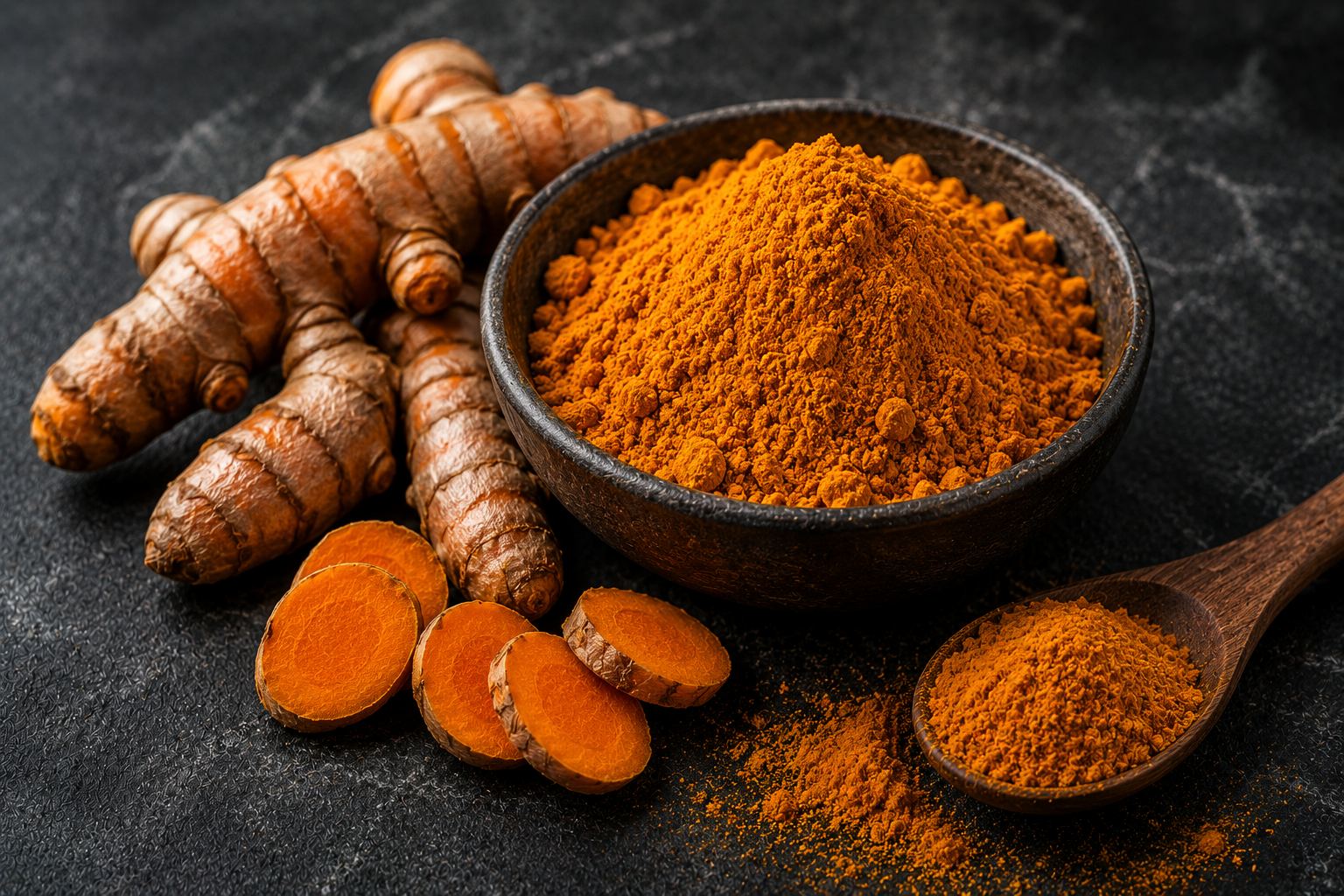
Turmeric — haldi — is the ground rhizome of Curcuma longa, a plant native to South Asia. It is the most universally used spice in Indian cooking, appearing in virtually every savoury preparation across every region — from Kashmir to Kerala, Gujarat to Bengal. Its role in Indian cooking is primarily as a colourant and base-level flavour agent, not as a dominant taste component the way cumin or cardamom would be.
Turmeric's flavour is mild, earthy, and slightly bitter — subtle enough that it is rarely noticed as a distinct taste in finished dishes, yet its absence is immediately apparent in the colour and perceived warmth of a preparation. Its bright golden colour comes from curcumin — the compound responsible for most of the health claims associated with turmeric.
- Indian cooking without turmeric is literally colourless — the golden hue of dals, curries, and rice preparations comes from haldi
- Turmeric functions as a preservative in Indian cooking — its antimicrobial properties help preserve pickles and prevent bacterial growth in cooked dishes at room temperature
- The antiseptic tradition — haldi doodh (turmeric milk) given for injuries and illness — reflects its documented antimicrobial properties
- Without turmeric, the masala base of most Indian curries loses the rounded, earthy warmth that underpins all other spice flavours
- Turmeric in fish marinades performs the dual function of colour and odour-reduction — the amine compounds in fish are neutralised by curcumin
Turmeric Through History
Turmeric is native to South Asia and has been cultivated in India for at least 5,000 years. Archaeological evidence from the Harappan civilisation shows turmeric residue in cooking vessels. Sanskrit texts reference haridra extensively in both cooking and medicine — the same dual role it occupies in Indian households today.
Turmeric was known in ancient Chinese, Arab, and Roman medicine but was largely used as a dye and medicinal plant outside India rather than as a cooking spice. Marco Polo noted it in the 13th century as a substance resembling saffron — hence the name 'Indian Saffron.' The connection between turmeric and wedding rituals (haldi ceremony) is ancient — the yellow colour is considered auspicious across South Asian cultures.
The modern global health food industry's interest in curcumin (from 2010s onwards) dramatically increased international awareness of turmeric, though Indian households had never stopped using it as a daily ingredient.
The Science of Turmeric
How to Store Turmeric
How to Buy Good Turmeric
How to Use Turmeric Correctly
- Add to hot oil with onion during the masala stage — usually 1/4 to 1/2 tsp per dish
- For fish: marinate with 1/4 tsp turmeric + salt 15 minutes before cooking
- For haldi doodh: 1/4 tsp in warm milk with a pinch of black pepper
- For lentils: add 1/4 tsp to cooking water — prevents excessive foaming and adds colour
- Do not add raw to cold dishes — the flavour is better when briefly cooked in oil
What Turmeric Pairs Well With
Dishes That Use Turmeric
Where Turmeric Matters Most
| North Indian Cuisine | Essential |
| South Indian Cuisine | Essential |
| Bengali Cuisine | Essential |
| Gujarati Cuisine | Essential |
| All Indian Cuisines | Essential |
| Jain Cooking | Essential |
| Sattvic Cooking | Essential |
Turmeric vs Saffron vs Annatto (Colour Spices)
| Feature | Turmeric | Saffron | Annatto |
|---|---|---|---|
| Colour | Yellow-orange | Deep golden-red | Orange-red |
| Flavour | Earthy, mild | Floral, complex | Mild, nutty |
| Price | Very low | Highest spice by weight | Low |
| Indian use | Essential — universal | Mughlai, Kashmiri | Rarely in traditional |
| Bioactive compound | Curcumin | Crocin | Bixin |
| Substitutable? | No — unique role | Partially with turmeric | No |