★★★★☆ North India
★★★☆☆ South India
What Does Poppy Seeds Taste Like?
Poppy Seeds in Every Indian Language
| Language | Name | Pronunciation |
|---|---|---|
| English | Poppy Seeds | POP-ee SEEDZ |
| Hindi | खसखस — Khus Khus | KHOOS KHOOS |
| Bengali | পোস্ত — Posto | POH-stoh |
| Tamil | கசகசா — Kasakasa | KAH-sah-KAH-sah |
| Telugu | గసగసాలు — Gasagasalu | gah-sah-GAH-sah-loo |
| Malayalam | കസകസ — Kasakasa | KAH-sah-KAH-sah |
| Kannada | ಗಸಗಸೆ — Gasagase | gah-sah-GAH-seh |
| Gujarati | ખસખસ — Khas Khas | KHAS KHAS |
| Marathi | खसखस — Khas Khas | KHAS KHAS |
| Punjabi | ਖਸਖਸ — Khas Khas | KHAS KHAS |
| Urdu | خشخاش — Khash Khash | KHASH KHASH |
| Sanskrit | खस-खस — Khasa-Khasa | KAH-sah KAH-sah |
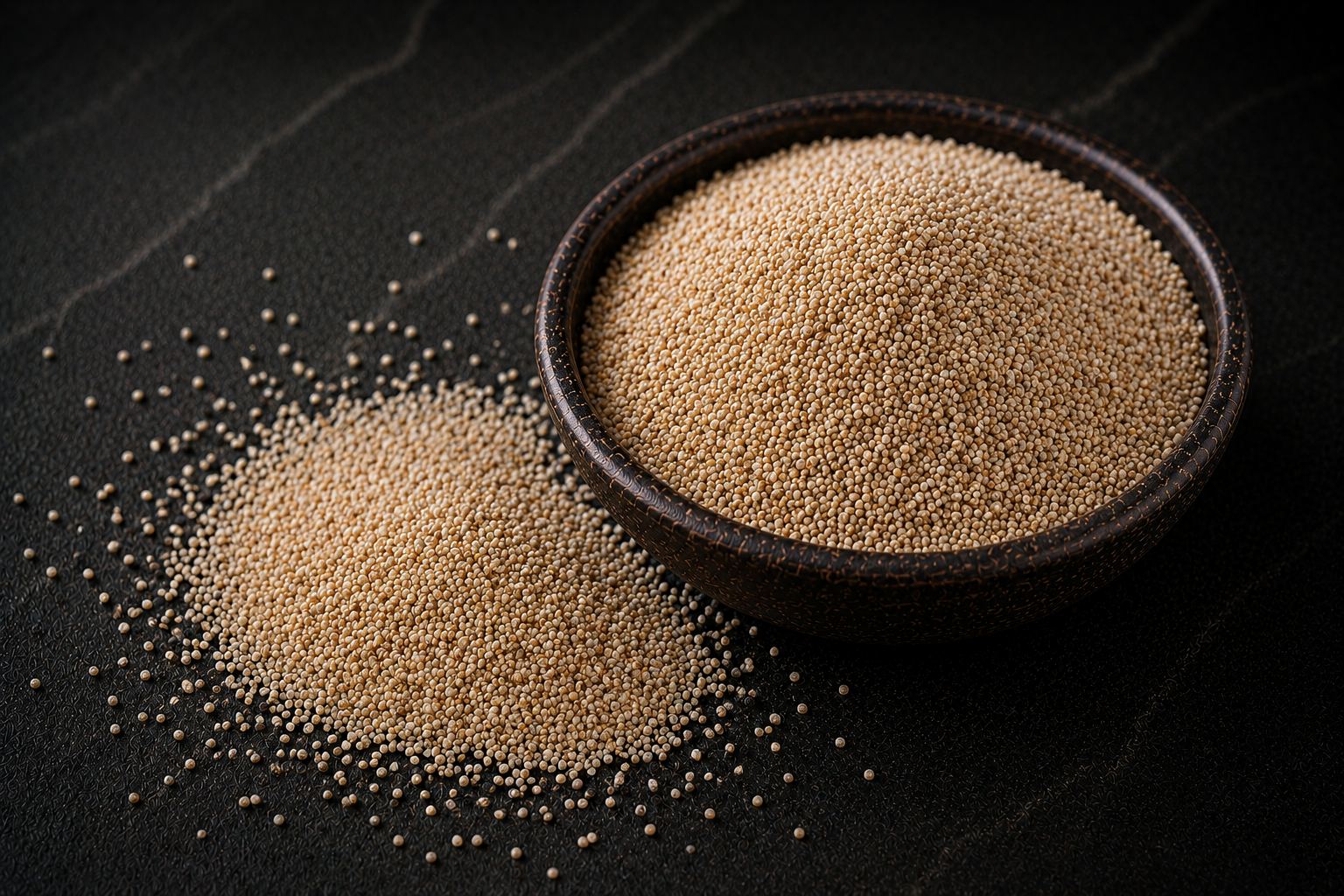
What Is Poppy Seeds?
Poppy seeds — khus khus — are the tiny seeds of Papaver somniferum, the opium poppy plant. The culinary seeds contain negligible amounts of opiate alkaloids — they are safe to eat and are used worldwide in baking and cooking. The opioid compounds are concentrated in the latex of the plant's unripe seed pod, not in the mature dried seeds.
In Indian cooking, poppy seeds function primarily as a thickening and enriching agent, not as a dominant flavour. Ground to a paste with water, they create a creamy, slightly nutty sauce base that thickens curries and kormas without the sharpness of tomato or the richness of coconut milk. In Bengal, posto is virtually its own food group — the white poppy seed paste forms the base of Aloo Posto, one of Bengali cuisine's most beloved preparations.
- Bengali cuisine is partly defined by posto — the white poppy seed paste that gives Aloo Posto its characteristic creamy, mild richness
- Mughlai korma's creamy richness comes significantly from ground white poppy seeds alongside cashew paste and cream — without it the sauce is thinner
- The thickening property of ground poppy seeds is unlike any other Indian spice — they create a smooth, creamy texture that tomato paste or yogurt cannot replicate
- Rajasthani white curry preparations use poppy seed paste in place of tomato for a pale, creamy sauce
- The mild nuttiness of poppy seeds is an essential background note in biryani and pulao preparations in the Mughlai tradition
Poppy Seeds Through History
Poppy seeds have been cultivated in India for at least 3,000 years, primarily in the Gangetic plains of Bengal, Bihar, and Rajasthan. The plant's association with Bengal is ancient — both for culinary use (posto) and for the poppy's place in Bengali cultural identity.
The British East India Company's opium trade (primarily from the Patna region of Bihar to China) made the poppy plant economically significant in colonial India — an association that gave poppy cultivation a complex historical shadow. The culinary tradition of eating poppy seeds (the opioid-free part of the plant) predates colonial involvement and represents an entirely separate use of the plant.
Mughal court cuisine adopted poppy seed paste (khus khus) as a thickening agent for kormas and sauces — it was particularly valued for creating white, pale sauces where tomato or chilli would add unwanted colour and sharpness.
The Science of Poppy Seeds
How to Store Poppy Seeds
How to Buy Good Poppy Seeds
How to Use Poppy Seeds Correctly
- Soak 2–4 tbsp in warm water for 30 minutes before grinding to a smooth paste
- Grind in blender with minimal water — consistency of thick peanut butter
- For Aloo Posto: add ground paste to oil, fry briefly, add boiled potatoes and spices
- For korma: add ground paste to fried onions and spices before adding cream
- Quantity: 2–4 tbsp per dish for 4 people as a sauce thickener
- Do not dry-roast — the high oil content means they burn quickly
What Poppy Seeds Pairs Well With
Dishes That Use Poppy Seeds
Where Poppy Seeds Matters Most
| Bengali Cuisine | Essential |
| Mughlai Cuisine | Essential |
| Rajasthani Cuisine | Common |
| North Indian Cuisine | Common |
| Odishan Cuisine | Common |
| South Indian Cuisine | Rare |
| Jain Cooking | Common |
| Sattvic Cooking | Common |
Poppy Seeds vs Cashew Paste vs Coconut Milk (Sauce Thickeners)
| Feature | Poppy Seeds (Khus Khus) | Cashew Paste | Coconut Milk |
|---|---|---|---|
| Thickening type | Oil-protein emulsion | Fat-protein paste | Fat emulsion |
| Flavour | Mild, nutty | Rich, sweet | Distinctive coconut |
| Colour | Pale/cream | Ivory | White |
| Best for | Bengali dishes, korma | Mughlai, North Indian | South Indian, Kerala |
| Richness | Medium | High | High |
| Regional association | Bengal, Rajasthan | Mughlai, all India | South India, Kerala |