★★★☆☆ Urban home cooking
★★☆☆☆ Declining
What Does Vanaspati Taste Like?
Vanaspati in Every Indian Language
| Language | Name | Pronunciation |
|---|---|---|
| English | Vanaspati / Hydrogenated Fat | VAH-nas-pah-tee |
| Hindi | वनस्पति — Vanaspati | VAH-nas-pah-tee |
| Bengali | বনস্পতি — Banaspati | BAH-nas-pah-tee |
| Tamil | வனஸ்பதி — Vanaspati | VAH-nas-pah-tee |
| Telugu | వనస్పతి — Vanaspati | VAH-nas-pah-tee |
| Malayalam | വനസ്പതി — Vanaspati | VAH-nas-pah-tee |
| Kannada | ವನಸ್ಪತಿ — Vanaspati | VAH-nas-pah-tee |
| Gujarati | વનસ્પતિ — Vanaspati | VAH-nas-pah-tee |
| Marathi | वनस्पती — Vanaspati | VAH-nas-pah-tee |
| Punjabi | ਵਨਸਪਤੀ — Vanaspati | VAH-nas-pah-tee |
| Urdu | وناسپتی — Vanaspati | VAH-nas-pah-tee |
What Is Vanaspati?
Vanaspati is partially hydrogenated vegetable oil — a solid fat produced by forcing hydrogen through liquid vegetable oil under heat and pressure, with nickel as a catalyst. This process creates trans fatty acids as a byproduct, which are now recognised as the most harmful dietary fat — worse than saturated fat by most health metrics.
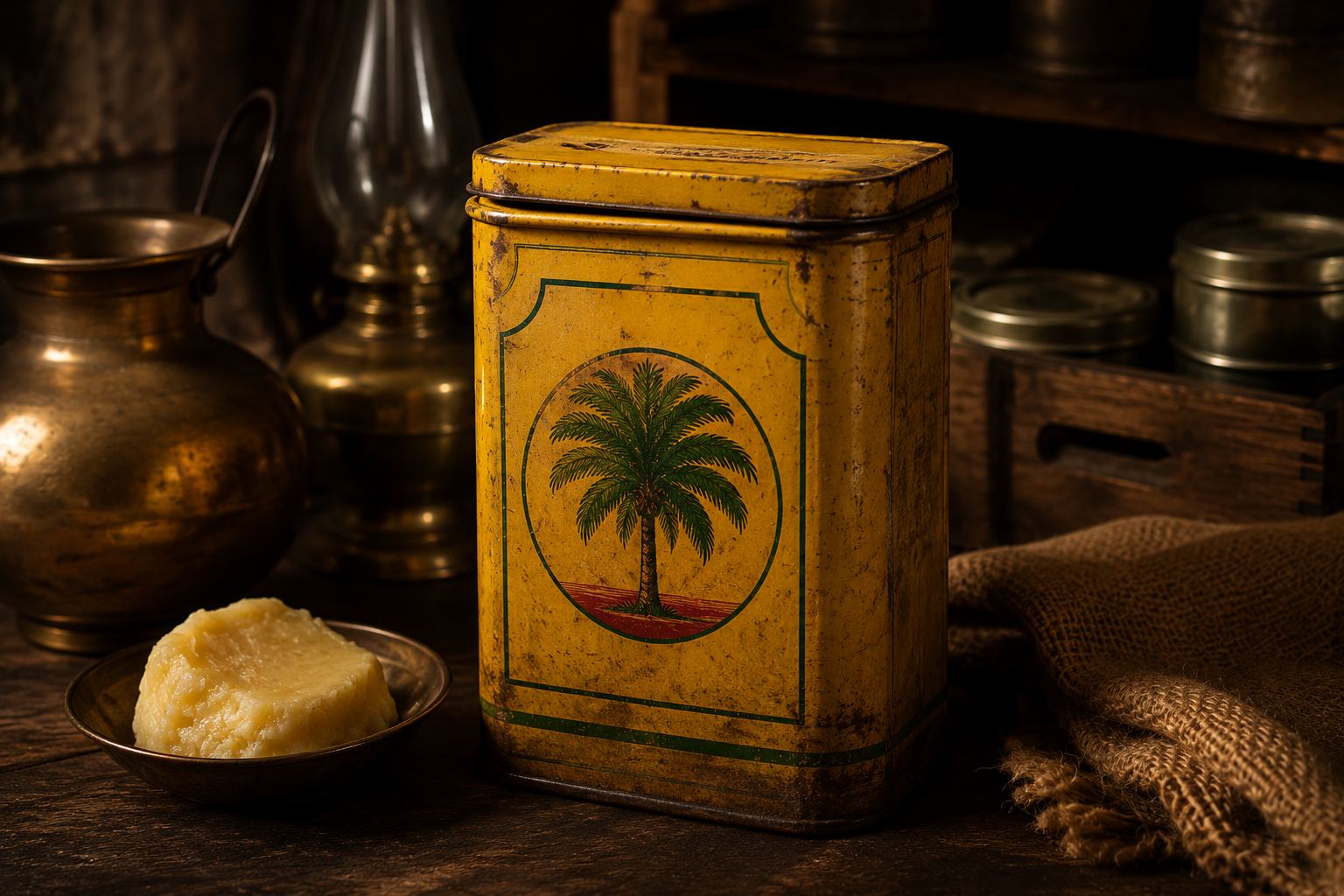
Vanaspati was introduced to India by Lever Brothers (now Unilever) under the brand name Dalda in the 1930s as an affordable alternative to ghee. The name Dalda became so embedded that it is still used generically for all vanaspati in many parts of India. At its peak (1960s–80s), vanaspati was a staple in Indian homes and dominated commercial cooking. Its use is now declining as trans fat research has become mainstream and regulatory limits have been introduced.
- Understanding vanaspati is important for reading Indian recipe contexts — older recipes often specify dalda where modern practice would use ghee or refined oil
- Commercial Indian food — biscuits, namkeen, fried snacks from factories — still uses vanaspati widely, making it important to understand label reading
- Street food frying across India still commonly uses vanaspati for its cost and stability
- The Dalda brand's cultural penetration — like Xerox for photocopying — tells a story about India's post-independence food industrialisation
- The trans fat health narrative is directly relevant to this ingredient — understanding vanaspati means understanding why trans fats were regulated
Vanaspati Through History
Lever Brothers launched Dalda in 1937, marketed as 'vegetable ghee' — a term designed to appeal to Hindus (who could not eat beef tallow) and to suggest the familiar ghee while offering a much cheaper product. The marketing was enormously successful and Dalda became the first mass-market packaged food product in India.
At India's independence in 1947, vanaspati production was established as strategically important for affordable cooking fats for a large, food-insecure population. Government policy supported vanaspati production for decades. Its nutritional problems were not understood until decades later, when the trans fat research of the 1990s-2000s fundamentally changed the health assessment of partially hydrogenated oils.
India introduced trans fat regulatory limits (5% maximum in 2021, targeting 2% by 2022) following WHO guidance. Major manufacturers reformulated. But enforcement in small-scale production and street food remains challenging.
The Science of Vanaspati
How to Store Vanaspati
How to Buy Good Vanaspati
How to Use Vanaspati Correctly
- Where possible: replace with ghee (for flavour applications) or refined oil (for neutral frying)
- Commercial/budget deep frying: refined palmolein or groundnut oil are better choices
- For old family recipes that specify dalda: substitute equal quantity of ghee for sweet preparations, or neutral refined oil for savoury
- Do not use in health-conscious cooking
What Vanaspati Pairs Well With
Dishes That Use Vanaspati
Where Vanaspati Matters Most
| Commercial Indian Food | Common |
| Street Food | Common |
| Budget Cooking | Common |
| Home Cooking | Declining |
| Health-Conscious Cooking | Avoid |
Vanaspati vs Ghee vs Refined Oil
| Feature | Vanaspati | Ghee | Refined Oil |
|---|---|---|---|
| Trans fats? | Yes (in traditional form) | No | No |
| Saturated fat | High | High | Low-medium |
| Flavour | Neutral-mild | Rich, nutty | Neutral |
| Cost | Very low | High | Low-medium |
| Traditional? | No — 1937 industrial | Ancient | Modern |
| Health assessment | Negative | Positive (in moderation) | Neutral |