★★★★★ Andhra Pradesh
★★★★☆ Karnataka
What Does Sesame Oil Taste Like?
Sesame Oil in Every Indian Language
| Language | Name | Pronunciation |
|---|---|---|
| English | Sesame Oil / Gingelly Oil | SES-ah-mee OYL |
| Hindi | तिल का तेल — Til Ka Tel | TIL KAH TEL |
| Bengali | তিলের তেল — Tiler Tel | TIL-er TEL |
| Tamil | நல்லெண்ணெய் — Nallennai | NAH-len-eye |
| Telugu | నువ్వుల నూనె — Nuvvula Noone | noo-VOO-lah NOO-neh |
| Malayalam | എള്ളെണ്ണ — Ellenna | EL-len-nah |
| Kannada | ಎಳ್ಳೆಣ್ಣೆ — Ellenne | EL-len-eh |
| Gujarati | તલ નું તેલ — Tal Nu Tel | TAL noo TEL |
| Marathi | तिळाचे तेल — Tilache Tel | TIL-ah-cheh TEL |
| Punjabi | ਤਿਲ ਦਾ ਤੇਲ — Til Da Tel | TIL DAH TEL |
| Urdu | تل کا تیل — Til Ka Tel | TIL KAH TEL |
| Sanskrit | तैल — Taila | TYE-lah — the original word for oil |
What Is Sesame Oil?
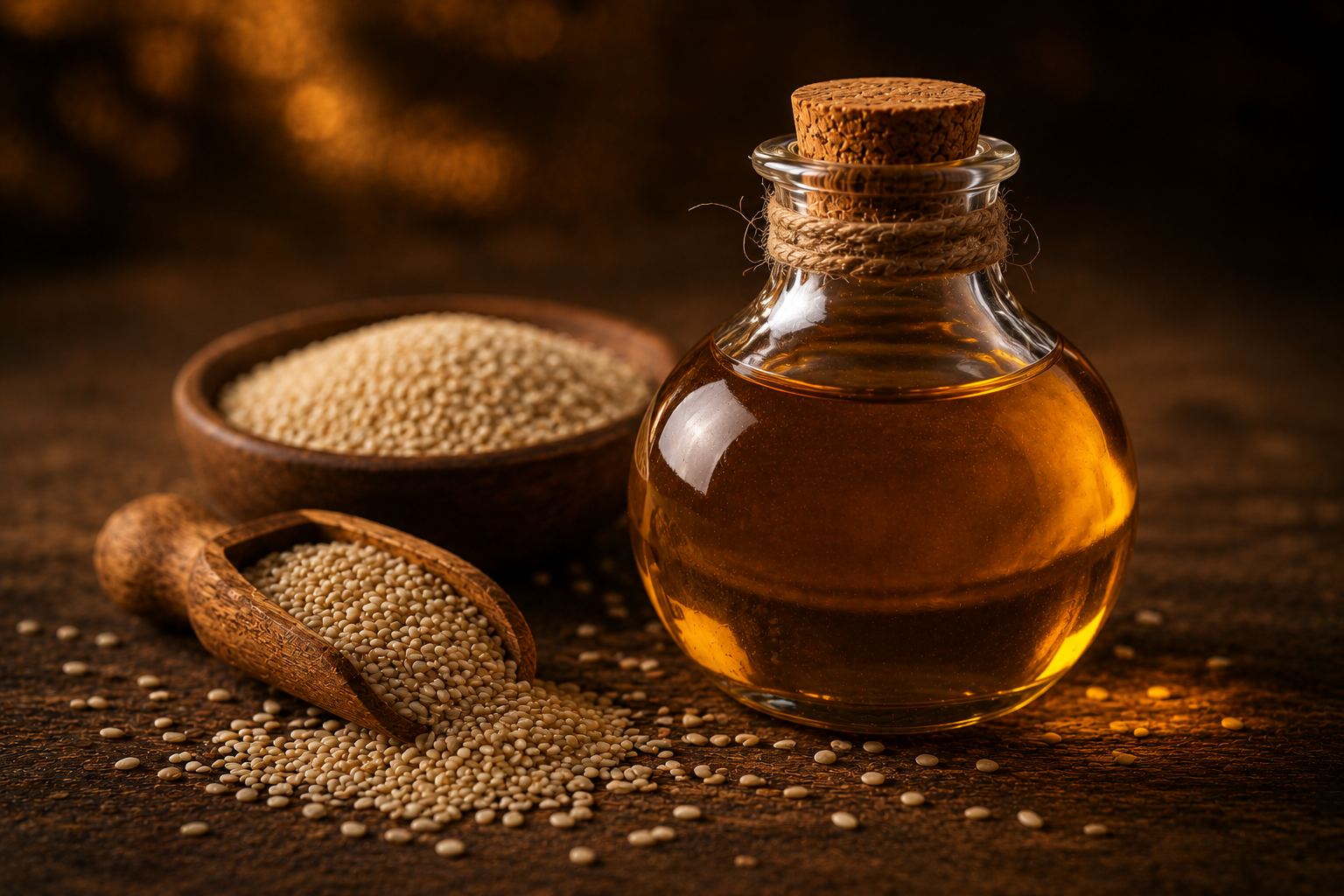
Sesame oil is pressed from sesame seeds (Sesamum indicum). It holds a unique historical position in Indian cooking: the Sanskrit word taila (oil) derives from tila (sesame), indicating that sesame was India's first cultivated oil crop and the original reference point for all pressed oils.
Three forms exist in Indian cooking: cold-pressed (gingelly oil) — golden, mild sesame flavour, used in South Indian cooking; toasted sesame oil — dark brown, intensely nutty, used in small quantities as a finishing oil; and refined sesame oil — neutral, high smoke point. In South India, particularly Tamil Nadu and Andhra Pradesh, cold-pressed gingelly oil is the traditional everyday cooking fat.
- Tamil Nadu's traditional cooking — pongal, kootu, tamarind rice — uses gingelly oil as the authentic fat that refined oil cannot replicate
- Makar Sankranti (the harvest festival) across India uses sesame seeds and sesame oil in ritual foods — tilgul (sesame-jaggery sweet) in Maharashtra and Andhra Pradesh
- Ayurvedic Abhyanga (self-massage) uses sesame oil as the primary therapeutic medium — one of India's most ancient health traditions
- The toasted sesame oil finish on certain preparations (particularly Chinese-influenced Indo-Chinese) provides an intensely aromatic note
- Pickles and chutneys across South India use sesame oil as both cooking medium and flavour agent
Sesame Oil Through History
Sesame (Sesamum indicum) has been cultivated in India for at least 5,500 years — seeds have been found at Harappan sites. It is considered one of humanity's oldest oil crops. The Sanskrit word taila comes from tila (sesame), and this linguistic history reflects sesame oil's position as the primordial oil of Indian cooking, predating all other pressed oils.
Ayurvedic medicine has used sesame oil as the primary therapeutic oil for over 3,000 years — in Abhyanga (self-massage), Nasya (nasal therapy), and Kavala (oil pulling). These practices continue in Kerala and across India today. Sesame oil's high linoleic acid content and its natural antioxidants (sesamin and sesamolin) make it one of the most shelf-stable of all vegetable oils.
The Science of Sesame Oil
How to Store Sesame Oil
How to Buy Good Sesame Oil
How to Use Sesame Oil Correctly
- Gingelly (cold-pressed): use as everyday cooking fat in South Indian preparations — not for high heat
- Toasted: use as a finishing oil — 1 tsp drizzled over finished dishes, never for cooking
- For pickles: cold-pressed sesame oil is traditional in South Indian and Andhra pickles
- For Abhyanga: warm sesame oil to body temperature, massage into skin
- Quantity: 2–3 tbsp per dish (gingelly); 1/2–1 tsp (toasted, as finishing)
What Sesame Oil Pairs Well With
Dishes That Use Sesame Oil
Where Sesame Oil Matters Most
| South Indian Cuisine | Essential |
| Tamil Cuisine | Essential |
| Andhra Cuisine | Essential |
| Karnataka Cuisine | Essential |
| Ayurvedic Cooking | Essential |
| Festival Foods | Essential |
| North Indian Cuisine | Occasional |
Cold-Pressed vs Toasted Sesame Oil
| Feature | Cold-Pressed (Gingelly) | Toasted Sesame Oil |
|---|---|---|
| Colour | Golden | Dark brown |
| Flavour | Mild sesame | Intensely nutty |
| Smoke point | 177°C | ~177°C |
| Used for | Cooking fat | Finishing oil only |
| South Indian? | Yes — primary cooking oil | Less common |
| East/West Asian use | South India | East Asian cooking |
| Quantity used | Cooking quantities | Drops/teaspoon only |