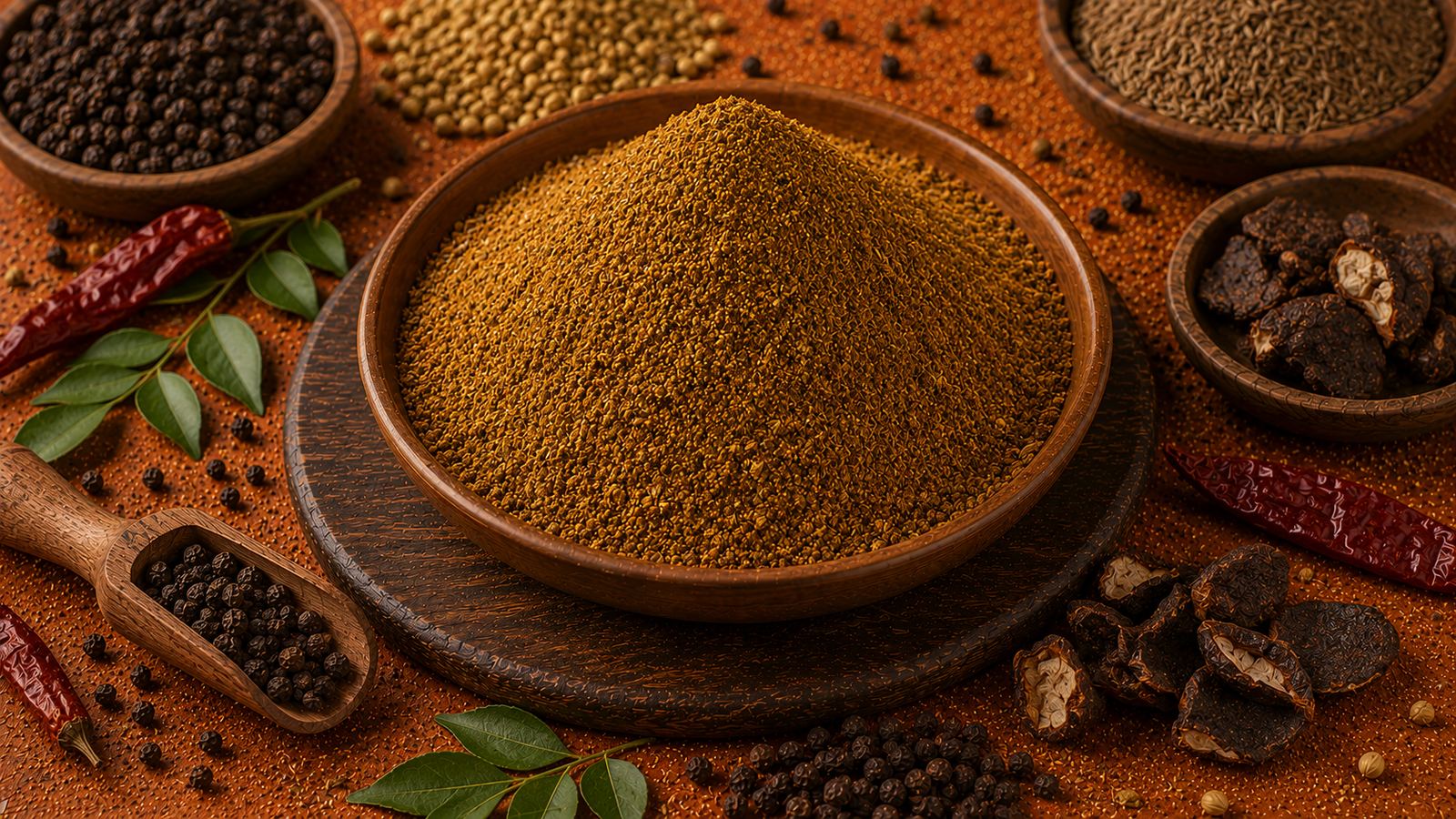
What Does Rasam Powder Taste Like?
Rasam Powder in Every Indian Language
| Language | Name | Pronunciation |
|---|---|---|
| English | Rasam Powder | RAH-sum |
| Hindi | रसम मसाला | RAH-sum Mah-sah-lah |
| Tamil | ரசம் பொடி — Rasam Podi | RAH-sum POH-dee |
| Telugu | రసం పొడి — Rasam Podi | RAH-sum POH-dee |
| Malayalam | രസം പൊടി — Rasam Podi | RAH-sum POH-dee |
| Kannada | ಸಾರು ಪುಡಿ — Saaru Pudi | SAH-roo POO-dee |
| Bengali | রসম মশলা | RAH-sum Moh-sha-lah |
| Gujarati | રસમ મસાલો | RAH-sum Mah-sah-lo |
| Marathi | रसम मसाला | RAH-sum Mah-sah-lah |
What Is Rasam Powder?
Rasam powder is the ground spice blend for rasam — the thin, intensely peppery South Indian broth made with tamarind, tomato, and lentil water. Rasam is not the same as sambar: where sambar is thick, filling, and rich with vegetables, rasam is thin, pungent, and medicinal in character. It is consumed as a digestive, a cold remedy, a soup, and a rice accompaniment.
Rasam powder is distinguished from sambar powder primarily by its dramatically higher black pepper proportion — in some versions, black pepper is the largest single ingredient by weight. This pepper-forward character reflects rasam's medicinal tradition: it is the original pepper soup (the word 'mulligatawny' from colonial cooking comes from milagu thanni — Tamil for 'pepper water', which is essentially rasam).
- Rasam is the South Indian home remedy for cold and digestive issues — the high pepper content provides the medicinal character
- Peppery, thin, sour rasam provides the 'digestive' course in a traditional South Indian meal served before rice
- Rasam powder's high pepper proportion creates a heat and complexity that generic chilli-based masalas cannot provide
- Without rasam powder, homemade rasam lacks the specific pepper-cumin-coriander balance that defines the dish
- The difference between rasam made with rasam powder and sambar powder is as dramatic as the difference between the two dishes themselves
Rasam Powder Through History
Rasam's origin is ancient — some food historians trace it to the practice of using the water in which lentils were cooked (toor dal water) combined with spices as a thin, digestive broth. This 'lentil water' preparation evolved into the more complex rasam with tamarind and tomato additions over centuries. The pepper component was the original and primary spice — reflecting black pepper's role as India's primary heat and medicinal spice before chilli arrived in the 16th century.
The Science of Rasam Powder
How to Store Rasam Powder
How to Buy Good Rasam Powder
How to Use Rasam Powder Correctly
- Add 1 tsp to the tamarind-tomato water and simmer 10 minutes
- Finish with a tadka of mustard seeds, curry leaves, and dried red chilli
- For quick rasam: dissolve in tamarind water with tomatoes, simmer, add lentil water
- Rasam should be thin and watery — not thick
- Quantity: 1 tsp per pot serving 4 people
- Can be adjusted upward for more peppery rasam
What Rasam Powder Pairs Well With
Dishes That Use Rasam Powder
Where Rasam Powder Matters Most
| South Indian Cuisine | Essential |
| Tamil Cuisine | Essential |
| Karnataka Cuisine | Essential |
| Andhra Cuisine | Essential |
| Keralan Cuisine | Common |
| Jain Cooking | Common |
Rasam Powder vs Sambar Powder
| Feature | Rasam Powder | Sambar Powder |
|---|---|---|
| Defining spice | Black pepper (highest proportion) | Coriander (highest proportion) |
| Lentils in blend? | No | Yes |
| Dish consistency | Very thin broth | Thick stew |
| Medicinal role? | Yes — cold and digestive remedy | Less specific |
| Tamarind? | Essential in both | Essential in both |
| Interchangeable? | No | No |