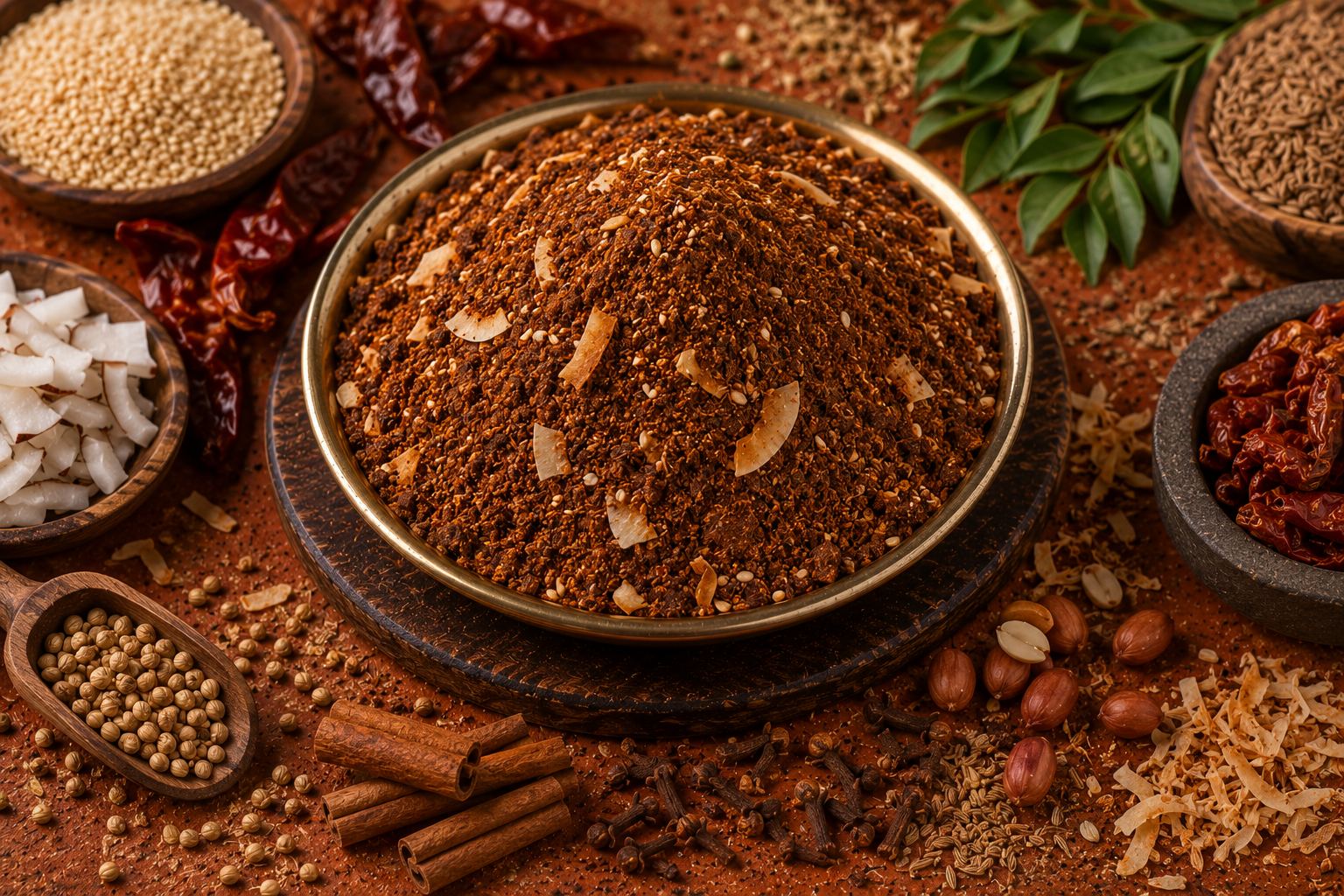
What Does Garam Masala Taste Like?
Garam Masala in Every Indian Language
| Language | Name | Pronunciation |
|---|---|---|
| English | Garam Masala | Gah-rum Mah-sah-lah |
| Hindi | गरम मसाला | Gah-rum Mah-sah-lah |
| Bengali | গরম মশলা | Goh-rum Mo-sha-lah |
| Tamil | கரம் மசாலா | Gah-rum Mah-sah-lah |
| Telugu | గరం మసాలా | Gah-rum Mah-sah-lah |
| Malayalam | ഗരം മസാല | Gah-rum Mah-sah-lah |
| Kannada | ಗರಂ ಮಸಾಲ | Gah-rum Mah-sah-lah |
| Gujarati | ગરમ મસાલો | Gah-rum Mah-sa-lo |
| Marathi | गरम मसाला | Gah-rum Mah-sah-lah |
| Punjabi | ਗਰਮ ਮਸਾਲਾ | Gah-rum Mah-sah-lah |
| Urdu | گرم مسالہ | Gah-rum Mah-sah-lah |
| Sanskrit | — | — |
What Is Garam Masala?
Garam masala is a ground spice blend — not a single spice but a composition that varies by region, cook, and tradition. The name means 'warm spices' in Hindi, reflecting the Ayurvedic concept that these spices raise body heat. Core components across most versions include cumin, coriander, cardamom, black pepper, cloves, cinnamon, and nutmeg — but proportions and additional ingredients shift dramatically between regions.
The most important fact about garam masala: it is a finishing spice, not a cooking spice. Added in the last two minutes of cooking or sprinkled over a finished dish, it delivers aroma rather than base flavour. Most Indian home cooks add it at the very end. Adding it at the start — as many Western recipes instruct — destroys its volatile aromatic compounds and produces a flat, slightly bitter result.
- North Indian curries lose their aromatic top note without a final garam masala addition
- Biryani loses its warm, complex finish — garam masala is layered into the rice during dum cooking
- The Ayurvedic framework of warming spices is built around garam masala's composition
- No two regional versions are identical — Bengal's version includes stone flower and dried rose petals; Kashmir's is dominated by cardamom
- It represents the single most important lesson in Indian cooking: same spice, different timing, completely different result
Garam Masala Through History
Garam masala as a concept — warming spices blended together — has roots in both Ayurvedic medicine and the Mughal imperial kitchen. Ayurvedic texts classify spices by their body-warming properties, and the combination of cardamom, pepper, cloves, and cinnamon was considered particularly effective.
The Mughal kitchen, which reached its peak sophistication under Akbar and Shah Jahan in the 16th and 17th centuries, developed elaborate spice blends for different preparations. Biryani, korma, and qorma all required different compositions, and garam masala emerged as a versatile finishing blend.
British colonial cooks misunderstood garam masala as a single fixed product — similar to curry powder — and the commercial mixed spice tradition that followed created a standardised blend bearing little resemblance to India's regional diversity.
The Science of Garam Masala
How to Store Garam Masala
How to Buy Good Garam Masala
How to Use Garam Masala Correctly
- Add in the last 2 minutes of cooking — not at the start
- Quantity: 1/2 to 1 tsp per dish for 4 people
- Sprinkle over finished dal, curry, or biryani rice
- For dry rubs: mix with yogurt to protect volatile compounds
- Make your own: dry-roast whole spices, cool, grind fine
- Never fry garam masala in oil at the start — aroma will be destroyed
What Garam Masala Pairs Well With
Dishes That Use Garam Masala
Where Garam Masala Matters Most
| North Indian Cuisine | Essential |
| Mughlai Cuisine | Essential |
| Bengali Cuisine | Common |
| Punjabi Cuisine | Essential |
| Maharashtrian Cuisine | Occasional |
| South Indian Cuisine | Occasional |
| Jain Cooking | Common |
Garam Masala vs Curry Powder vs Sambar Powder
| Feature | Garam Masala | Curry Powder | Sambar Powder |
|---|---|---|---|
| Origin | North India / Mughal | British colonial invention | South India |
| Base | Warm aromatic spices | Turmeric-heavy | Lentil-friendly spices |
| When to add | End of cooking | During cooking | During cooking |
| Authentic? | Yes | No — colonial | Yes |
| Interchangeable? | No | No | No |