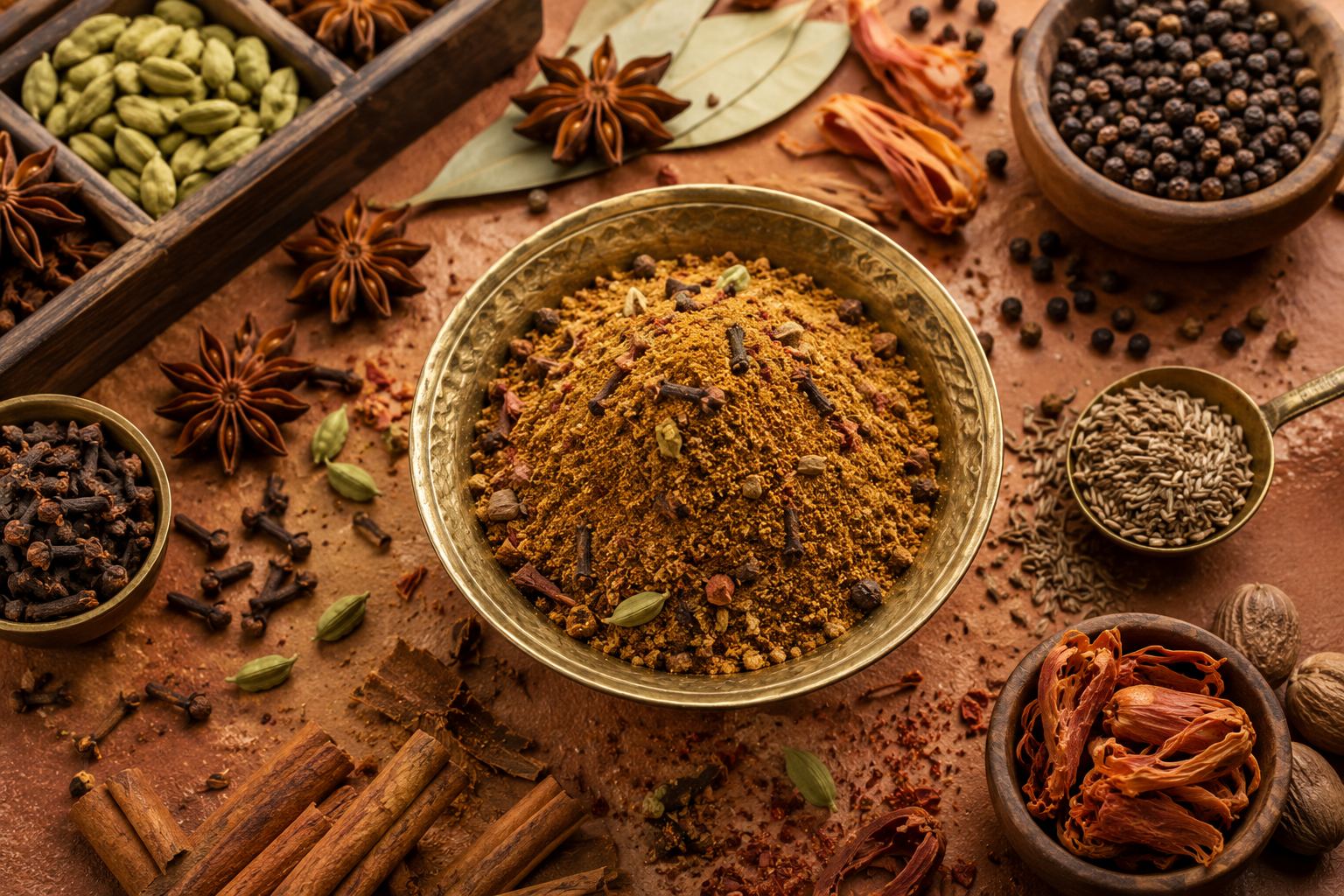
What Does Biryani Masala Taste Like?
Biryani Masala in Every Indian Language
| Language | Name | Pronunciation |
|---|---|---|
| English | Biryani Masala | beer-YAH-nee |
| Hindi | बिरयानी मसाला | beer-YAH-nee Mah-sah-lah |
| Tamil | பிரியாணி மசாலா | beer-YAH-nee |
| Telugu | బిర్యాని మసాలా | beer-YAH-nee |
| Malayalam | ബിരിയാണി മസാല | beer-YAH-nee |
| Kannada | ಬಿರ್ಯಾನಿ ಮಸಾಲ | beer-YAH-nee |
| Bengali | বিরিয়ানি মশলা | beer-YAH-nee |
| Gujarati | બિરિયાની મસાલો | beer-YAH-nee |
| Marathi | बिर्याणी मसाला | beer-YAH-nee |
| Punjabi | ਬਿਰਯਾਨੀ ਮਸਾਲਾ | beer-YAH-nee |
| Urdu | بریانی مسالہ | beer-YAH-nee |
What Is Biryani Masala?
Biryani masala is the ground spice blend used specifically in biryani — India's most celebrated rice preparation. It is important to understand that biryani uses two distinct spice systems simultaneously: whole spices added to the hot cooking fat at the start (cinnamon, cardamom, cloves, bay leaf, black cardamom, shahi jeera) and a ground masala (biryani masala) incorporated into the meat and onion base.
Commercial biryani masala blends (MDH, Everest, Shan) provide a convenient pre-ground version. The most complex and flavourful biryanis use neither commercial nor single-spice approaches, but rather a region-specific combination of fresh-ground masala and whole spices.
- Biryani without the correct spice system produces a spiced rice dish, not biryani
- The layering of whole and ground spices at different stages produces the complex aromatic depth that defines great biryani
- Regional biryani variations (Hyderabadi, Lucknawi, Kolkata, Malabar) differ significantly in their masala composition
- Understanding biryani masala reveals why restaurant biryani often tastes different from home cooking — professional kitchens use proprietary blends at different stages
Biryani Masala Through History
Biryani was developed in the Mughal court kitchen as a complete meal — rice, meat, and the complexity of the court's extensive spice pantry combined in a single vessel. The dum technique (slow-cooking in a sealed vessel) was brought from the Persian court tradition. The specific masala system for biryani evolved over centuries of Mughal, Awadhi, and Hyderabadi court refinement.
The Science of Biryani Masala
How to Store Biryani Masala
How to Buy Good Biryani Masala
How to Use Biryani Masala Correctly
- Stage 1 (whole spices in hot ghee): cinnamon, cardamom, cloves, bay leaf, black cardamom, shahi jeera
- Stage 2 (during meat cooking): biryani masala 2 tbsp per kilo of meat
- Stage 3 (layering): saffron milk, fried onions, fresh mint and coriander
- Stage 4 (dum): seal and slow cook
- Do not use biryani masala as a general curry powder — it is designed for this specific application
What Biryani Masala Pairs Well With
Dishes That Use Biryani Masala
Where Biryani Masala Matters Most
| Mughlai Cuisine | Essential |
| North Indian Cuisine | Essential |
| Hyderabadi Cuisine | Essential |
| All Indian Cuisines | Common |
Biryani Masala vs Garam Masala vs Pulao Masala
| Feature | Biryani Masala | Garam Masala | Pulao Masala |
|---|---|---|---|
| Purpose | Biryani — specific | General finishing | Pulao — lighter |
| Complexity | Very high | High | Medium |
| When added | During meat cooking | End of cooking | During rice cooking |
| Whole spices separate? | Yes — first stage | No | Yes |
| Interchangeable? | No | No | No |