Ingredient identity
Ingredient DNA
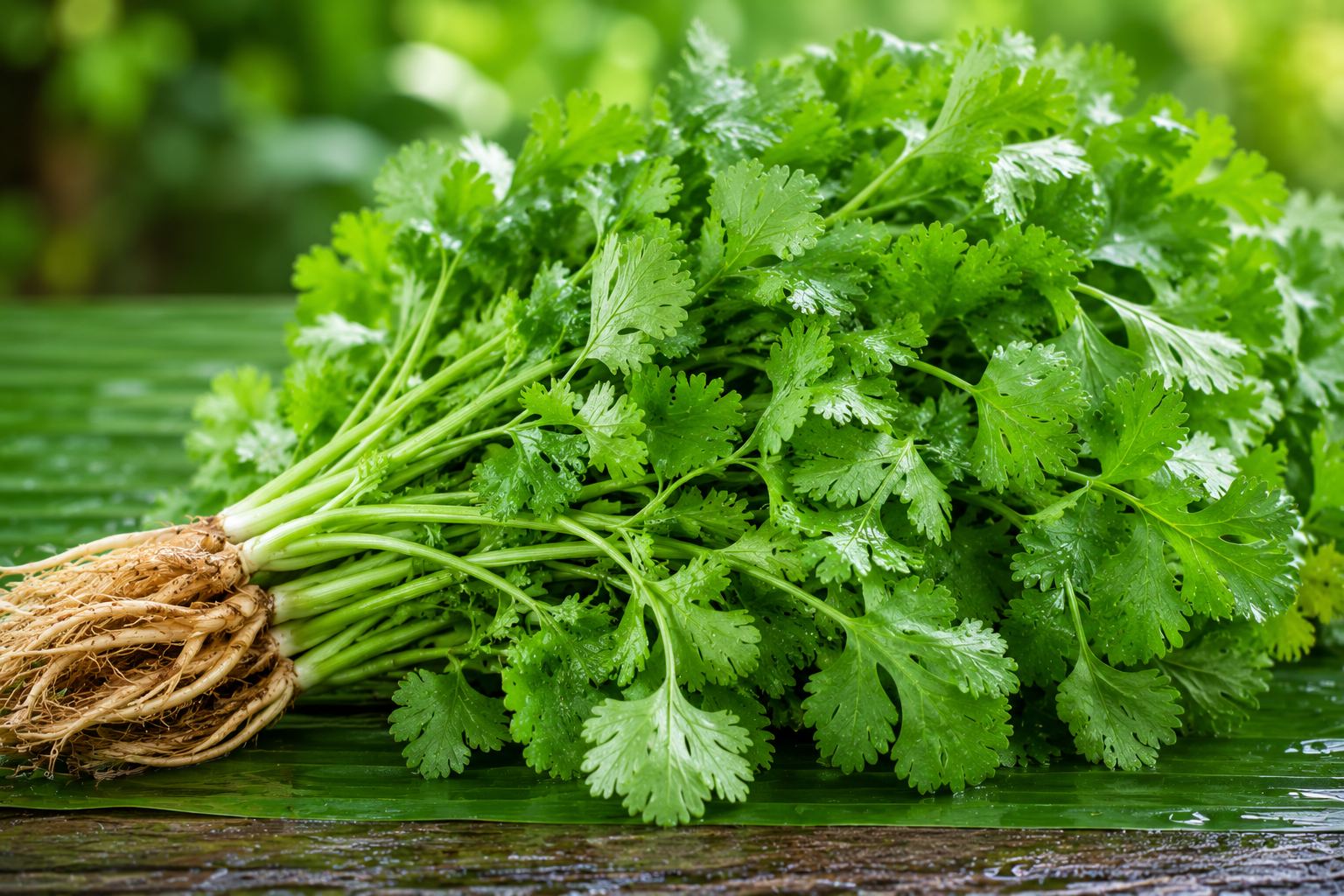
Fresh Coriander — Dhania Patta
Coriandrum sativum · Family: Varies · Genus: Coriandrum
Origin
South/South East Asia
Category
Fresh Aromatic
Primary Use
Garnish · Chutney · Masala base · Dal finishing
Form
Fresh root/leaf/herb
Taste profile
What Does Fresh Coriander Taste Like?
Flavour Profile — Fresh Coriander
Pungency★★★★☆
Earthiness★★☆☆☆
Freshness★★★★☆
Complexity★★★☆☆
Warmth★★☆☆☆
Aroma Strength★★★★☆
Botanical classification
Kingdom
Plantae
Family
Varies
Genus
Coriandrum
Species
Coriandrum sativum
Hindi Name
Hara Dhania / Dhania Patta
Sanskrit Name
—
English Name
Fresh Coriander
Arabic Name
—
Names across India
Fresh Coriander in Every Indian Language
| Language | Name | Pronunciation |
|---|---|---|
| English | Fresh Coriander / Cilantro | |
| Hindi | Hara Dhania / Dhania Patta | |
| Tamil | கொத்தமல்லி — Kothamalli | |
| Telugu | కొత్తిమీర — Kottimira | |
| Malayalam | കൊത്തമ്പലരി — Kothampalari | |
| Kannada | ಕೊತ್ತಂಬರಿ — Kottambari |
Origin and identity
What Is Fresh Coriander?
Fresh coriander — hara dhania, kothamalli — is the green leafy herb of Coriandrum sativum, the same plant whose dried seeds are ground as coriander (dhania) spice. The leaves and seeds have very different flavour profiles: the leaves are citrusy, slightly soapy (to some), bright and fresh; the seeds are earthy, warm, and complex.
Fresh coriander is India's most widely used fresh herb garnish — present in virtually every served dish from dal to biryani to chaat. It is also the basis for fresh green chutneys and is used as a masala base ingredient in some preparations.
What Indian Cooking Loses Without Fresh Coriander
- Green chutney — the universal accompaniment of Indian street food — is based on fresh coriander
- Fresh coriander garnish over dal, biryani, and curries is so standard it is almost invisible until it's absent
- Fresh coriander paste forms the base of certain curries and kebab marinades
- Coriander is the bridge between South and North Indian cooking — used universally across all regional traditions
Historical significance
Fresh Coriander Through History
Historical Record
Ancient Aromatic
One of the foundational aromatics of Indian cooking with thousands of years of cultivation history. Appears in ancient texts as both culinary and medicinal ingredient.
Cooking science
The Science of Fresh Coriander
Cooking Science
Volatile Compounds and Heat
The aromatic compounds in fresh ingredients are volatile and degrade with heat. Fresh aromatics should often be added at the end of cooking or used raw to preserve maximum flavour.
Storage science
How to Store Fresh Coriander
Storage Reference
Fresh
1–2 weeks refrigerated
Key note
Store properly to preserve volatile aromatic compounds
Note
Store in airtight container away from heat and light
Buying guide
How to Buy Good Fresh Coriander
Technique
How to Use Fresh Coriander Correctly
Using Fresh Coriander in the Kitchen
Technique, quantity, and what to avoid
- Use fresh for maximum flavour
- Add at appropriate cooking stage
- Amounts vary by preparation and taste
Pairings
What Fresh Coriander Pairs Well With
Best Pairings — Fresh Coriander
Famous dishes
Dishes That Use Fresh Coriander
Key Dishes Using Fresh Coriander
Green Chutney
All India · Herb condiment
Primary ingredient
Dal Garnish
All India · All dals
Universal finish
Biryani Garnish
All India · Layered rice
Layer and garnish
Raita
All India · Yogurt side
Fresh herb
Regional use
Where Fresh Coriander Matters Most
Regional Importance
★★★★★
All India
Universal aromatic
★★★★★
South India
Essential
★★★★★
North India
Foundation aromatic
Where Fresh Coriander Fits in Indian Cooking
| All Indian Cuisines | Essential |
| Jain Cooking | Varies — see notes |
| Sattvic Cooking | Common |
Comparison
Fresh Coriander in Indian Cooking
Fresh Coriander in Indian Cooking
| Feature | Fresh Coriander | Dry Alternative | Other Fresh |
|---|---|---|---|
| Form | Fresh | Dried/powdered | Related herb |
| Aroma | Full, vibrant | Diminished | Different |
| Cooking stage | Varies | Often early | Varies |
| Jain? | Check notes | Check notes | Varies |
Nutrition
Nutrition and Key Compounds
Fresh Coriander — Honest Nutritional Picture
Culinary quantities — aromatic and flavour contribution, not macro nutrition
Fresh Coriander at culinary quantities contributes some vitamins and minerals in addition to essential aromatic compounds.
Substitutions
Substitutes for Fresh Coriander
What Works and What Does Not
Partial
Dried/powdered version
Reduced intensity — use 1/4 to 1/3 the quantity.
People Also Search
Related Articles
Chef's notes
Practical Insight
From the Kitchen
The genetic variation in how people perceive coriander flavour is real — approximately 10–15% of the population has a genetic variant that makes fresh coriander taste like soap (from aldehyde compounds that others don't detect). If fresh coriander seems unpleasant, this may be the cause, not personal preference.