Ingredient identity
Ingredient DNA
Fresh Garlic — Lahsun
Allium sativum · Family: Varies · Genus: Allium
Origin
South/South East Asia
Category
Fresh Aromatic
Primary Use
Curry base · Tadka · Marinades · Chutney
Form
Fresh root/leaf/herb
Taste profile
What Does Fresh Garlic Taste Like?
Flavour Profile — Fresh Garlic
Pungency★★★★☆
Earthiness★★☆☆☆
Freshness★★★★☆
Complexity★★★☆☆
Warmth★★☆☆☆
Aroma Strength★★★★☆
Botanical classification
Kingdom
Plantae
Family
Varies
Genus
Allium
Species
Allium sativum
Hindi Name
Lahsun
Sanskrit Name
—
English Name
Fresh Garlic
Arabic Name
—
Names across India
Fresh Garlic in Every Indian Language
| Language | Name | Pronunciation |
|---|---|---|
| English | Fresh Garlic | |
| Hindi | Lahsun | |
| Tamil | பூண்டு — Poondu | |
| Telugu | వెల్లుల్లి — Velluli | |
| Malayalam | വെള്ളുള്ളി — Velluli | |
| Kannada | ಬೆಳ್ಳುಳ್ಳಿ — Bellulli |
Origin and identity
What Is Fresh Garlic?
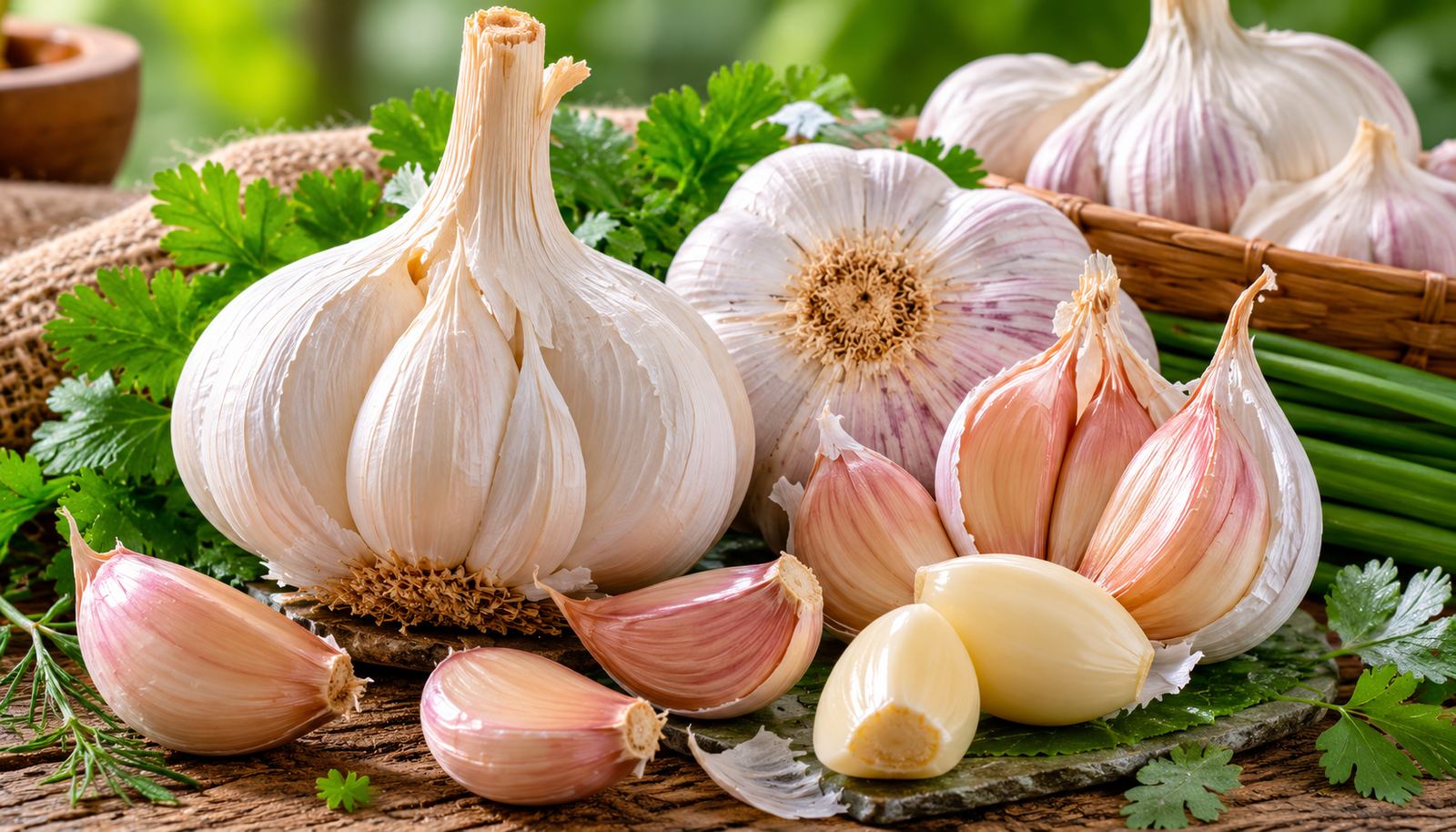
Fresh garlic — lahsun — is the bulb of Allium sativum, used in virtually every Indian savoury preparation outside of Jain and some Sattvic cooking. Alongside ginger, it forms the two-part aromatic foundation of most Indian curries.
Garlic's flavour comes from allicin — formed when the garlic cells are crushed or cut, triggering an enzyme reaction. This means freshly crushed garlic has dramatically more pungency than pre-crushed garlic that has been sitting. The ginger-garlic paste used in North Indian cooking is typically made fresh or stored refrigerated for maximum potency.
What Indian Cooking Loses Without Fresh Garlic
- Ginger-garlic paste is the non-negotiable foundation of North Indian curry masala — without garlic the masala lacks depth and savouriness
- South Indian tadka uses garlic in preparations across Tamil Nadu, Karnataka, and Andhra Pradesh
- Garlic-based preparations (lahsun chutney, garlic rasam for cold) are among India's most effective home remedies
- Jain cooking's prohibition on garlic (and onion) requires asafoetida as a substitute — demonstrating garlic's importance by its absence
Historical significance
Fresh Garlic Through History
Historical Record
Ancient Aromatic
One of the foundational aromatics of Indian cooking with thousands of years of cultivation history. Appears in ancient texts as both culinary and medicinal ingredient.
Cooking science
The Science of Fresh Garlic
Cooking Science
Volatile Compounds and Heat
The aromatic compounds in fresh ingredients are volatile and degrade with heat. Fresh aromatics should often be added at the end of cooking or used raw to preserve maximum flavour.
Storage science
How to Store Fresh Garlic
Storage Reference
Fresh
1–2 weeks refrigerated
Key note
Store properly to preserve volatile aromatic compounds
Note
Store in airtight container away from heat and light
Buying guide
How to Buy Good Fresh Garlic
Technique
How to Use Fresh Garlic Correctly
Using Fresh Garlic in the Kitchen
Technique, quantity, and what to avoid
- Use fresh for maximum flavour
- Add at appropriate cooking stage
- Amounts vary by preparation and taste
Pairings
What Fresh Garlic Pairs Well With
Best Pairings — Fresh Garlic
Famous dishes
Dishes That Use Fresh Garlic
Key Dishes Using Fresh Garlic
Curry Masala
All India · All curries
Foundation ingredient
Garlic Rasam
South India · Medicinal rasam
Primary flavour
Lahsun Chutney
All India · Pungent chutney
Primary ingredient
Tadka
South India · Tempering
Fried in oil
Regional use
Where Fresh Garlic Matters Most
Regional Importance
★★★★★
All India
Universal aromatic
★★★★★
South India
Essential
★★★★★
North India
Foundation aromatic
Where Fresh Garlic Fits in Indian Cooking
| All Indian Cuisines | Essential |
| Jain Cooking | Varies — see notes |
| Sattvic Cooking | Common |
Comparison
Fresh Garlic in Indian Cooking
Fresh Garlic in Indian Cooking
| Feature | Fresh Garlic | Dry Alternative | Other Fresh |
|---|---|---|---|
| Form | Fresh | Dried/powdered | Related herb |
| Aroma | Full, vibrant | Diminished | Different |
| Cooking stage | Varies | Often early | Varies |
| Jain? | Check notes | Check notes | Varies |
Nutrition
Nutrition and Key Compounds
Fresh Garlic — Honest Nutritional Picture
Culinary quantities — aromatic and flavour contribution, not macro nutrition
Fresh Garlic at culinary quantities contributes some vitamins and minerals in addition to essential aromatic compounds.
Substitutions
Substitutes for Fresh Garlic
What Works and What Does Not
Partial
Dried/powdered version
Reduced intensity — use 1/4 to 1/3 the quantity.
People Also Search
Related Articles
Chef's notes
Practical Insight
From the Kitchen
Garlic is prohibited in Jain cooking (and in strict Sattvic practice) as a root vegetable disturbing underground organisms during harvest. In these traditions, asafoetida (hing) serves as a partial substitute for garlic's savouriness.