🍚 Biryani · Level 2
Vegetable Biryani
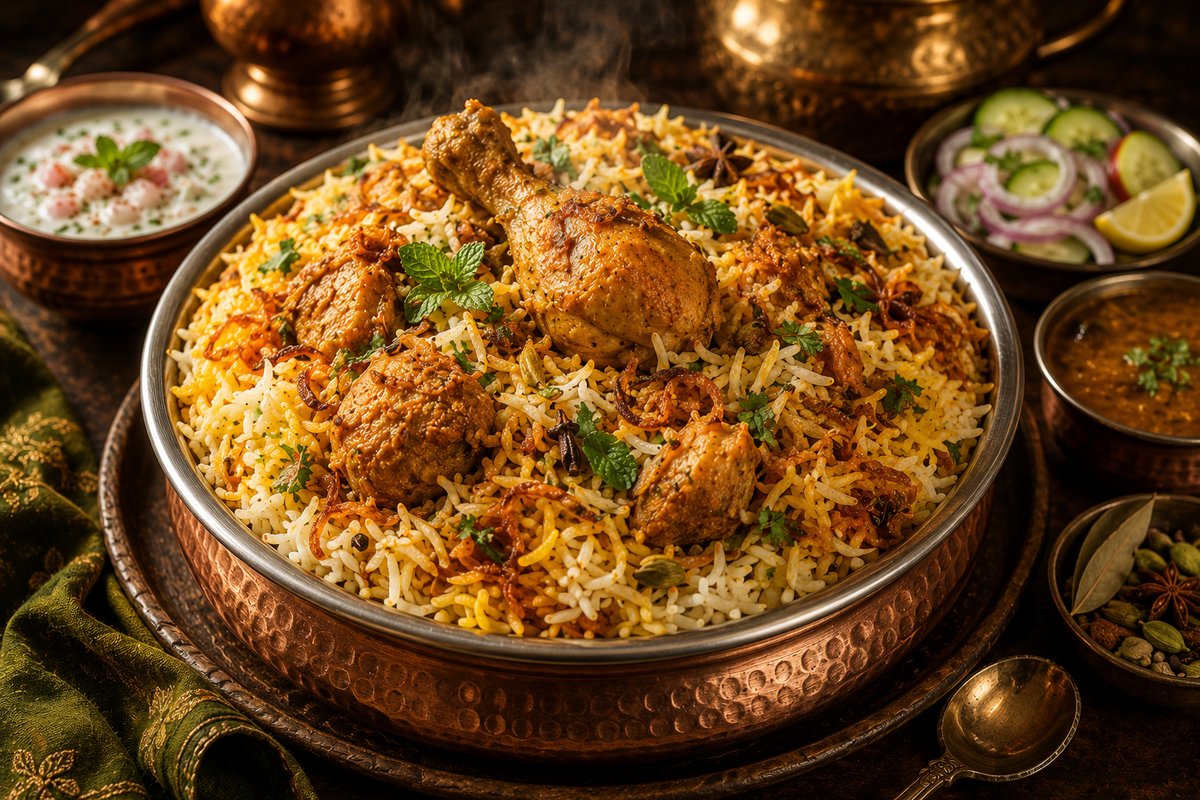
A biryani that earns its name — deeply spiced vegetables layered with saffron rice, dum-cooked. Not a vegetable pulao. A proper biryani technique applied to vegetables.
A biryani that earns its name — deeply spiced vegetables layered with saffron rice, dum-cooked. Not a vegetable pulao. A proper biryani technique applied to vegetables.
Most 'vegetable biryani' is vegetable pulao — vegetables cooked with rice in the same pot without layering or dum. A real vegetable biryani has the same structure as meat biryani: a separately cooked, deeply spiced vegetable masala base layered with par-cooked rice and dum-cooked. The layering and dum produce the aromatic exchange between the spiced masala and the rice that defines biryani. Vegetables do not produce the same steam volume as marinated meat, so the technique is adapted.
Heat oil/ghee, cook onion 12 minutes until golden. Add ginger-garlic paste, tomatoes, biryani masala, chilli. Bhuno until oil separates. Add dense vegetables (potato, carrot) first — cook 5 minutes covered. Add cauliflower and beans — cook 3 minutes. Add peas and yogurt. Stir well. The masala should be thick and coating the vegetables. Season generously.
The staggered vegetable addition respects each vegetable's different cell wall composition and density. Potatoes and carrots have dense, pectin-rich cell walls requiring longer softening. Cauliflower has more delicate walls. Peas need almost no cooking. Adding all vegetables simultaneously would produce perfectly cooked peas alongside raw potatoes. The yogurt added at the end coats the vegetables, providing both moisture for the dum stage and a dairy protein barrier that slows moisture loss.
Par-cook soaked basmati in heavily salted spiced water for 7 minutes. Drain. Rice should have a visible white centre.
The 70% par-cooking is the same as pakki biryani — vegetable masala produces less steam than meat, so rice needs to be slightly more cooked than for kachchi biryani. The yogurt in the vegetable masala is the primary moisture source for the dum, evaporating as steam to complete the remaining 30% of rice cooking.
Spread vegetable masala in a heavy pot. Layer rice on top. Add saffron milk, ghee, birista, mint and coriander. Seal tightly with foil and lid. High heat 5 minutes, lowest heat 20 minutes.
The dum physics for vegetable biryani are identical to meat biryani — steam from the masala base rises through the rice layers, completing the starch gelatinisation and distributing the aromatic compounds from the spiced masala through every rice grain. The saffron volatilises in the steam and deposits safranal aroma compounds on the rice surfaces it contacts — creating the characteristic spotted yellow grains that indicate a properly made biryani.