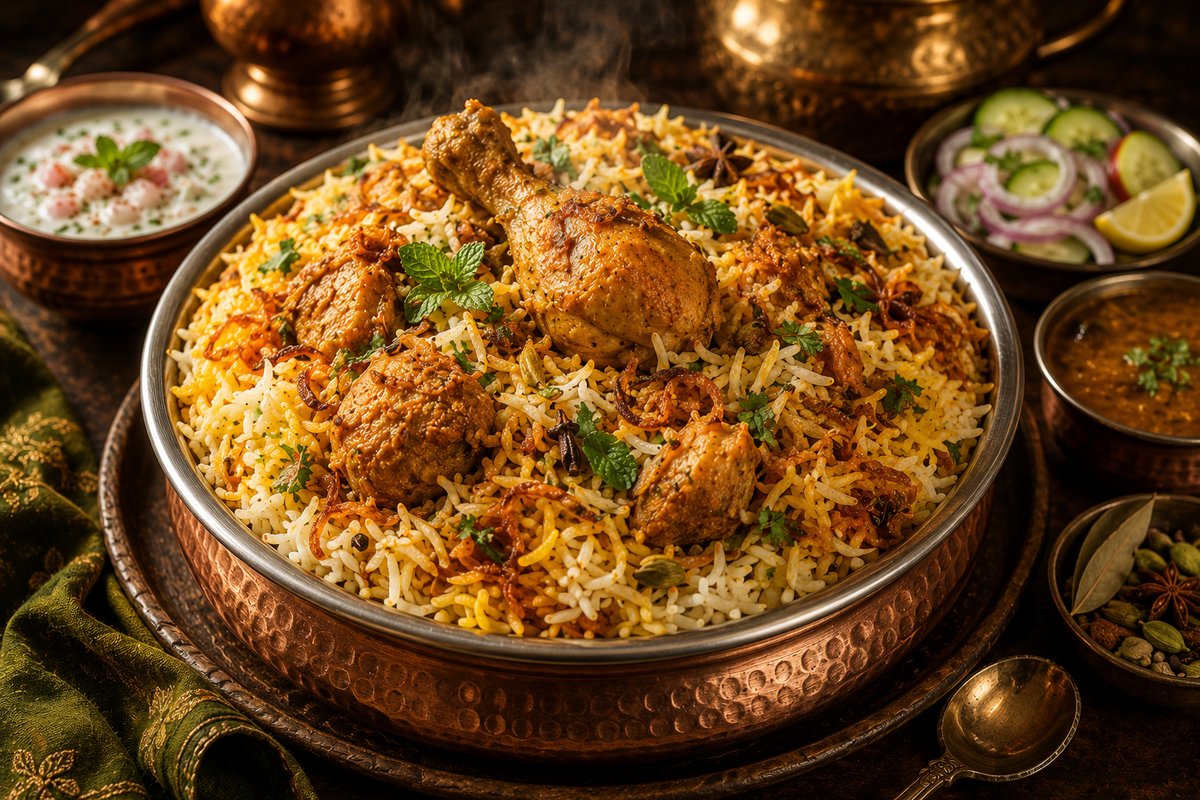
The overcooked rice problem
Why rice becomes mushy — starch breakdown and excess water
Mushy rice has two causes that often combine: too much water, and too much starch released from the grain surface. Both are fixable with correct technique. Starchy Indian rice varieties — especially older basmati — cook beautifully if rinsed correctly, measured correctly, and cooked with restraint.
The Science
Why does washing rice prevent mushiness?
Rice grains are coated in loose surface starch (amylopectin) that dissolves rapidly in cooking water, thickening the liquid and causing grains to stick and clump together into a gluey mass. Washing rice under cold water removes this surface starch before cooking — the water runs clear after 3–4 washes, indicating most surface starch has been removed. Washed rice cooks into separate, distinct grains. Unwashed rice cooks into a sticky, mushy mass at the same water ratio.
30 second read
The Fix
How to prevent mushy rice
- Wash rice until water runs clear — 3 to 5 rinses under cold water
- Soak basmati for 20–30 minutes before cooking — swells grains before heat application, reducing cooking time and water needed
- Water ratio: 1:1.5 rice to water (absorption method) — not the 1:2 that produces mushy rice in most basmati varieties
- Cook on medium heat, not high — rapid boiling agitates and breaks grains, releasing more starch
- Do not stir during cooking — agitation releases starch and causes mushiness