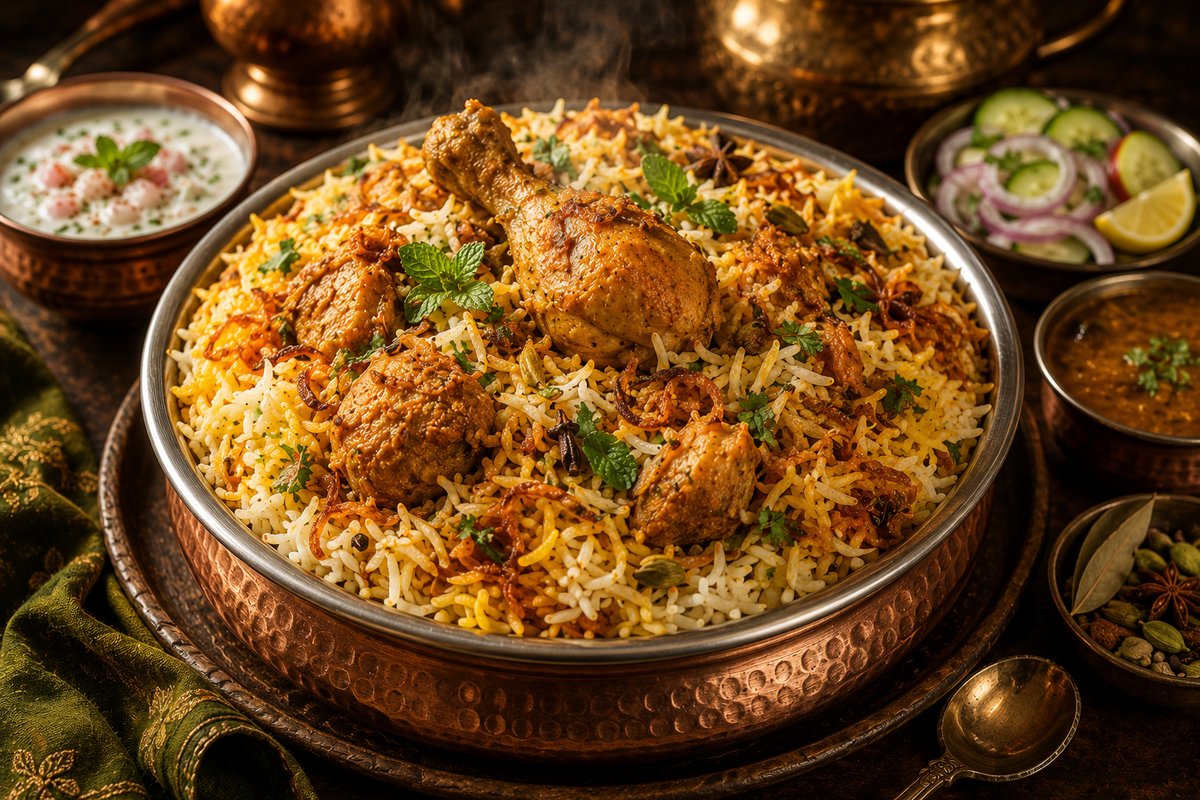
The foundation
Perfect rice — it's entirely about starch gelatinisation
Cooking rice perfectly is not a matter of talent or intuition — it is a matter of understanding one process: starch gelatinisation. Rice starch granules absorb water and swell when heated above approximately 65°C. When they reach their maximum hydration at 100°C, they gelatinise — transitioning from hard, crystalline structures to soft, translucent gels. Perfect rice is starch that has gelatinised completely and evenly throughout each grain, with no excess water remaining. Every technique decision (water ratio, pre-soaking, lid-on vs lid-off) is about managing this gelatinisation process.
The Science
Why does the water ratio matter so precisely for rice cooking?
Rice starch needs a specific amount of water to gelatinise completely. Too little water: starch gelatinises partially — hard, chalky centres remain. Too much water: starch gelatinises fully but excess water surrounds the grains — mushy, sticky, collapsed structure. The correct ratio provides exactly enough water for complete gelatinisation with minimal excess. Basmati: 1:1.5 to 1:1.75 (rice:water by volume). Sona masoori: 1:2. Short-grain: 1:1.25 to 1:1.5. Soaking reduces the ratio needed because some pre-hydration has occurred.
The Four Variables of Perfect Rice
Control all four simultaneously
- Water ratio: the most critical variable. Different rice varieties have different starch-to-water requirements. Measure accurately rather than estimating.
- Pre-soaking: soaking basmati 20–30 minutes reduces cooking time and produces longer, more separate grains — the starch begins hydrating before heat is applied.
- Heat management: bring to boil on high, then reduce to lowest heat for the steam phase. Consistent low heat prevents scorching while completing gelatinisation.
- Resting (most missed step): rest covered for 10 minutes off heat after cooking. Residual steam continues gelatinising the top layers and allows moisture to distribute evenly.