🍚 Biryani · Level 3
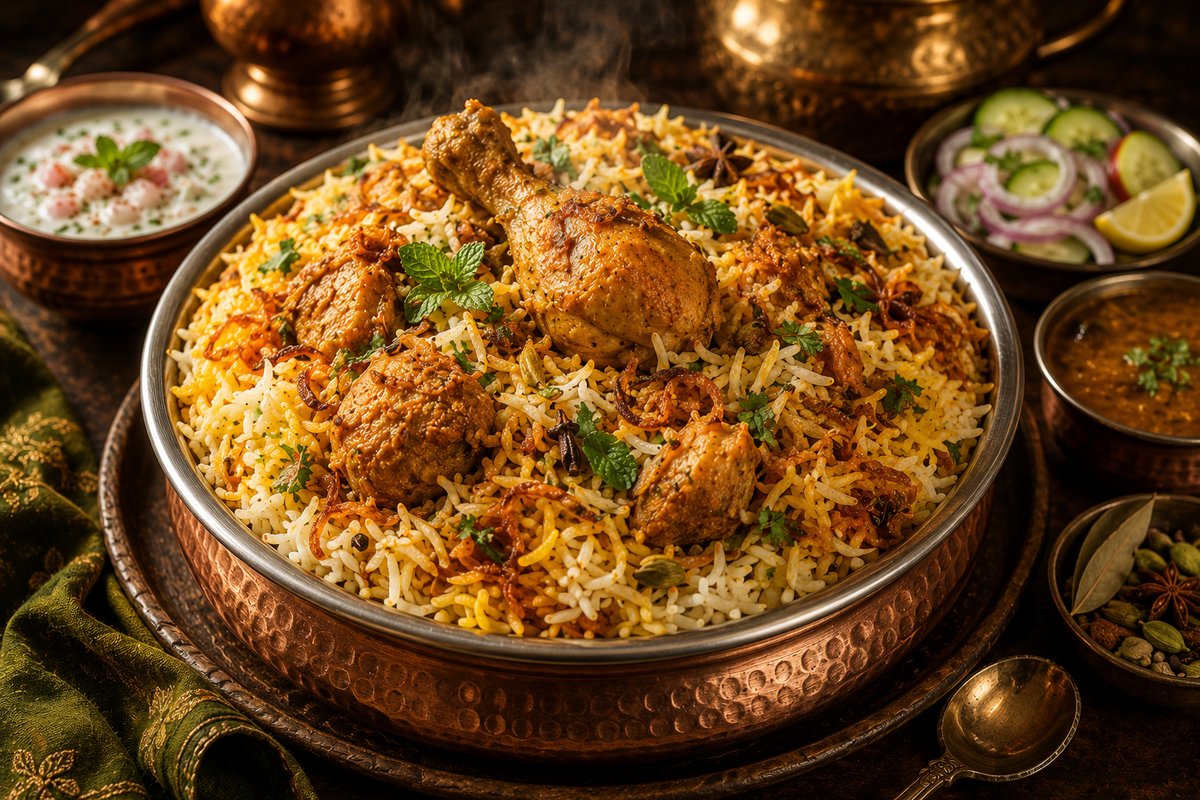
Hyderabadi Biryani
The most complex biryani in the world — raw marinated meat under par-cooked rice, sealed with dough, cooked in one pot. The Nizami method. No shortcuts.
The most complex biryani in the world — raw marinated meat under par-cooked rice, sealed with dough, cooked in one pot. The Nizami method. No shortcuts.
Hyderabadi biryani is kachchi (raw) biryani — the meat is marinated but not pre-cooked. Raw marinated meat is layered under par-cooked rice, the pot is sealed with dough (atta) rather than foil, and the entire assembly is cooked together. The raw meat's collagen and fat render during the dum, their juices rising as steam through the rice layers above. This produces a biryani where the rice has absorbed the actual cooking juices of the meat — something impossible to replicate with pre-cooked meat.
Mix lamb/goat with all marinade ingredients. Mix thoroughly so every piece is coated. Marinate overnight — minimum 8 hours.
Raw meat marination in yogurt-acid is more complex than chicken — lamb/goat connective tissue contains more collagen that requires longer acid exposure to begin pre-softening. The lemon juice and yogurt lactic acid work together: lemon's citric acid acts immediately on the surface, while yogurt's lactic acid penetrates slowly over 8+ hours. The birista compounds (caramelised onion Maillard products) dissolve into the yogurt fat phase, being deposited onto the meat surface throughout the overnight period.
Par-cook rice in heavily salted spiced water for only 6 minutes — 60% cooked. Drain immediately. The rice should be very firm with a large white centre.
Hyderabadi kachchi biryani par-cooks rice to 60% rather than 70% because the raw meat below produces more steam over a longer dum period than pre-cooked meat. The additional 10% of rice cooking happens during the longer dum time. If the rice were 70% cooked (as in pakki biryani), the extended steam would overcook it to 90%+ — producing soft, broken grains rather than the distinct, separate grains that define a great Hyderabadi biryani.
Place raw marinated meat in a heavy pot in a single layer. Layer 60% par-cooked rice over the meat. Add saffron milk, ghee, birista, fresh herbs. Make a dough rope and seal the pot rim completely. Place lid on top and press to seal. Cook on medium heat 15 minutes, then lowest heat 30 minutes.
The dough seal (called the dum seal or luting in culinary terms) creates a near-airtight environment. Unlike foil, which allows micro-steam escape, the dough seal maintains consistent pressure throughout the dum period. The sealed pressure raises the internal temperature to 102–103°C — high enough to cook raw lamb (which requires reaching 74°C internally) and gelatinise the remaining 40% of the rice starch simultaneously. The condensation from the steam falls back onto the rice rather than escaping, maintaining perfect moisture balance.