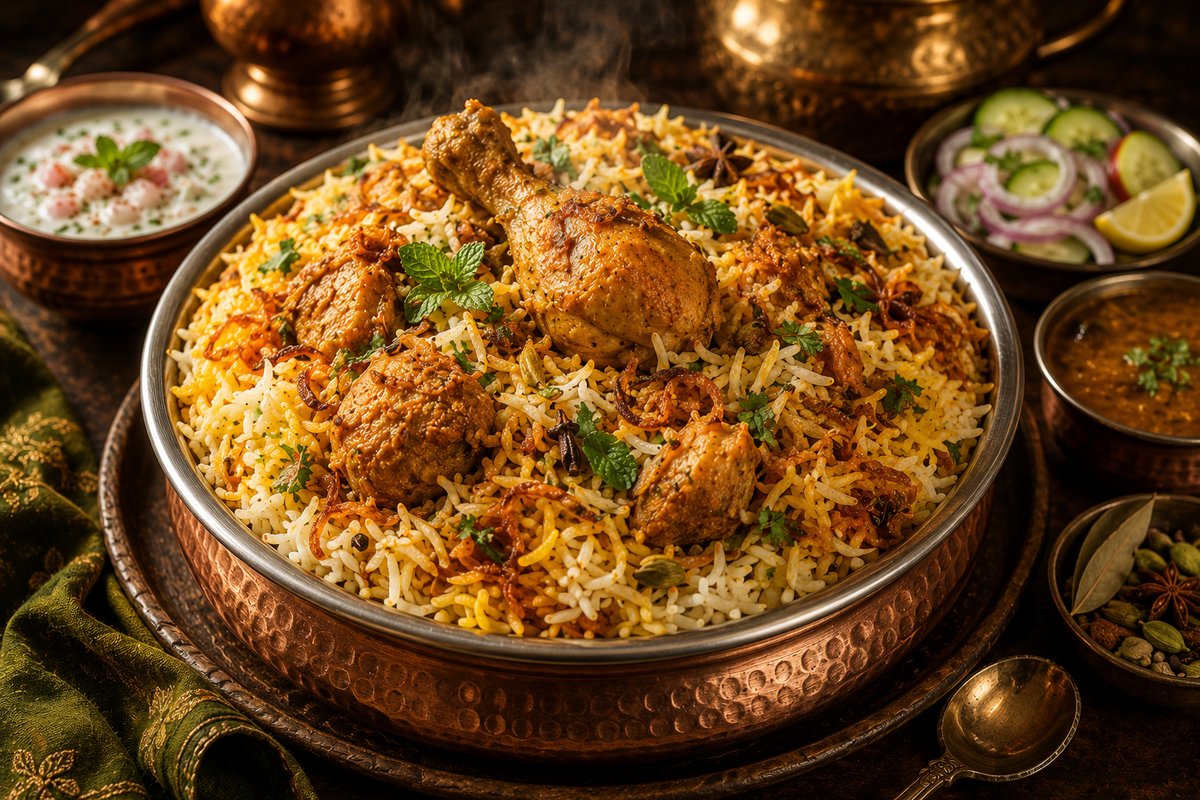
The clumping rice problem
Why rice becomes sticky — amylopectin and surface starch
Rice stickiness comes from amylopectin — the branched starch molecule that makes grains cling together when it dissolves into cooking water and then gels as the rice cools. High-amylopectin varieties like sushi rice are intentionally sticky. For Indian cooking where separate grains are desired, the goal is to minimise amylopectin release through washing, soaking, and correct cooking technique.
The Science
Why is aged basmati less sticky than new-season rice?
Rice loses moisture during ageing, which concentrates the starch inside the grain. More importantly, the protein matrix surrounding starch granules becomes more robust during ageing, reducing starch dissolution during cooking. Aged basmati (1–2 years old) produces significantly less sticky, more separate-grain rice than new-season basmati. This is why premium Indian basmati is always labelled with its age.
30 second read
The Fix
How to make non-sticky fluffy rice
- Wash until water runs completely clear — 4–5 rinses
- Soak for 30 minutes — pre-swells starch granules reducing dissolution during cooking
- Add 1 teaspoon of oil or ghee to cooking water — fat coats grains and reduces sticking
- Drain method: boil in excess water (like pasta), drain when 80% cooked — removes most dissolved surface starch
- Spread on a tray after cooking to release steam and prevent condensation sticking