🫓 Bread · Level 2
Naan
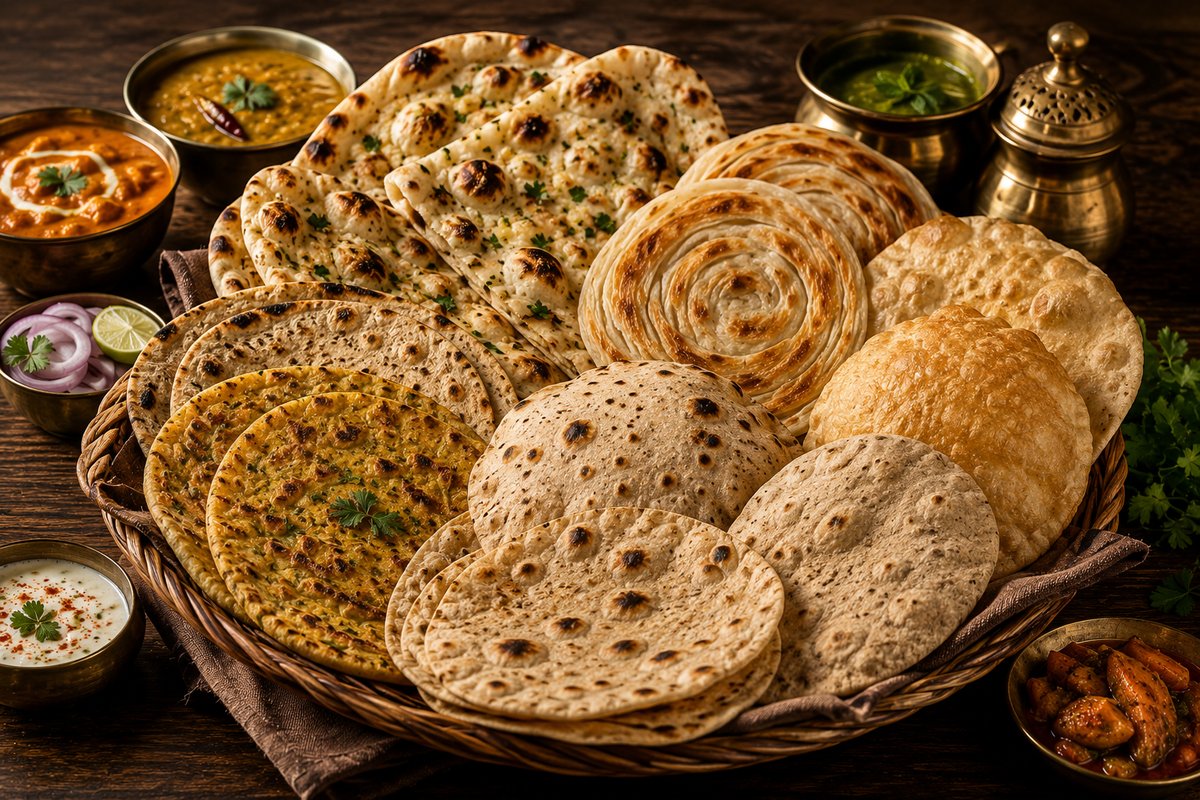
Leavened, chewy, charred flatbread — the bread of North Indian restaurants worldwide. Without a tandoor, the closest result comes from a cast-iron pan at maximum heat.
Leavened, chewy, charred flatbread — the bread of North Indian restaurants worldwide. Without a tandoor, the closest result comes from a cast-iron pan at maximum heat.
Naan is a leavened bread — it contains yogurt (for lactic acid fermentation and protein richness), baking powder (for immediate CO₂ leavening) and sometimes yeast for additional rise. The characteristic chew comes from the higher gluten development in plain flour versus atta. The characteristic char comes from the tandoor's radiant heat at 400–500°C. Without a tandoor, the closest approximation is a cast-iron pan preheated on maximum heat, flipped face-down over a gas flame, or finished under a very hot grill.
Mix flour, salt, sugar and baking powder. Add yogurt, oil and water. Mix until combined. Knead 5 minutes until smooth and elastic. The dough should be softer than roti dough. Cover and rest 1 hour at room temperature.
Plain flour's higher gluten protein content (12–13% versus atta's 11%) produces a stronger, more extensible gluten network — this is why naan has a chewier texture than roti. The yogurt's fat (from milk proteins) inhibits some gluten development, producing a tender crumb rather than a tough one. Baking powder provides immediate CO₂ leavening when the dough hits the heat. The 1-hour rest allows the yogurt's lactic acid bacteria to partially ferment the dough, producing flavour compounds and further weakening the gluten slightly for better extensibility.
Divide dough into 6 balls. Roll into tear-drop shapes, slightly thicker than roti. Preheat cast-iron pan on maximum heat for 3 minutes — it must be smoking hot. Place naan — it should bubble immediately. Cook 2 minutes until large bubbles appear and char spots form underneath. Flip — cook 1 minute. Remove and brush with butter immediately.
The 3-minute preheating ensures the cast iron reaches 280–300°C — high enough to produce the Maillard browning and char spots that approximate tandoor cooking. The bubbles that form within the first 30 seconds are CO₂ from the baking powder activating in the heat, combined with steam from the yogurt's water content. These bubbles create the characteristic blistered surface of naan. Butter brushed immediately onto the hot naan melts into the warm, porous structure of the bread.