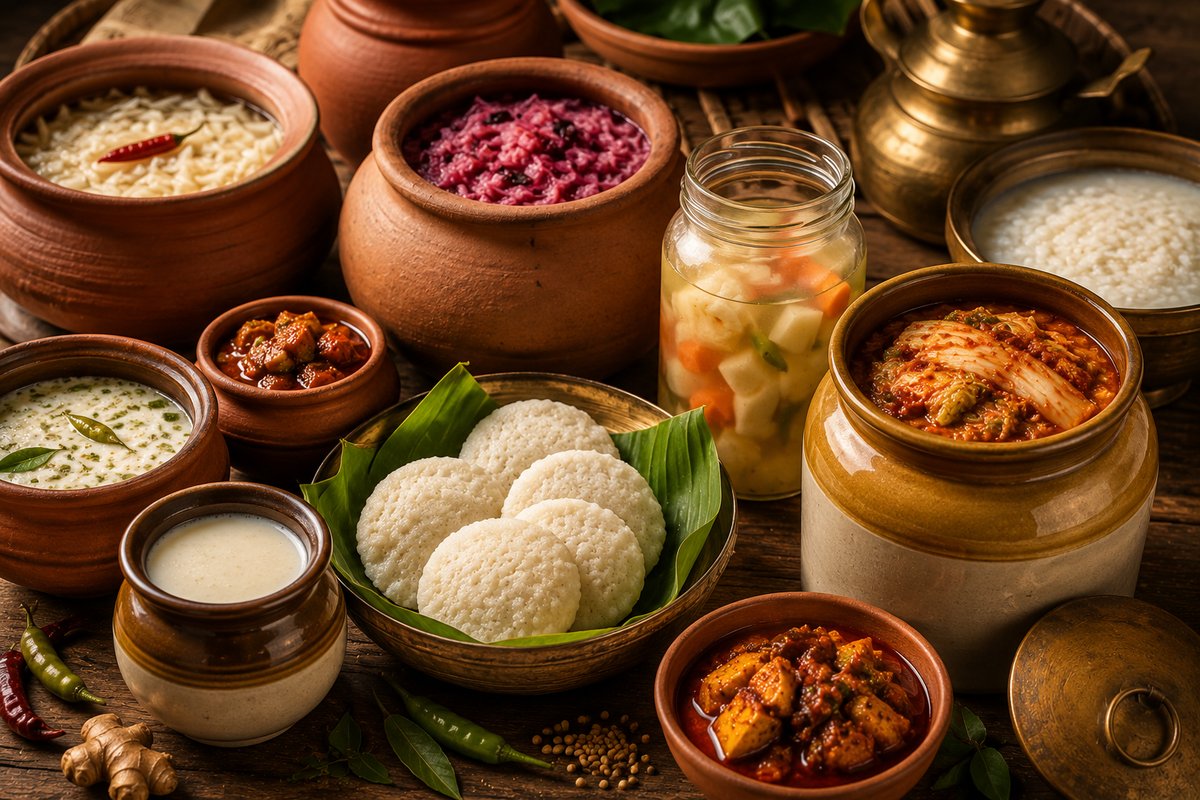
The foundation
What fermentation actually is
Fermentation is one of the most misunderstood processes in cooking — simultaneously described as mysterious, dangerous, and magical when it is in fact a well-understood microbial process that Indian cooking has exploited systematically for thousands of years. Understanding what fermentation is at the cellular level transforms it from an unpredictable kitchen event into a controllable, repeatable process. The key insight: fermentation is microorganisms eating the sugars and starches in your batter and producing the compounds that make fermented food taste, smell, and function the way it does.
The Science
What exactly is happening during fermentation?
Fermentation is anaerobic (without oxygen) metabolic activity by microorganisms — primarily lactic acid bacteria (LAB) and yeasts — that converts sugars and simple carbohydrates into acids, alcohols, and CO₂ as metabolic byproducts. In dosa and idli batter: Leuconostoc mesenteroides and Lactobacillus species convert the sugars in rice and urad dal into lactic acid (sourness) and CO₂ (the rise). Wild yeasts (Saccharomyces and related species) simultaneously produce ethanol and more CO₂. The CO₂ is trapped by urad dal's viscous protein network — producing the characteristic risen, porous batter. Temperature, salt, water quality, and grinding method all affect which organisms dominate and how fast they work.
Indian Foods That Depend on Fermentation
A surprisingly complete list
- Batter-based: dosa, idli, uttapam, medu vada, appam, pesarattu (some versions)
- Gujarat fermented: dhokla, handvo, khaman
- Sweet/fried: jalebi (wild yeast), some malpua variations
- Drinks: kanji, toddy, fermented buttermilk, some lassi
- Preservation: all lactic-fermented pickles, gundruk, pakhala, ambali
- Bread: kulcha, some bhatura versions use yogurt fermentation