The foundation
Gluten — the protein network that makes Indian bread possible
Gluten is the most important structural protein in wheat-based Indian cooking — it makes roti stretchable without tearing, gives naan its chew, allows paratha to be layered, and enables the thin-rolling that Indian flatbreads require. Understanding gluten is the single most useful piece of bread science for Indian cooking: it explains why atta and maida behave so differently, why resting dough matters, why kneading is necessary, and why the same wheat flour produces both paper-thin roti and chewy naan.
The Science
What is gluten and how does it form in dough?
Gluten is not a naturally present compound in wheat — it forms when wheat flour is mixed with water. Two proteins in wheat flour — glutenin (provides elasticity — snaps back) and gliadin (provides extensibility — stretches without breaking) — are separate in dry flour. When water is added and the dough is kneaded, these proteins hydrate and interlink through disulfide bonds, forming a continuous elastic network called gluten. The quality and strength of this network determines the bread's characteristics: strong gluten = chewy, elastic; moderate gluten with bran interruption (atta) = pliable, soft; minimal gluten (gluten-free) = fragile, must rely on starch gelatinisation for structure.
Gluten Development in Indian Bread Making
How each bread type uses gluten differently
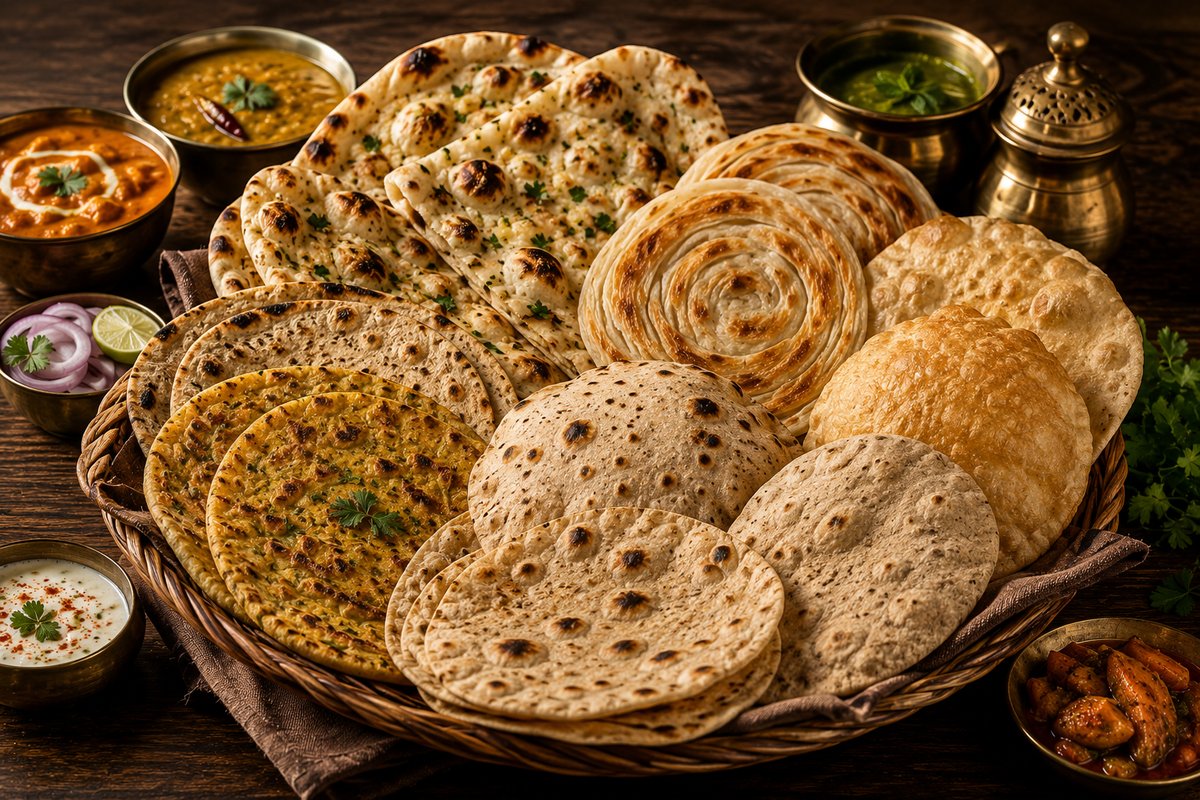
- Roti (atta): moderate gluten network, interrupted by bran particles. Pliable, thin-rollable, not chewy. Bran is not merely nutritional — it structurally limits gluten strength.
- Naan (maida): strong, continuous gluten network (no bran interruption). Chewy, elastic, stretchy. Can be pulled thin without tearing at high hydration.
- Paratha (atta + fat): fat layered between gluten sheets limits their bonding across layers — producing the flaky, separated layers of paratha.
- Puri and bhatura (maida or atta): gluten strength allows the thin dough to trap steam or expanding gas during frying — producing the characteristic puff.
- Jowar/bajra bhakri (no gluten): no gluten network possible — structure comes entirely from starch gelatinisation, requiring hot water and hand-patting technique.