Series 1 · The Chronological Story · Chapter 3 of 17
Ancient Indian
Kitchens
The Hearths, Tools, Vessels, and Techniques
That Built a Culinary Tradition
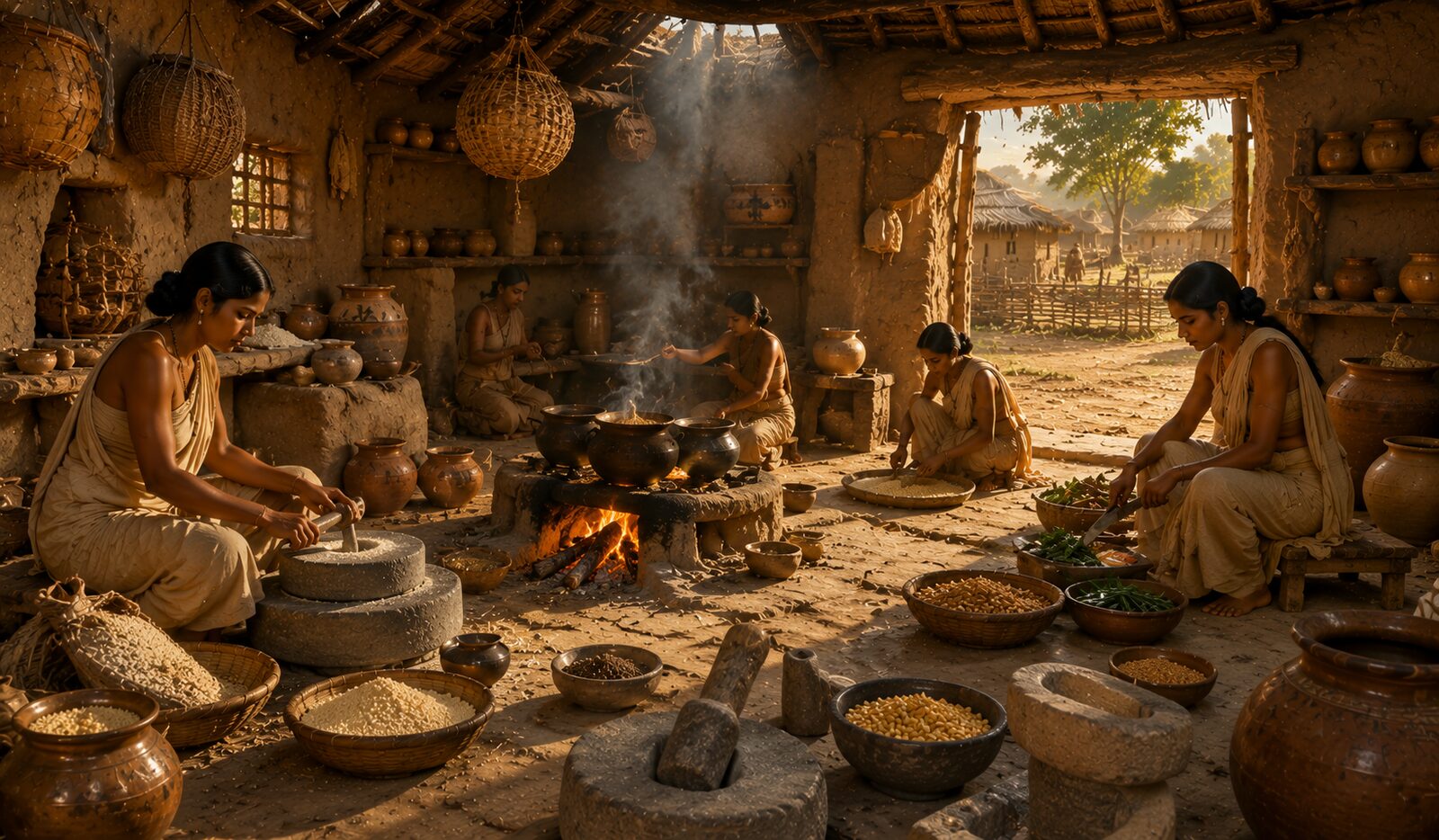
Artist's reconstruction based on archaeological evidence
The Hearths, Tools, Vessels, and Techniques
That Built a Culinary Tradition
Artist's reconstruction based on archaeological evidence
Every dish begins before the ingredients. It begins with the fire — how hot, how long, how controlled. It begins with the vessel — clay or metal, sealed or open. It begins with the grinding stone — how fine the flour, how long the labour. Understanding what ancient Indians ate is one thing. Understanding how they cooked it — the physical reality of heat, time, tools, and technique — is something entirely different, and arguably more important for anyone who actually cooks.
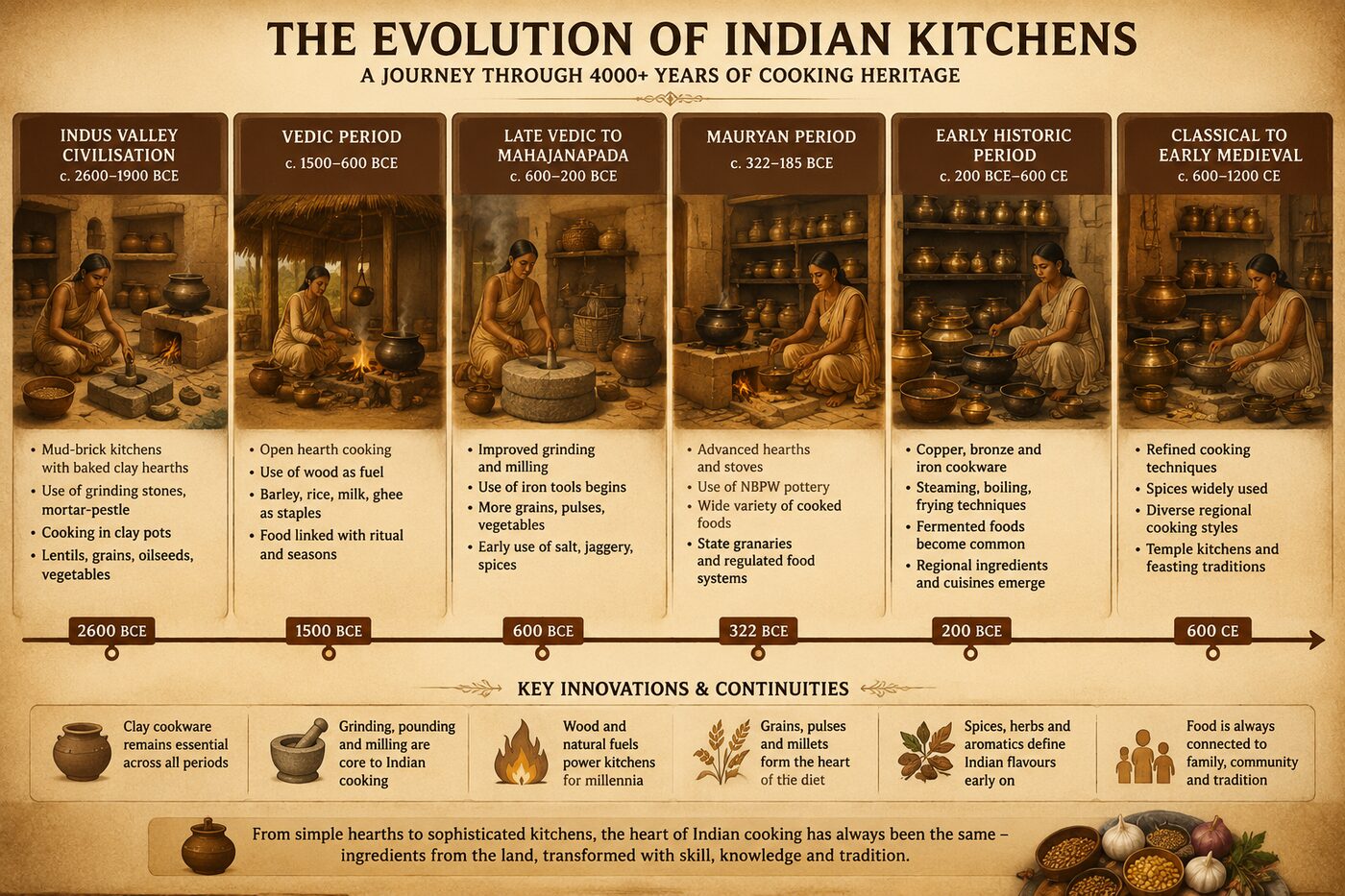
The hearth is where everything begins. In the ancient Indian kitchen — from the Indus Valley through the Vedic period — the cooking fire was not simply a heat source. It was the organisational centre of the household, the first technology of the morning, and, in Vedic culture, a sacred space that connected the domestic to the divine.
The physical form of the Indus Valley hearth was a clay-lined pit or platform, sometimes with a low surround to contain the fire and support vessels. The design solved a specific engineering problem: how to transfer heat from burning fuel to the contents of a clay pot efficiently and controllably. The three-stone fireplace — three stones arranged in a triangle to support a vessel above the fire — is one of the oldest and most universal cooking technologies in human history, and its design has not improved significantly in five thousand years. You can still find this configuration in use across rural India today.
In the Vedic period, the domestic hearth acquired a dimension that went far beyond cooking. The fire in a Vedic household was considered a manifestation of Agni — the fire god who was both the divine messenger and the sacred transformer. Food placed in the cooking fire was not just being cooked: it was being transformed from raw to cooked, from natural to cultural, from material to spiritual.
The Vedic domestic fire was never supposed to go out. The householder's duty was to maintain it from marriage to death — the same fire that witnessed the wedding ceremony, cooked daily food, and eventually provided the final cremation. This is an extraordinary concept: the same fire thread connecting a human life from its beginning to its end, with every meal cooked in that life a continuation of the same sacred act.
The choice of cooking fuel in an ancient kitchen was not arbitrary. Different fuels produce different temperatures, different heat duration, different flavours in the food, and different cooking behaviours. Understanding the fuels of the ancient Indian kitchen explains much about why ancient Indian food tasted the way it did — and why certain traditional cooking methods still produce results that modern gas or electric cooking cannot replicate.
Dried cattle dung — gobar — was the everyday domestic fuel across the ancient Indian world. It burns at a moderate, steady temperature suitable for long, slow cooking: the simmering of dal, the gradual fermentation of curds, the controlled heat for flatbread. It produces minimal smoke when fully dried and leaves an alkaline ash that has antimicrobial properties useful around food. It is abundant wherever cattle are kept. And it does not require deforestation — a critical advantage in a densely populated agricultural landscape.
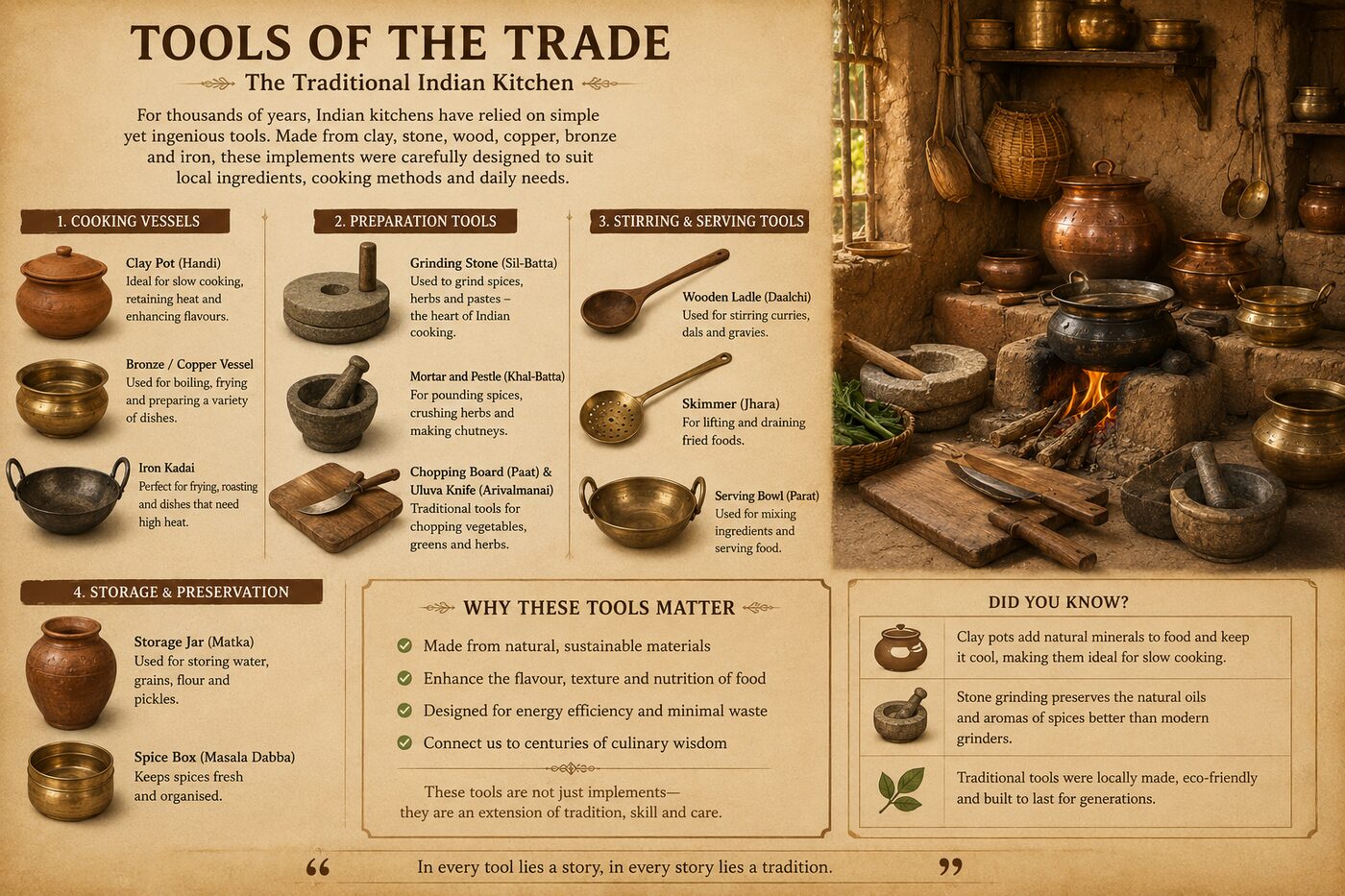
If the hearth is where cooking happens, the clay pot is how it happens. The unglazed clay vessel — in its many forms — was the universal cooking technology of ancient India, and its physical properties made it extraordinarily well-adapted to the food it was used to prepare.
Unglazed clay is porous. Water moves slowly through its walls, evaporating from the outer surface and cooling the contents — a form of evaporative cooling that kept water vessels cooler than the surrounding air. In a hot climate before refrigeration, this was the closest thing to a refrigerator that existed. The same porosity means clay vessels "breathe" — they allow a slow exchange of gases that affects fermentation and storage. A clay curd pot inoculates its contents with the bacterial culture that has accumulated in its walls over previous uses, producing more consistent and often more complex fermented products than a sterile vessel.
Clay also heats and cools slowly compared to metal — a property that promotes even, gentle cooking rather than rapid, high-heat cooking. This matches the primary techniques of the ancient Indian kitchen: long simmering of dal and grain, slow cooking of curds, gradual heating of ghee. The flat clay griddle — the tawa — is a partial exception, reaching sufficient temperature for flatbread in a reasonable time, but even here the clay's thermal mass produces a more even heat distribution than thin metal.
The tools of the ancient Indian kitchen were not primitive. They were precisely adapted to specific physical and chemical transformations — the breaking of grain into flour, the reduction of spices to pastes, the extraction of juice, the separation of fat from liquid. Each tool represented accumulated knowledge about how to apply force to food in ways that produced the desired result.
The sil-batta was the most important. Two stones — a flat lower slab and a cylindrical upper roller — worked together to crack, crush, and grind grain through a combination of compression and shear force. The same tool was used for spices and aromatic pastes: ginger, turmeric, and mustard seed were ground wet on the sil-batta into the fresh pastes that formed the aromatic base of cooking. The specific texture of stone-ground paste — slightly gritty, unevenly ground, releasing volatile compounds gradually rather than all at once — is distinctly different from blender-processed paste and produces a different flavour profile in the final dish.
One of the most underappreciated aspects of the ancient Indian kitchen is its storage system. With no refrigeration, no canning, no vacuum sealing, and no artificial preservatives, the ancient cook had to ensure that food lasted — sometimes for days, often for weeks, sometimes for months or even years. The solutions they developed were not inferior to modern preservation: they were different, often more nutritious, and frequently more complex-flavoured.
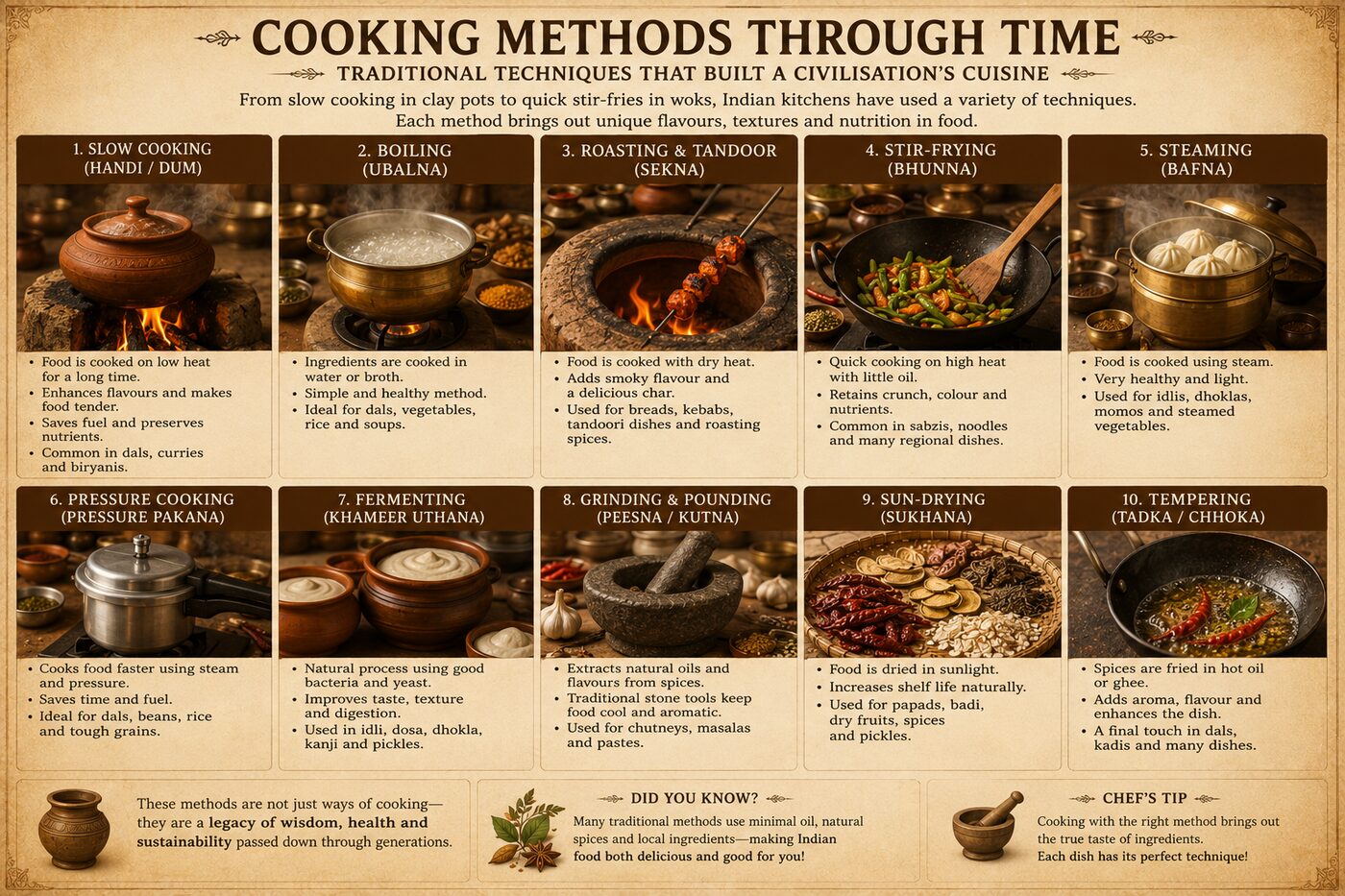
Drying removes the water that bacteria and mould need to grow. Grain dried to low moisture content can last years without spoilage. Dried ginger, dried spices, and dried pulses extend the seasonal availability of foods beyond their harvest window. The ancient Indian spice system is partly a preservation system: turmeric, ginger, mustard, and fenugreek all have antimicrobial properties that slow the spoilage of foods they are cooked with.
Fermentation uses beneficial microorganisms to acidify or otherwise transform food in ways that make it inhospitable to pathogens. Curds, buttermilk, fermented grain batters, and pickles preserved in salt, oil, or brine all fall into this category. Fermentation was not a preservation technique adopted out of desperation: it produces food that is more digestible, more nutritious, and more flavourful than the original ingredients.
Oil and ghee immersion excludes oxygen and inhibits bacterial growth. Foods submerged in oil or ghee — the principle behind ancient Indian achaar (pickle) — can last for months. Ghee itself has a long shelf life precisely because it contains almost no water and no milk proteins — the two components that enable bacterial growth in ordinary dairy products.
Clay vessel properties — the porosity that enables evaporative cooling — helped keep water vessels cooler than ambient temperature and maintained specific temperature conditions suitable for fermentation. The microbial cultures that accumulated in well-used clay vessels over time also acted as consistent inoculants for fermented preparations.
Fermentation was not discovered — it was observed. Milk left in a warm clay vessel became curds. Grain soaked in water and left for a day began to bubble and develop sourness. Fruit juice exposed to air transformed. Ancient cooks did not understand microbiology, but they understood that these transformations happened, that they were reliable and reproducible, and that the results were desirable — often more digestible, longer-lasting, and better-flavoured than the original ingredients.
The fermented foods of ancient India — documented in the Vedas and archaeologically plausible from the Indus Valley period — are the direct ancestors of the fermented foods central to Indian cooking today. Understanding this lineage makes the modern foods more meaningful.
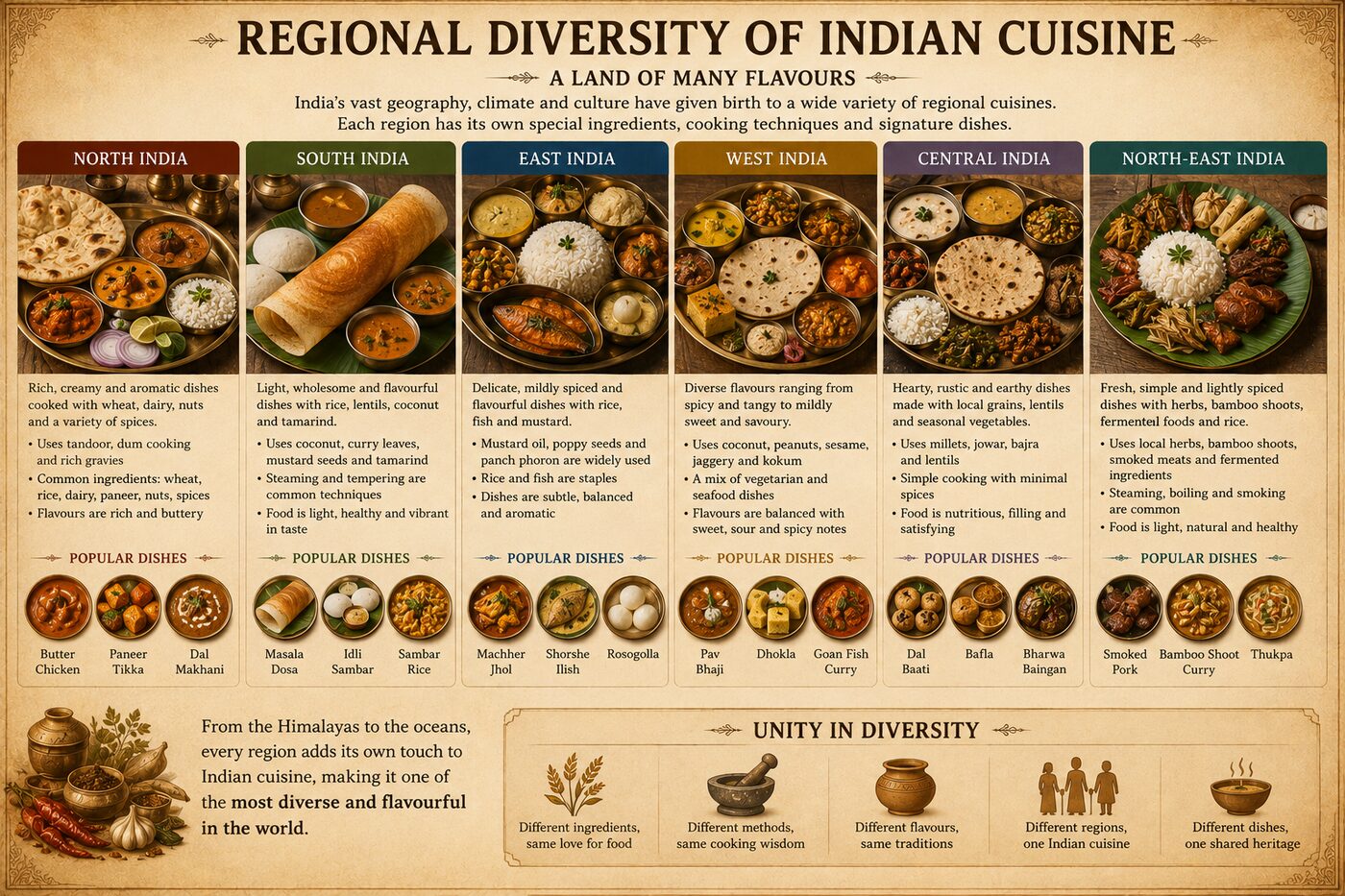
Putting all the evidence together: what did a fully equipped ancient Indian kitchen actually look like, and how did it function as a system?
The kitchen occupied the ground floor of the house — close to the storage areas, the water source, and with a direct opening or ventilation for cooking smoke. The hearth was positioned centrally or against a wall, slightly raised on a clay platform that kept sparks from the floor and provided a stable cooking surface. Around it, within arm's reach of the cook, were the vessels: a large water jar, the cooking handi, the flat griddle, the churning vessel, small clay cups for oil and ghee, and lidded storage jars for grain and spice.
The grinding stone occupied a permanent position — it was heavy, stable, and used every morning. The lower stone was set slightly slanted toward a collection area, so flour ran forward as it was ground. The cook worked leaning forward over the stone, using body weight rather than arm strength to generate grinding pressure. An hour of grinding for two people's daily grain requirement was typical — and this was done before any other cooking had begun.
Water came from the communal well, the river, or a stored vessel. It was used prodigally in ancient Indian cooking: to soak grain the night before grinding, to cook dal, to make flatbread dough, to cool the cook in the heat of cooking, and to clean the clay vessels after use. The connection between water access and kitchen capability is direct — a well-watered household cooked more varied food than one that had to ration water.
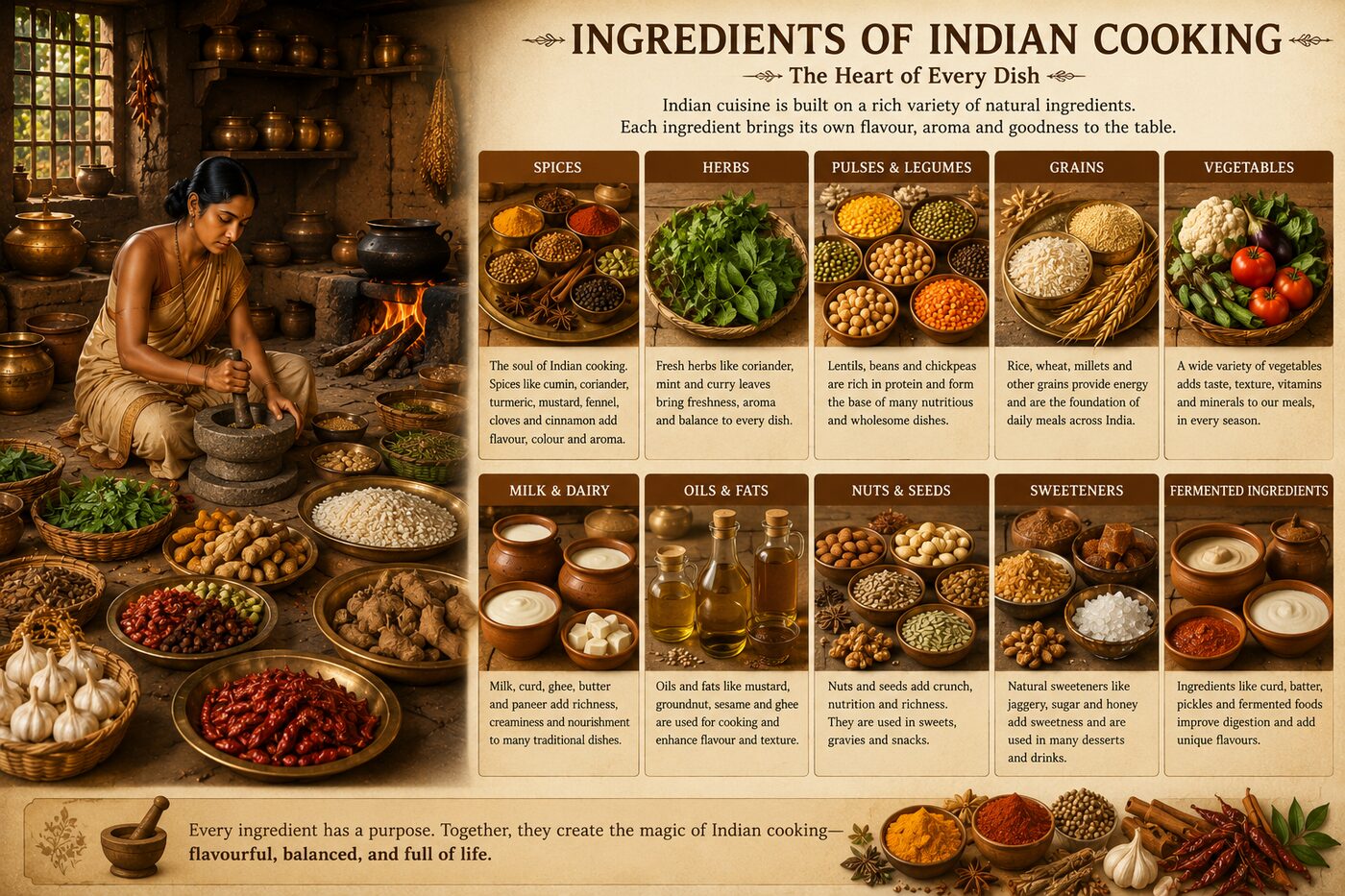
Three meals that illustrate how the kitchen tools, techniques, and ingredients came together in actual daily eating. Each reconstruction integrates the physical evidence (tools and vessels) with the ingredient evidence (grains, dairy, spice) to produce the most complete picture possible.
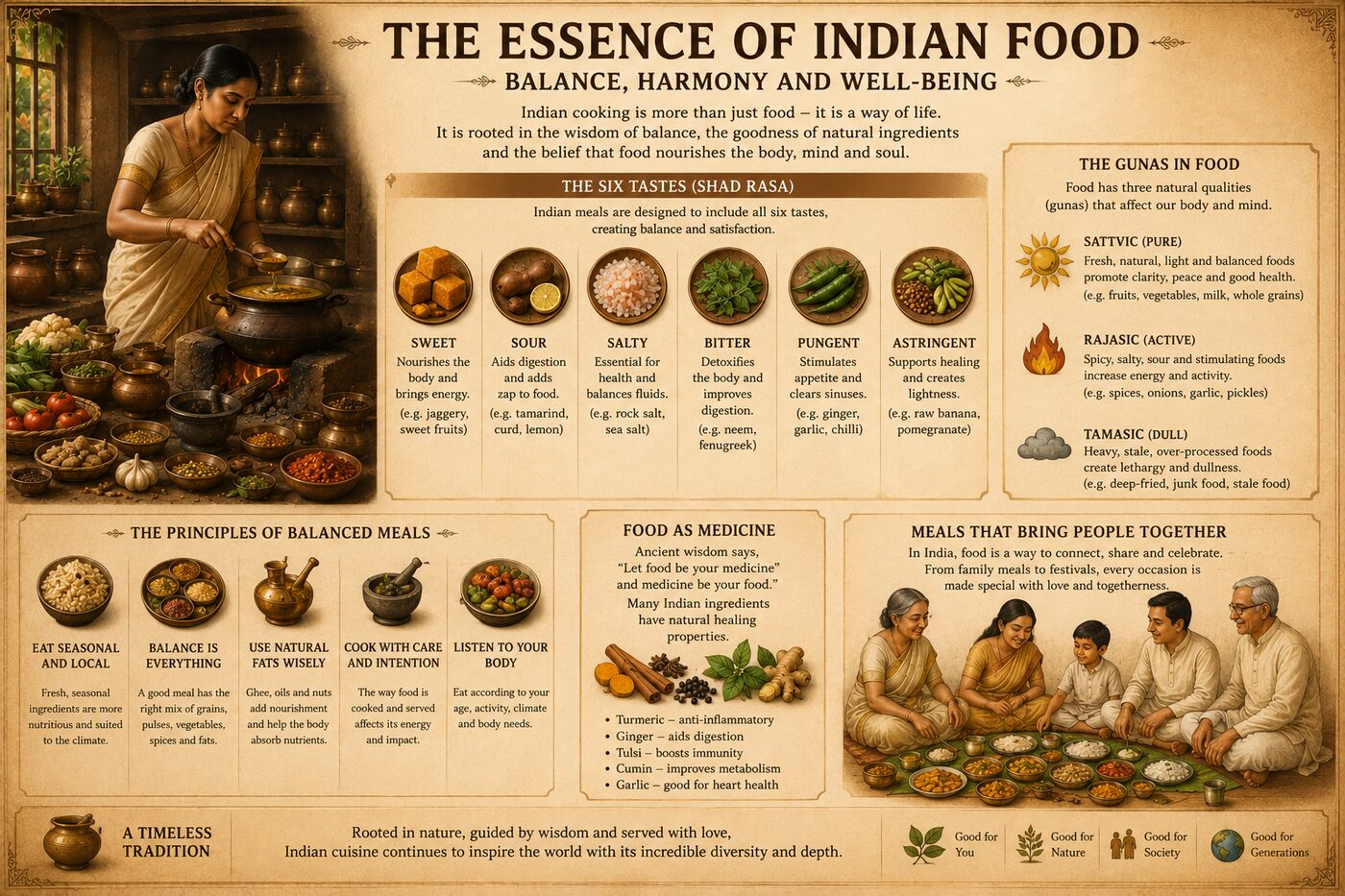
The morning meal was structured by the grinding — flour made fresh every day, not stored, because ground grain goes rancid faster than whole grain. The flatbread was cooked immediately after grinding, while the fire was being built up. Leftover dal from the previous evening was reheated — slow clay pot cooking means a large batch, eaten over multiple meals. Fresh curds from overnight fermentation provided cooling dairy alongside the warm grain. The entire meal was prepared and eaten within an hour of dawn.
The main meal of the day required the longest fire — dal simmered for an hour or more in the clay handi, developing depth of flavour as the lentils broke down and absorbed the turmeric, ginger, and mustard that had been added. The ghee or sesame oil was heated separately and spices added — the proto-tadka — then poured over the finished dal. This finishing technique, however it was named or conceived, is present in the logic of the cooking: hot fat extracts and transfers volatile aromatic compounds in ways that water-based cooking does not.
In dry season, in drought years, or during travel, the preserved-food meal became necessary. Dried grain — pre-ground and dried to prevent rancidity — could be reconstituted with water. Oil pickles provided flavour, salt, and the antimicrobial protection of mustard oil and turmeric. Stored ghee, stable for months, provided the fat needed to make dried grain palatable. This was not poverty food — it was the intelligent use of a sophisticated preservation system developed over millennia. Its descendants are the travel foods, the fasting foods, and the non-perishable preparations still found across Indian regional food traditions.
The shift from clay to metal cookware — which began in the later Vedic period and accelerated through the historical period — was not a simple upgrade from inferior to superior technology. Clay and metal cook food in fundamentally different ways, and the ancient clay-based kitchen produced results that metal cookware cannot replicate.
The key property is thermal mass and conductivity. Clay has high thermal mass — it heats slowly but holds heat well — and low thermal conductivity — it transfers heat slowly. Metal has low thermal mass and high conductivity. In practice: a clay pot takes longer to heat but then maintains a more stable, even temperature. A metal pot heats quickly but creates hot spots and temperature fluctuations that clay does not.
Why this matters for dal: Lentil proteins denature and the cell walls break down most effectively at a stable temperature just below boiling — around 90–95°C, sustained for 45 minutes or more. A clay pot at this temperature over a dung-cake fire maintains this temperature remarkably well. Metal at the same fire level will fluctuate — sometimes boiling hard, sometimes dropping. The clay pot produces more even protein denaturation and a smoother, creamier dal texture. This is why clay pot dal tastes different from pressure cooker dal, even with identical ingredients.
Modern food safety logic says: sterilise everything. Ancient Indian food practice said the opposite: cultivate your fermentation vessels, never sterilise them, allow the microbial community to establish and stabilise. This was not ignorance — it was an accurate empirical understanding that a stable, established microbial community in a clay vessel produces more consistent, safer fermented food than a randomly inoculated sterile environment.
A well-used curd pot develops a biofilm — a community of lactic acid bacteria attached to the clay walls. These bacteria produce lactic acid, lowering the pH and making the environment hostile to pathogenic organisms. Each new batch of milk inoculated in this pot is immediately exposed to this established community, which outcompetes pathogens before they can establish. The clay pot is functioning as a carefully maintained probiotic culture vessel — primitive in materials, sophisticated in microbial management.
The sil-batta crushes spices through a combination of compression and shear — the upper stone pressing down while moving forward, cracking cell walls and rupturing oil glands in a way that releases volatile aromatic compounds gradually. A blender uses high-speed cutting and aeration — it chops tissue rather than crushing it, and the heat from friction and the aeration from spinning can partially volatilise and oxidise the most delicate aromatic compounds before they reach the food.
Stone-ground spice paste also retains more moisture and produces a more irregular particle size — some tissue still intact, some fully crushed — that releases its flavour compounds at different rates during cooking, producing a more complex, layered aromatic development. This is the physical reason why traditionally stone-ground chutneys and spice pastes taste different from blender-processed equivalents — and why many South Indian households still use the ammi-kallu (stone grinder) for specific preparations despite the universal availability of electric blenders.
Because the tools shaped the food. Indian cooking is not just a set of ingredients and recipes — it is a set of physical techniques developed over thousands of years with specific tools, and those techniques produce specific results that no modern substitute fully replicates.
When you make chutney in a blender rather than a stone grinder, you get a different product — smoother, more aerated, with some aromatic compounds volatilised away. When you cook dal in a pressure cooker rather than a clay pot, you get a different texture — coarser, less creamy, without the subtle mineral quality that clay imparts. When you buy stone-ground atta rather than roller-milled flour, you get bread with more texture, more flavour, and a different nutritional profile.
None of this means modern tools are wrong. The ancient kitchen was also brutal — the daily grinding alone represented an hour of hard physical labour before any other cooking began. But understanding what those tools did, and why the dishes they produced tasted the way they did, makes you a more informed cook. It explains why some traditional preparations are worth the extra effort and why some modern shortcuts produce measurably inferior results.
| Ancient India, c. 2000 BCE | Modern India |
|---|---|
| Three-stone hearth, dung cake fuel | LPG gas stove dominant; induction growing; dung cake fuel still used in rural areas |
| Clay handi as primary cooking vessel | Stainless steel and aluminium dominant; clay handi still used for biryani, dal makhani, and specific preparations |
| Sil-batta for all grinding | Wet grinder for idli-dosa batter; mixer-grinder for everyday; sil-batta retained for fresh coconut and special pastes |
| Clay tawa for flatbread | Iron tawa universally; non-stick growing; the cooking method is identical — only the material differs |
| Clay matka for water storage and cooling | Refrigerator dominant; clay matka retained for drinking water in hot season — still cooler by evaporation |
| Fermentation as primary preservation | Refrigeration dominant; fermented foods retained not just from tradition but for probiotic benefits now scientifically understood |
| Daily morning grinding as first kitchen task | Pre-milled flour purchased — the hour of daily labour eliminated; soaked batter prepared in advance for fermentation |
| One cooking fire, multiple vessels arranged around it | Multiple burners, independent temperature control — the most significant physical change to the ancient kitchen logic |
The tools of the ancient Indian kitchen did not disappear. Many survive in active, daily use — not as museum pieces or nostalgic gestures, but because they produce results that modern equivalents do not.