★★★★☆ Odisha
★★★☆☆ North India
★☆☆☆☆ South India
What Does Nigella Seeds Taste Like?
Nigella Seeds in Every Indian Language
| Language | Name | Pronunciation |
|---|---|---|
| English | Nigella Seeds | nih-JEL-ah |
| Hindi | कलोंजी — Kalonji | Kuh-LON-jee |
| Bengali | কালো জিরে — Kalo Jeere | Kah-lo JEE-reh |
| Tamil | கருஞ்சீரகம் — Karunjeeragam | Kah-run-JEE-rah-gum |
| Telugu | నల్ల జీలకర్ర — Nalla Jeelakarra | Nah-lah JEE-lah-kah-rah |
| Malayalam | കരിഞ്ജീരകം — Karinjeerakam | Kah-rin-JEE-rah-kam |
| Kannada | ಕರಿ ಜೀರಿಗೆ — Kari Jeerige | Kah-ree JEE-ree-geh |
| Gujarati | કલોંજી — Kalonji | Kuh-LON-jee |
| Marathi | कलोंजी — Kalonji | Kuh-LON-jee |
| Punjabi | ਕਲੌਂਜੀ — Kalonji | Kuh-LON-jee |
| Urdu | کلونجی — Kalonji | Kuh-LON-jee |
| Sanskrit | कृष्ण जीरक — Krishna Jiraka | KRISH-nah JEE-rah-kah |
What Is Nigella Seeds?
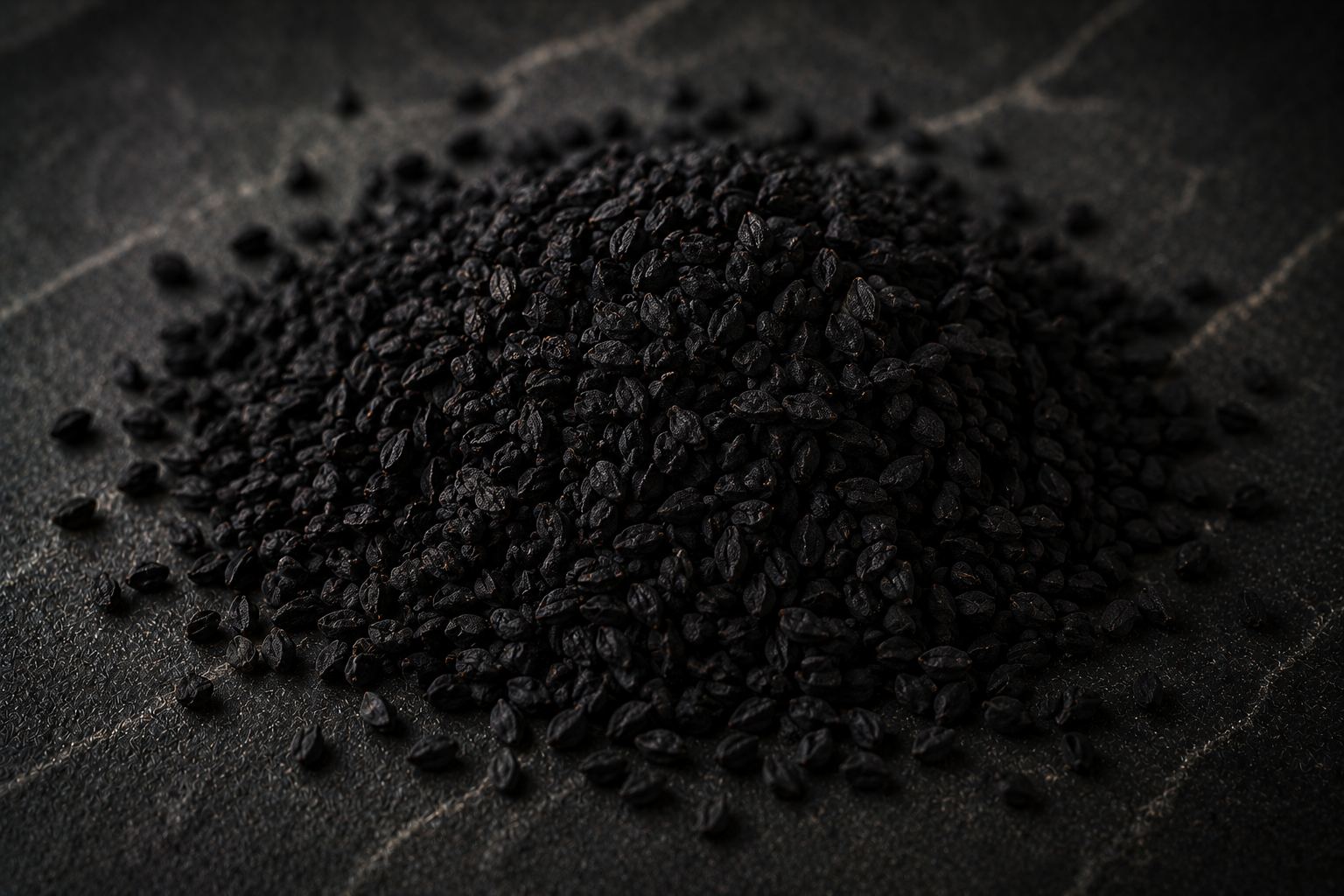
Nigella seeds — kalonji — come from Nigella sativa, a flowering plant native to South and West Asia. The tiny, jet-black seeds are teardrop-shaped with a slightly rough surface. When crushed, they release an aroma simultaneously onion-like, faintly oregano-adjacent, and distinctly bitter — unlike anything else in the Indian spice box.
Despite being called 'black cumin' or 'onion seeds' by many spice merchants, kalonji is botanically unrelated to either. It belongs to the buttercup family (Ranunculaceae), while cumin belongs to the carrot family (Apiaceae) and onion to the amaryllis family (Amaryllidaceae). The confusion is purely commercial — spice trade shorthand that became entrenched in labelling.
- Bengali panch phoron loses its defining identity — kalonji is one of five equal, irreplaceable components
- Naan loses its characteristic black-seed topping — the visual and flavour marker of the bread across North India
- North Indian achar (pickles) lose their onion-bitter background note — most traditional recipes use kalonji in the brine
- Bengali fish and vegetable curries lose tadka complexity — kalonji added whole alongside mustard seeds
- The specific combination of oregano bitterness with onion warmth cannot be replicated by any single other spice
Nigella Seeds Through History
Kalonji appears in Ayurvedic texts dating back over 2,000 years as both a culinary spice and a medicinal plant. The Charaka Samhita references it as a digestive and respiratory aid. In the medieval Arab world, kalonji was known as habbat al barakah — the blessed seed — and was a significant commodity along the spice routes connecting South Asia to the Persian Gulf, Egypt, and Ottoman Empire. South Indian cuisines generally relied more heavily on mustard seeds, curry leaves, black pepper, and asafoetida, leaving kalonji with a far smaller role than it enjoyed in Bengal and North India.
The Science of Nigella Seeds
How to Store Nigella Seeds
How to Buy Good Nigella Seeds
How to Use Nigella Seeds Correctly
- Tadka: add whole seeds to hot oil (180°C) — sizzle 15–20 seconds before adding other ingredients
- Naan: press whole seeds into shaped dough before baking
- Pickles: add to brine whole — slow extraction over days
- Quantity: 1/4 to 1/2 tsp per dish for 4 — assertive spice, use carefully
- Panch phoron: equal parts with cumin, mustard, fennel, and fenugreek
- Never grind — the aromatic profile collapses once ground
What Nigella Seeds Pairs Well With
Dishes That Use Nigella Seeds
Where Nigella Seeds Matters Most
| Bengali Cuisine | Essential |
| Odishan Cuisine | Essential |
| North Indian Cuisine | Common |
| Kashmiri Cuisine | Occasional |
| South Indian Cuisine | Rare |
| Jain Cooking | Common |
| Sattvic Cooking | Occasional |
Kalonji vs Black Cumin vs Onion Seeds
| Feature | Kalonji (Nigella) | Black Cumin (Shahi Jeera) | Onion Seeds |
|---|---|---|---|
| Botanical name | Nigella sativa | Bunium persicum | Allium cepa |
| Plant family | Ranunculaceae | Apiaceae | Amaryllidaceae |
| Flavour | Onion-oregano, bitter | Intense earthy cumin | Mild onion |
| Shape | Tiny teardrop, rough | Thin crescent, smooth | Flat teardrop |
| Used in cooking? | Yes — extensively | Yes — Mughlai | No — garden seed |
| Bengali cooking? | Essential (panch phoron) | Rarely | Never |
| Naan topping? | Yes — traditional | No | No |