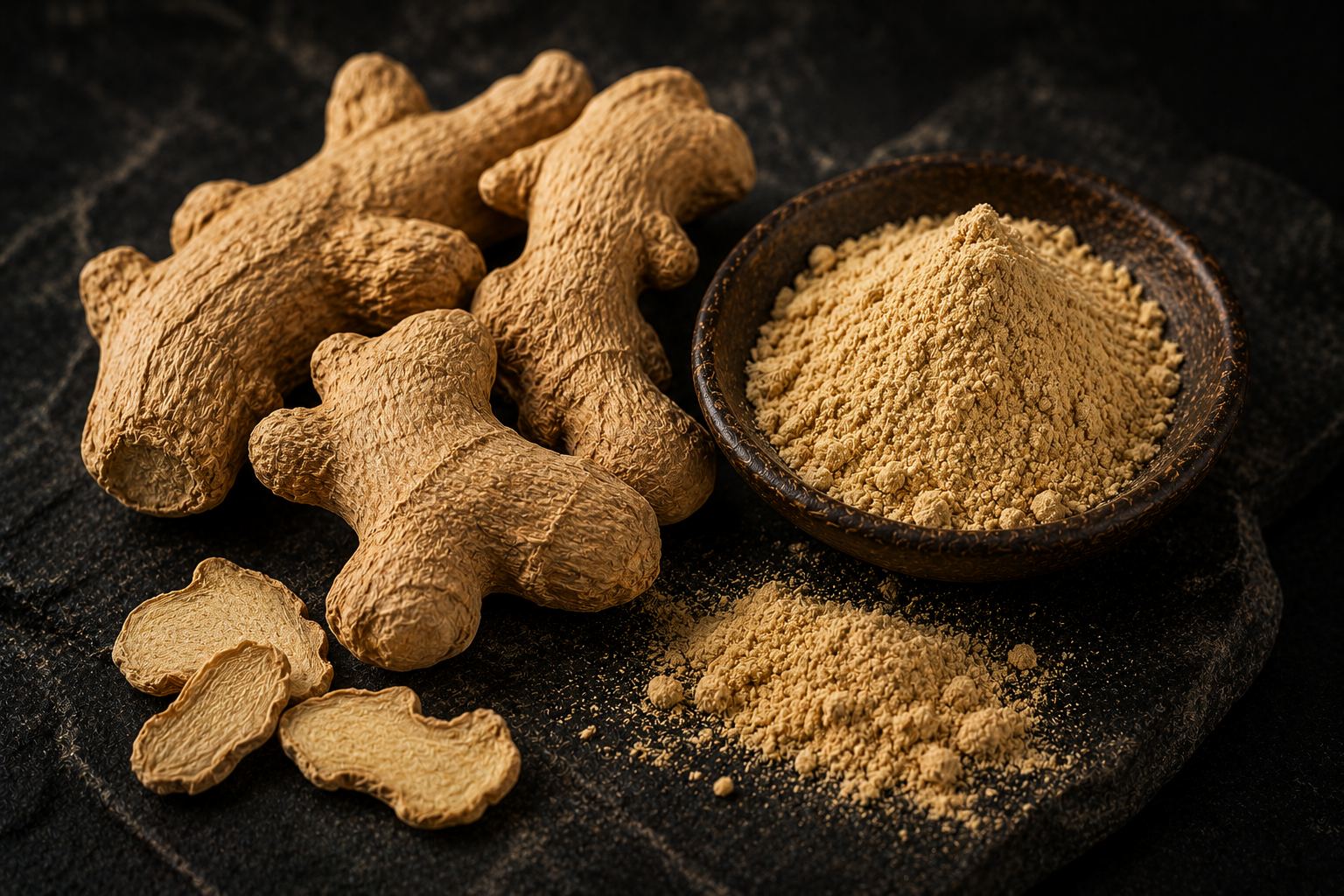
What Does Dry Ginger Taste Like?
Dry Ginger in Every Indian Language
| Language | Name | Pronunciation |
|---|---|---|
| English | Dry Ginger | |
| Hindi | Sonth / Saunth | |
| Tamil | சுக்கு — Chukku | |
| Telugu | శొంఠి — Shonti | |
| Malayalam | ഇഞ്ചി (ഉണക്ക) — Inchi (dried) | |
| Kannada | ಶುಂಠಿ — Shunthi |
What Is Dry Ginger?
Dry ginger — sonth — is fresh ginger (Zingiber officinale) that has been dried whole and then ground to powder. The drying process concentrates and transforms the ginger's compounds: fresh ginger's zingerone and shogaol balance shifts dramatically, producing a more pungent, woody, sharp flavour that is entirely different from fresh ginger. The two forms are not interchangeable.
In Indian cooking, sonth is used in spice blends (garam masala, chai masala), in warming winter preparations, and as one of the three components of Ayurveda's Trikatu (alongside long pepper and black pepper).
- Garam masala uses dry ginger for its warming pungency — fresh ginger cannot serve this role
- Trikatu — Ayurveda's most important digestive formula — uses sonth alongside long pepper and black pepper
- Masala chai in many traditions uses dry ginger powder for a different heat than fresh ginger
- Sonth kadha (warming winter drink) uses concentrated dry ginger for its documented warming effects
Dry Ginger Through History
Fresh ginger has been cultivated in India for at least 3,000 years. The drying of ginger to produce sonth is ancient — dried ginger is mentioned in Ayurvedic texts alongside fresh ginger as a distinct medicinal substance. The Arabs called it zanjabeel, the Romans zingiber — both likely derived from the Sanskrit shringavera.
The Science of Dry Ginger
How to Store Dry Ginger
How to Buy Good Dry Ginger
How to Use Dry Ginger Correctly
- Use as directed for each preparation
- Start small and adjust
What Dry Ginger Pairs Well With
Dishes That Use Dry Ginger
Where Dry Ginger Matters Most
| South Indian Cuisine | Essential |
| All Indian Cuisines | Common |
| Jain Cooking | Common |
Dry Ginger vs Related Spices
| Feature | Dry Ginger | Kashmiri Chilli | Regular Chilli |
|---|---|---|---|
| Heat | Varies | Very mild | Medium-hot |
| Colour | Varies | Deep red | Red-orange |
| Primary use | Garam masala · Chai · Medicinal kadha · Winter preparations | Colour | Heat |