★★★★★ Gujarat
★★★★☆ North India street food
What Does Vatana Taste Like?
Vatana in Every Indian Language
| Language | Name | Pronunciation |
|---|---|---|
| English | Dried Peas | vah-TAH-nah |
| Hindi | वटाणा / सूखा मटर — Vatana / Sookha Matar | vah-TAH-nah |
| Bengali | শুকনো মটর — Shukno Matar | SHOOK-no MAH-tar |
| Tamil | பச்சை பட்டாணி — Pachai Pattani | pah-CHYE PAT-tah-nee |
| Telugu | ఎండు బఠాణీ — Endu Batani | EN-doo bah-TAH-nee |
| Malayalam | ഉണക്ക പട്ടാണി — Unakka Pattani | oo-NAHK-kah PAT-tah-nee |
| Kannada | ಒಣ ಬಟಾಣಿ — Ona Batani | OH-nah bah-TAH-nee |
| Gujarati | વટાણા — Vatana | vah-TAH-nah |
| Marathi | वाटाणा — Vatana | vah-TAH-nah |
| Punjabi | ਸੁੱਕੇ ਮਟਰ — Sukke Matar | SOOK-keh mah-TAR |
| Urdu | خشک مٹر — Khushk Matar | KHOOSHK mah-TAR |
| Sanskrit | कलाय — Kalaya | kah-LAH-yah |
What Is Vatana?
Vatana — dried peas — are the mature, dried seeds of the common pea plant (Pisum sativum), distinct from fresh green peas (matar) eaten in their immature, sweet state. Once dried, peas develop a denser, starchier character closer to a dal or whole legume than to fresh peas, and are used very differently in Indian cooking.
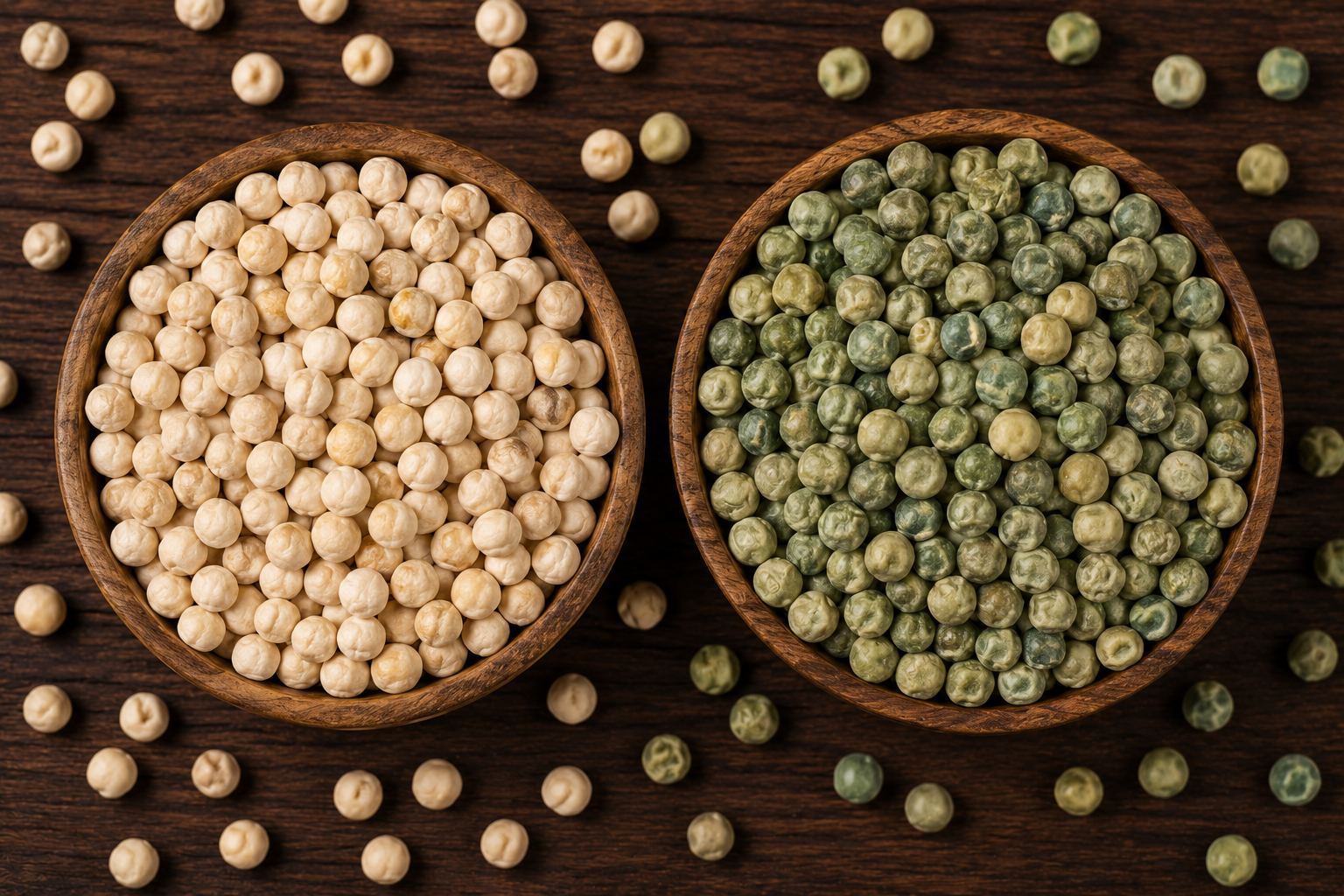
Two varieties dominate Indian kitchens: white vatana, pale cream in colour with a mild, slightly sweet flavour, used primarily in ragda (the thick pea curry topping for ragda pattice and samosa chaat); and green or blue-green vatana, with a more pronounced earthy, nutty flavour, used in Maharashtrian vatana usal and various curry preparations. Both require overnight soaking and thorough cooking to become tender and digestible.
- Ragda pattice — Mumbai's iconic street food — is built entirely on white vatana cooked down into a thick, spiced curry served over fried potato patties
- Matar chaat across North India uses boiled dried peas, finished with chutneys, onion, and spices, as a standalone street food dish in its own right
- Vatana usal is a core Maharashtrian breakfast and snack preparation, comparable in cultural importance to misal but built on dried peas rather than sprouted moth beans
- The distinct culinary identities of white versus green vatana reflect a level of ingredient sophistication in Western Indian street food that is often underappreciated outside the region
- Without vatana, Mumbai and Maharashtra's street food repertoire loses two of its most beloved, affordable, and protein-rich preparations
Vatana Through History
Peas have been cultivated and dried for storage since antiquity across Europe, the Near East, and South Asia — dried peas were historically one of the most important non-perishable protein sources in pre-refrigeration economies worldwide, including India. As fresh green peas (matar) became a celebrated seasonal vegetable in North Indian cooking from the colonial period onward, the dried form retained its own distinct culinary identity, particularly in Western India.
Mumbai's street food culture, which developed rapidly through the 20th century around railway stations, chowpatty beaches, and working-class neighbourhoods, embraced dried white vatana as an inexpensive, filling, protein-dense base for ragda — eventually elevating ragda pattice to one of the city's most iconic and widely loved snacks, served from carts and stalls across the metropolitan area.
The Science of Vatana
How to Store Vatana
How to Buy Good Vatana
How to Use Vatana Correctly
- Soak overnight (8–12 hours) — both varieties require this for even cooking
- Pressure cook: 20–25 minutes (white), 25–30 minutes (green) after soaking, until very tender
- For ragda: continue simmering after tender, mashing lightly, until naturally thickened — 15–20 additional minutes
- For matar chaat: cook until tender but intact, season directly, do not over-reduce
- For vatana usal: cook with tempering of mustard seeds, curry leaves, and goda masala until just tender
- 1/2 cup dry per 2–3 servings (yields more once cooked due to water absorption)
What Vatana Pairs Well With
Dishes That Use Vatana
Where Vatana Matters Most
| Maharashtrian Cuisine | Essential |
| Street Food | Essential |
| Gujarati Cuisine | Common |
| North Indian Cuisine | Common |
| Jain Cooking | Common |
| Sattvic Cooking | Common |
White Vatana vs Green Vatana vs Fresh Matar
| Feature | White Vatana (dried) | Green Vatana (dried) | Fresh Matar (green peas) |
|---|---|---|---|
| Form | Dried, mature, pale cream | Dried, mature, blue-green | Fresh, immature, bright green |
| Flavour | Mild, slightly sweet | Earthier, nuttier | Sweet, grassy, delicate |
| Primary use | Ragda, chaat | Usal, curry | Pulao, sabzi, paneer dishes |
| Cooking time | 20–25 min (PC, soaked) | 25–30 min (PC, soaked) | 5–8 min (fresh or frozen) |
| Texture cooked | Soft, breaks down for gravy | Firmer, holds shape more | Tender-crisp |
| Soaking required? | Yes — overnight | Yes — overnight | No |