★★★★★ Odisha
★☆☆☆☆ Rest of India
What Does Panch Phoron Taste Like?
Panch Phoron in Every Indian Language
| Language | Name | Pronunciation |
|---|---|---|
| English | Panch Phoron / Five Spice | Paanch Pho-ron |
| Bengali | পাঁচ ফোড়ন | Paanch Pho-ron |
| Hindi | पाँच फोरन | Paanch Pho-ran |
| Odia | ପଞ୍ଚ ଫୁଟଣ | Pancha Phutana |
| Tamil | பஞ்ச் போரன் | Panch Po-ran |
| Telugu | పంచ్ ఫోరన్ | Panch Pho-ran |
| Urdu | پانچ پھوران | Paanch Pho-ran |
What Is Panch Phoron?
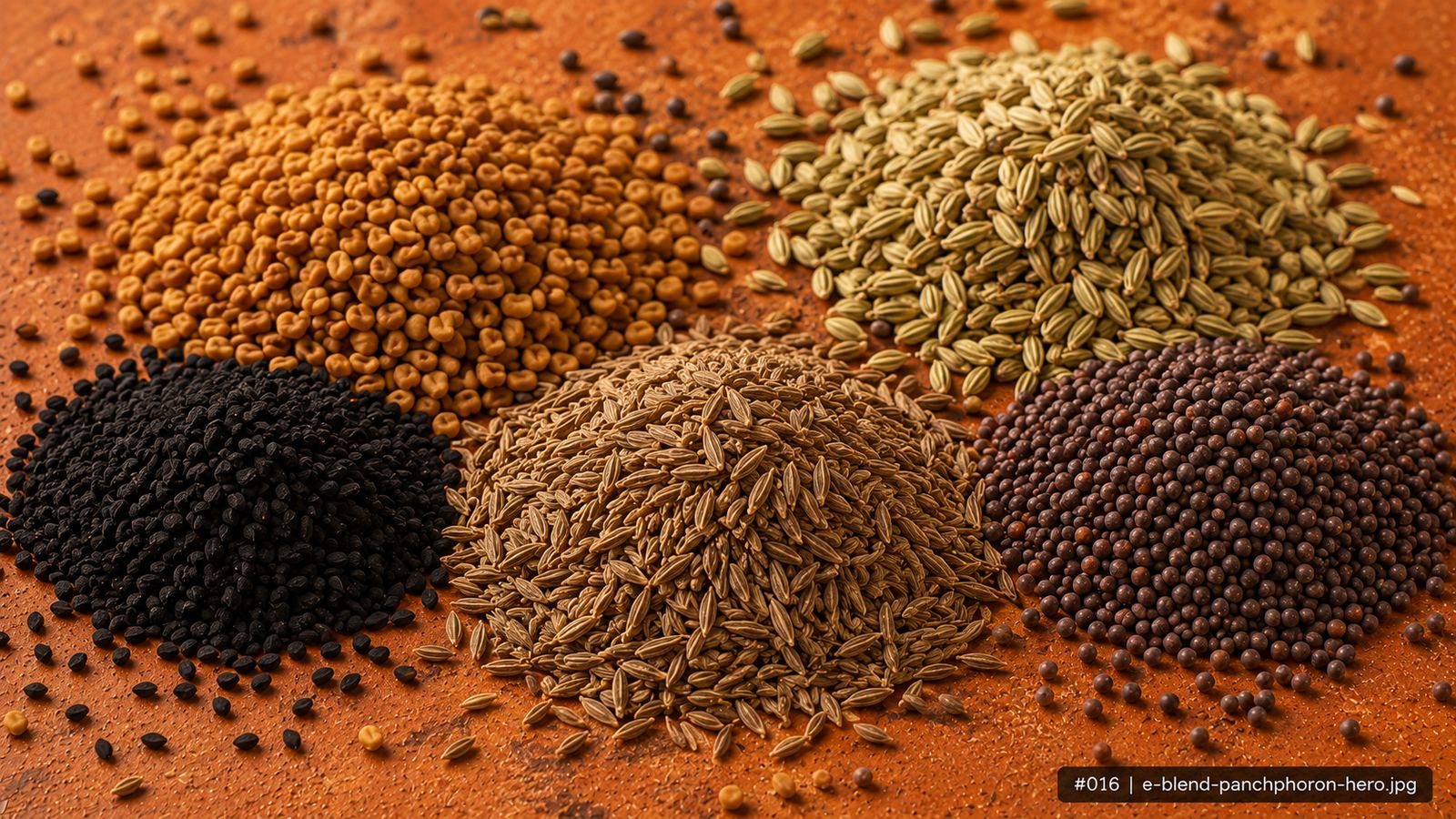
Panch phoron is Bengal's defining spice blend — five whole seeds used in equal proportions: cumin (jeera), nigella (kalonji), fennel (saunf), fenugreek (methi dana), and black or brown mustard (rai). Unlike garam masala which is ground and added at the end, panch phoron is always used whole and always in hot oil at the very start of cooking.
The name means 'five spices' in Bengali — panch (five) and phoron (tempering). It is one of the most elegant spice systems in Indian cooking: five seeds, equal ratios, one technique, defining an entire regional cuisine. The combination produces an aroma greater than any of its parts — bitter from fenugreek and nigella, sweet from fennel, pungent from mustard, and earthy from cumin.
- Bengali dal, vegetable curries, and fish preparations are architecturally built on panch phoron tadka
- Without it, Bengali vegetable cooking loses its defining aromatic identity
- The five-seed equal-proportion system is one of the most replicable, consistent spice frameworks in Indian cooking
- Odisha uses the same blend with variations — demonstrating how a spice system can define a region's food culture
- No other Indian regional cuisine has this level of systematic simplicity in its foundational spice blend
Panch Phoron Through History
The origins of panch phoron are ancient and local — rooted in Bengal's agricultural ecology, where all five component seeds were grown and available. Unlike garam masala with strong Mughal influences, panch phoron is a purely indigenous Bengali development.
Historical references to the five-seed combination appear in medieval Bengali cooking texts and in Vaishnava community records, where the blend was used in temple cooking. The equal-ratio system suggests a deliberate culinary philosophy — balance over dominance, with no single spice permitted to overpower.
Odisha adopted panch phoron through centuries of cultural exchange with Bengal, creating pancha phutana with slightly different proportions. The spread beyond these two states has been limited — it remains one of the most geographically concentrated defining spice systems in Indian cooking.
The Science of Panch Phoron
How to Store Panch Phoron
How to Buy Good Panch Phoron
How to Use Panch Phoron Correctly
- Add 1 tsp whole to hot oil or ghee at start of cooking
- Seeds will sizzle and pop (mustard first) — wait 15–20 seconds
- Add vegetables, fish, or dal immediately after
- Never grind — whole seed texture and layered release is the point
- For dal: add as a final tadka poured over cooked dal
- Quantity: 1 tsp per dish for 4 people
What Panch Phoron Pairs Well With
Dishes That Use Panch Phoron
Where Panch Phoron Matters Most
| Bengali Cuisine | Essential |
| Odishan Cuisine | Essential |
| Bihari Cuisine | Occasional |
| Vaishnava Cooking | Essential |
| Sattvic Cooking | Common |
| North Indian Cuisine | Rare |
Panch Phoron vs Garam Masala vs Tadka
| Feature | Panch Phoron | Garam Masala | Basic Tadka |
|---|---|---|---|
| Form | Whole seeds | Ground powder | Variable |
| When added | Start of cooking | End of cooking | Start (technique) |
| Region | Bengal / Odisha | All India | All India |
| Fixed ratio? | Yes — equal parts | Regional variation | No |
| Grind before use? | Never | Already ground | Depends |