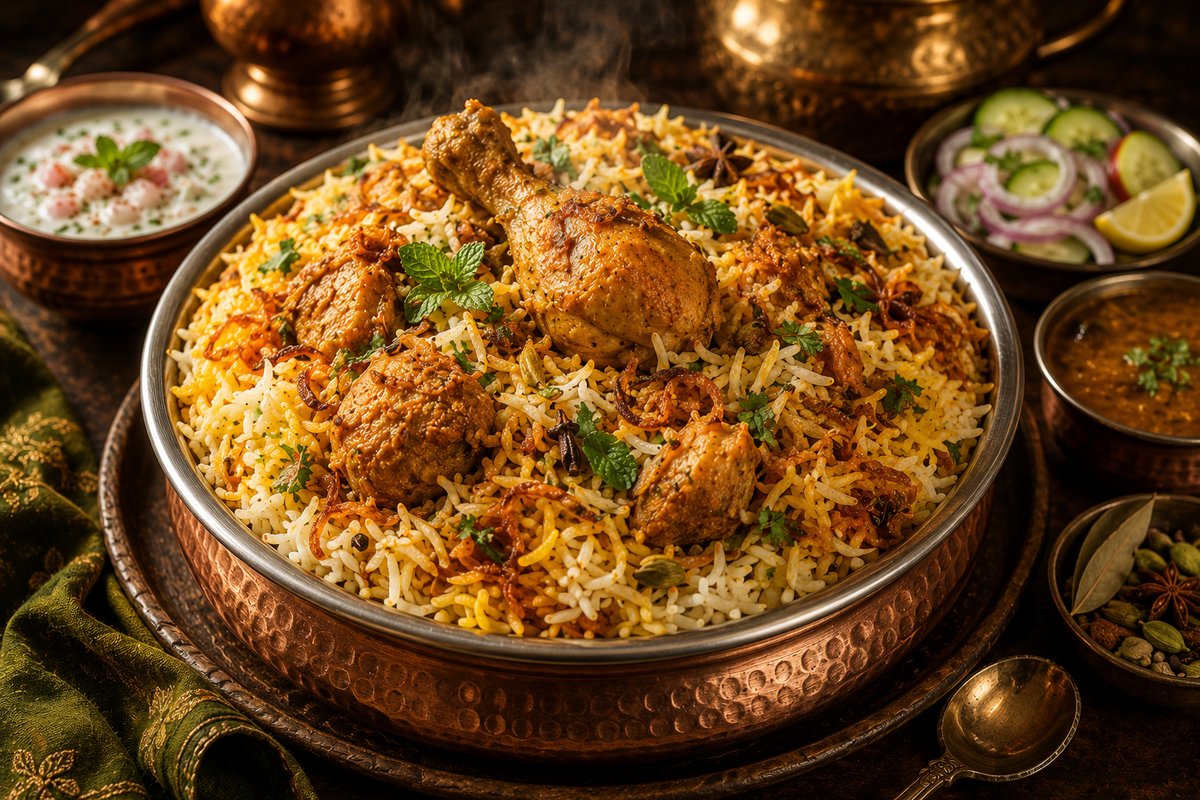
The restaurant biryani gap
The restaurant biryani gap — five structural differences
The gap between home biryani and restaurant biryani is real and comes from five specific differences in technique, ingredients, and time that restaurants apply as standard practice and that home recipes rarely fully specify.
The Five Restaurant Biryani Differences
1. Overnight marination: restaurants marinate 24 hours minimum. Most home recipes say 2–4 hours.
2. Birista quality: restaurants make large batches of properly deep-fried, thoroughly drained birista. Rushed or shallow-fried birista lacks the Maillard depth.
3. Aged basmati: restaurants source 1–2 year aged basmati for elongation and separate grain. New-season rice produces shorter, stickier grains.
4. Dum duration: restaurants dum for 35–45 minutes on a heat diffuser. Home recipes often specify 20 minutes directly on gas.
5. Saffron quality and quantity: restaurants use Iranian or Kashmiri saffron generously. Cheap saffron substitutes (safflower, turmeric) produce colour without flavour.
2. Birista quality: restaurants make large batches of properly deep-fried, thoroughly drained birista. Rushed or shallow-fried birista lacks the Maillard depth.
3. Aged basmati: restaurants source 1–2 year aged basmati for elongation and separate grain. New-season rice produces shorter, stickier grains.
4. Dum duration: restaurants dum for 35–45 minutes on a heat diffuser. Home recipes often specify 20 minutes directly on gas.
5. Saffron quality and quantity: restaurants use Iranian or Kashmiri saffron generously. Cheap saffron substitutes (safflower, turmeric) produce colour without flavour.
The Single Biggest Improvement
Start the night before
- Marinate meat overnight in the full spiced yogurt marinade
- Make birista the night before — it keeps crispy for 24 hours in an airtight container
- Soak rice the night before if planning morning cooking
- This single preparation change — starting 24 hours ahead — closes approximately 60% of the restaurant gap