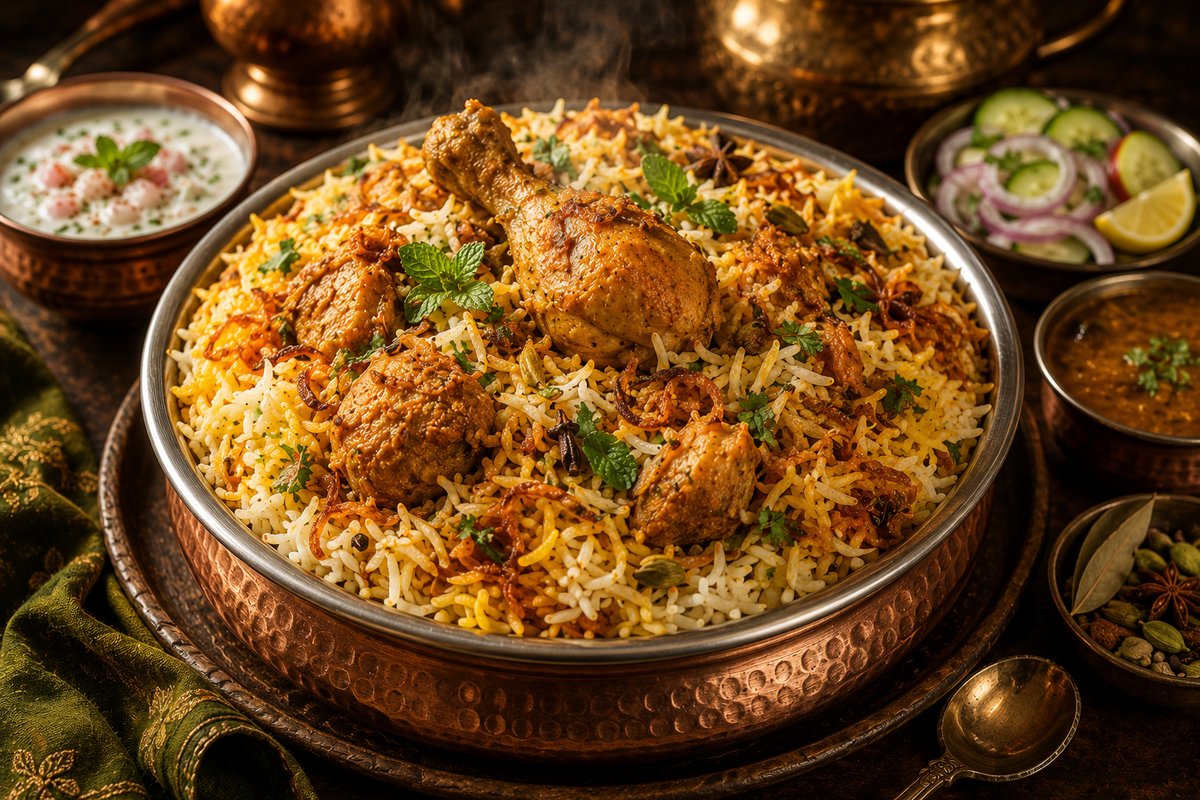
The mixed-up biryani problem
Why biryani loses its layers — assembly and structure
Layered biryani — where distinct strata of rice and meat are visible when served — is not just aesthetic. The distinct layers mean each element of the dish (rice, meat, saffron, birista, herbs) has cooked in its own environment and then mixed at service, producing the complex, varied flavour of authentic biryani. When layers collapse during dum, the result is a mixed pulao rather than a layered biryani.
The Fix
How to build and preserve layers
- Rice must be 70% cooked: 80%+ cooked rice is too soft to hold its layer structure under dum steam — it collapses and mixes
- Do not stir after layering: any mixing during assembly or before sealing collapses layers permanently
- Firm rice layer: each rice layer should be packed relatively firmly (not loose) to resist collapse under steam pressure
- Heavy layer markers: saffron milk, birista, and herbs should be clearly concentrated in distinct bands — this is what makes layers visible at serving
- Serve by scooping vertically: use a wide spatula to take from top to bottom — each scoop contains all layers
The Science
Why does over-parboiled rice lose its layered structure during dum?
Rice parboiled to 80%+ is structurally very soft — the starch has nearly fully gelatinised and the grain is flexible rather than firm. Under steam pressure during dum, these soft grains deform and flow around each other under gravity, effectively mixing the layers. Rice at 70% — soft outside but firm centre — maintains structural integrity under steam pressure, holding its layer position until the final cooking stage is complete.
35 second read